Introduction to Tangzhong.
An intriguing technique for softer yeast bread and rolls. Information from the King Arthur Flour site.Try tangzhong
This Japanese technique cooks a small percentage of the flour and liquid (water or milk) in a yeast recipe very briefly before combining the resulting thick slurry with the remaining ingredients.
How does this technique affect yeast dough? It pre-gelatinizes the starches in the flour, meaning they can absorb more water. In fact, flour will absorb twice as much hot water or milk as it does the cool/lukewarm water or milk you'd usually use in yeast dough.
Not only does the starch in the flour absorb more liquid; since heating the starch with water creates structure, it's able to hold onto that extra liquid throughout the kneading, baking, and cooling processes. Which in turn means:
• Since there's less free (unabsorbed) water in the dough, it's less sticky and easier to knead;
• The bread or rolls may rise higher, due to more water creating more internal steam (which makes bread rise in the oven — along with the carbon dioxide given off by the yeast);
• Having retained more water during baking, bread and rolls will be moister, and will stay soft and fresh longer.
We currently have just a few recipes using tangzhong on our website; as we become more familiar with the method, we hope to add more.
Ingredients
Tangzhong (starter) for Cinnamon Rolls
5 tablespoons (71g) water
5 tablespoons (71g) whole milk
3 tablespoons + 1 teaspoon (28g) King Arthur Unbleached Bread Flour
Dough
all of the tangzhong (above)
4 cups + 2 tablespoons (496g) King Arthur Unbleached Bread Flour
3 tablespoons (21g) Baker's Special Dry Milk or 1/4 cup (35g) nonfat dry milk
1 3/4 teaspoons salt
1 tablespoon instant yeast
3/4 cup (170g) lukewarm whole milk
2 large eggs
3/8 cup (6 tablespoons, 85g) unsalted butter, melted
Filling
3/4 cup (142g) brown sugar
4 teaspoons ground cinnamon
Frosting
2 cups (227g) confectioners' sugar
pinch of salt
2 tablespoons (28g) melted butter
1/2 teaspoon vanilla extract
2 to 3 tablespoons (28g to 43g) whole milk or cream, enough to make a thick but spreadable frosting.
Directions:
To make the tangzhong:
Combine all of the starter ingredients in a small saucepan, and whisk until no lumps remain.
Place the saucepan over medium heat, and cook the mixture, whisking constantly, until thick and the whisk leaves lines on the bottom of the pan. This will probably take only a minute or so. Remove from the heat, and set it aside for several minutes.
To make the dough:
Mix the tangzhong with the remaining dough ingredients until everything comes together. Let the dough rest, covered, for 20 minutes; this will give the flour a chance to absorb the liquid, making it easier to knead.
After 20 minutes, knead the dough — by hand, mixer, or bread machine — to make a smooth, elastic, somewhat sticky dough.
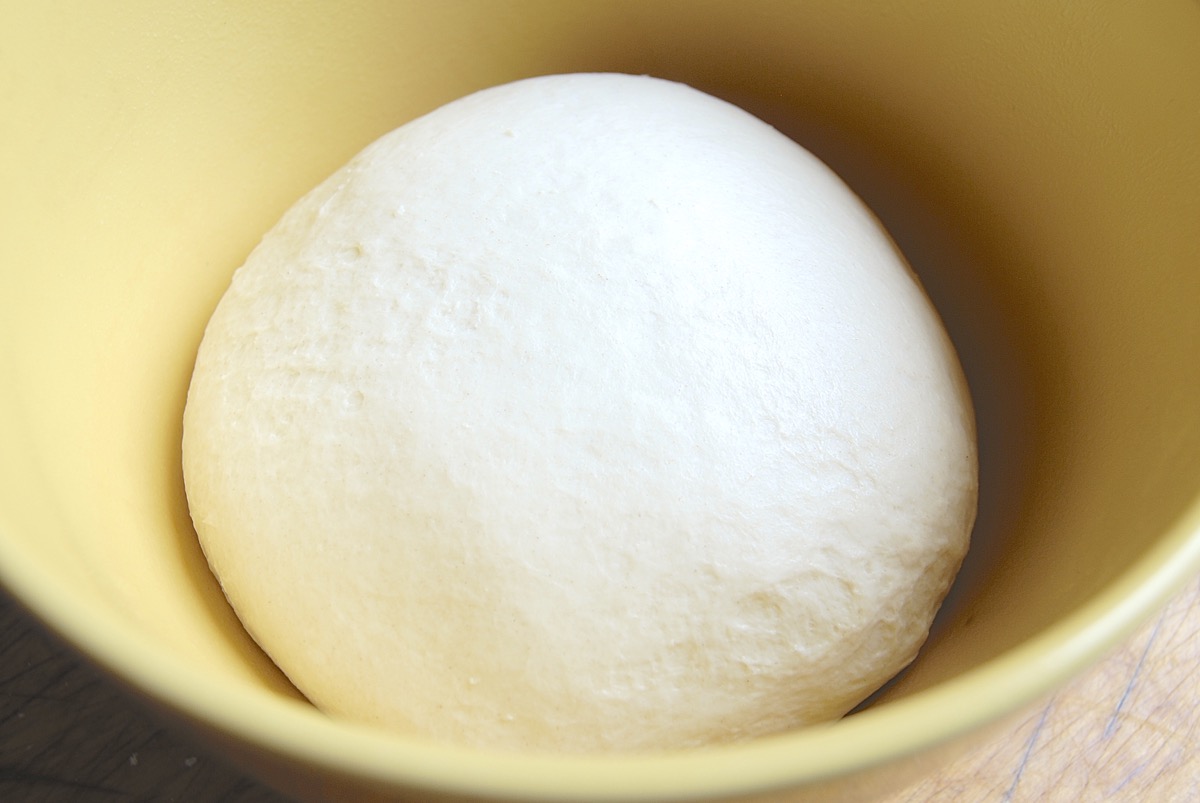
Shape the dough into a ball, and let it rest in a lightly greased covered bowl for 60 to 90 minutes, until puffy but not necessarily doubled in bulk.
To make the filling:
Combine the brown sugar and cinnamon, mixing until the cinnamon is thoroughly distributed.
Gently deflate the risen dough, divide it in half, and shape each piece into a rough rectangle.
Working with one piece at a time, roll the dough into an 18" x 8" rectangle.
Sprinkle half the filling onto the rolled-out dough.
Starting with a long edge, roll the dough into a log. With the seam underneath, cut the log into 12 slices, 1 1/2" each.
Repeat with the second piece of dough and the remaining filling.
Lightly grease a 9" x 13" pan. Space the rolls in the pan.
Cover the pan and let the rolls rise for 45 to 60 minutes, until they're crowding one another and are quite puffy.
While the rolls are rising, preheat the oven to 350°F with a rack in the bottom third.
Uncover the rolls, and bake them for 22 to 25 minutes, until they feel set. They might be just barely browned; that's OK. It's better to under-bake these rolls than bake them too long. Their interior temperature at the center should be about 188°F.
While the rolls are baking, stir together the icing ingredients, adding enough of the milk to make a thick spreadable icing. The icing should be quite stiff, about the consistency of softened cream cheese.Remove the rolls from the oven, and turn them out of the pan onto a rack. Spread them with the icing; it'll partially melt into the rolls.
Serve the rolls warm. Store completely cool rolls for a couple of days at room temperature, or freeze for up to 1 month.
****
These days, with “artisan” the byword for many yeast bakers, we aspire to breads that are ever more crusty/chewy: pizza crust, baguettes, bagels.
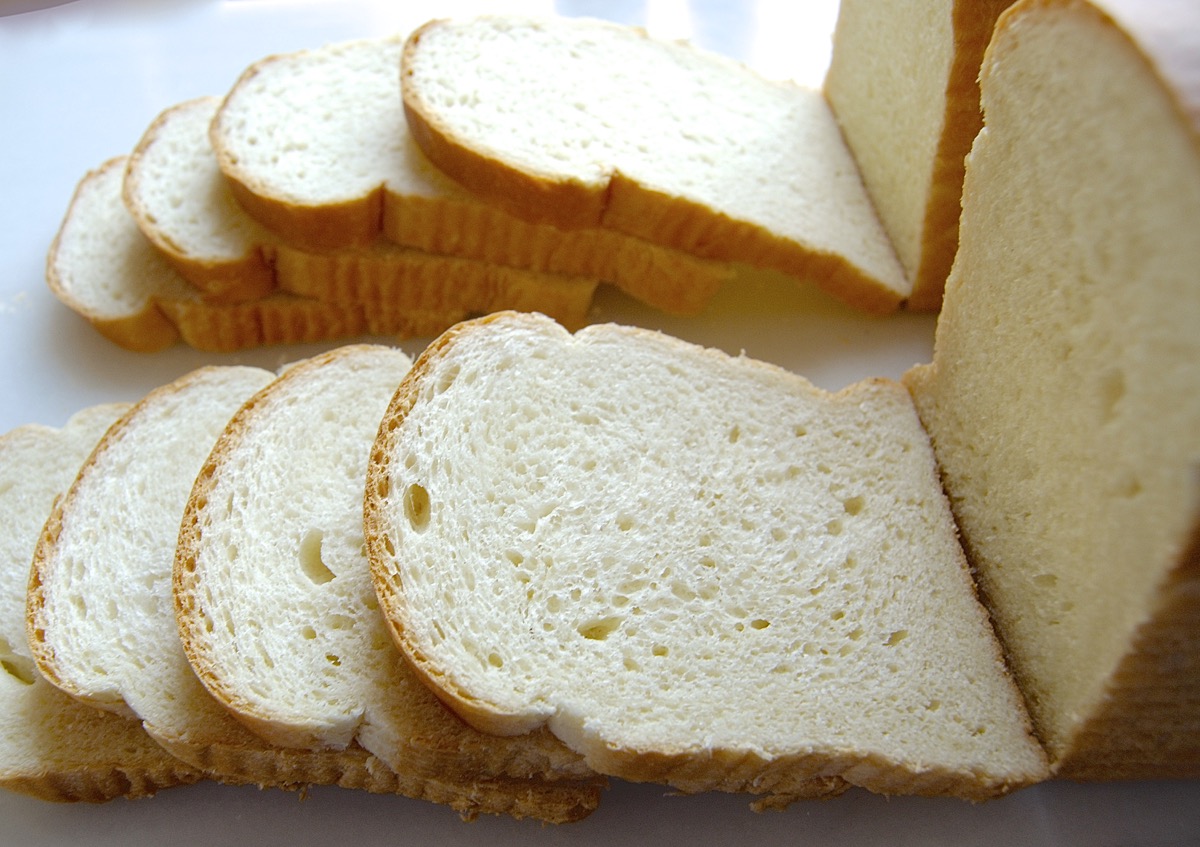
But let’s not lose sight of a whole world of classic soft yeast breads: the sliced white bread of our youthful sandwiches, the Sunday morning platter of tender sticky buns.
Sadly, all too often our quest for super-soft rolls falls far short of our dreams. The brioche buns are oddly dry and chewy; the cinnamon rolls, downright tough. What’s a frustrated baker to do?
Tangzhong: the quick and easy path to softer, more tender dinner rolls, sandwich loaves, and cinnamon buns.
Pillow Soft Bread Dough
Tangzhong: the quick and easy path to softer, more tender dinner rolls, sandwich loaves, and cinnamon buns.
Pillow Soft Bread Dough
Ingredients:
Ingredients
Tangzhong
- 3 tablespoons (43g) water
- 3 tablespoons (43g) whole milk
- 2 tablespoons (14g) King Arthur Unbleached Bread Flour
Dough
- 2 1/2 cups (298g) King Arthur Unbleached Bread Flour
- 2 tablespoons (14g) Baker's Special Dry Milk or nonfat dry milk
- 1/4 cup (50g) sugar
- 1 teaspoon salt
- 1 tablespoon instant yeast
- 1/2 cup (113g) whole milk
- 1 large egg
- 4 tablespoons (57g) unsalted butter, melted
Instructions:
- To make the tangzhong: Combine all of the ingredients in a small saucepan, and whisk until no lumps remain.
- Place the saucepan over low heat and cook the mixture, whisking constantly, until thick and the whisk leaves lines on the bottom of the pan, about 3 to 5 minutes.
- Transfer the tangzhong to a small mixing bowl or measuring cup and let it cool to lukewarm.
- To make the dough: Combine the tangzhong with the remaining dough ingredients, then mix and knead — by mixer or bread machine — until a smooth, elastic dough forms; this could take almost 15 minutes in a stand mixer.
- Shape the dough into a ball, and let it rest in a lightly greased bowl, covered, for 60 to 90 minutes, until puffy but not necessarily doubled in bulk.
- Gently deflate the dough and divide it into four equal pieces; if you have a scale each piece will weigh between 170g and 175g.
- Flatten each piece of dough into a 5" x 8" rectangle, then fold the short ends in towards one another like a letter. Flatten the folded pieces into rectangles again (this time about 3" x 6") and, starting with a short end, roll them each into a 4" log.
- Place the logs in a row of four — seam side down and side by side — in a lightly greased 9" x 5" loaf pan.
- Cover the loaf and allow it to rest/rise for 40 to 50 minutes, until puffy.
- Towards the end of the rising time, preheat the oven to 350°F.
- To bake the bread:
Brush the loaf with milk and bake it for 30 to 35 minutes, until it's golden brown on top and a digital thermometer inserted into the center reads at least 190°F. - Remove the loaf from the oven and cool it in the pan until you can transfer it safely to a rack to cool completely.
- Store leftover bread, well wrapped, at cool room temperature for 5 to 7 days; freeze for longer storage.
Tips from our Bakers
Would you like a dark-gold, shiny crust on your loaf? Make an egg wash by whisking together 1 large egg + 1 tablespoon cold water. Just before putting the bread into the oven, instead of brushing the top crust with milk, brush it with some of the egg wash (you won't use all of it). Bake as directed.
Try tangzhong
This Japanese technique cooks a small percentage of the flour and liquid (water or milk) in a yeast recipe very briefly before combining the resulting thick slurry with the remaining ingredients.
How does this technique affect yeast dough? It pre-gelatinizes the starches in the flour, meaning they can absorb more water. In fact, flour will absorb twice as much hot water or milk as it does the cool/lukewarm water or milk you'd usually use in yeast dough.
Not only does the starch in the flour absorb more liquid; since heating the starch with water creates structure, it's able to hold onto that extra liquid throughout the kneading, baking, and cooling processes. Which in turn means:
• Since there's less free (unabsorbed) water in the dough, it's less sticky and easier to knead;
• The bread or rolls may rise higher, due to more water creating more internal steam (which makes bread rise in the oven — along with the carbon dioxide given off by the yeast);
• Having retained more water during baking, bread and rolls will be moister, and will stay soft and fresh longer.
We currently have just a few recipes using tangzhong on our website; as we become more familiar with the method, we hope to add more.
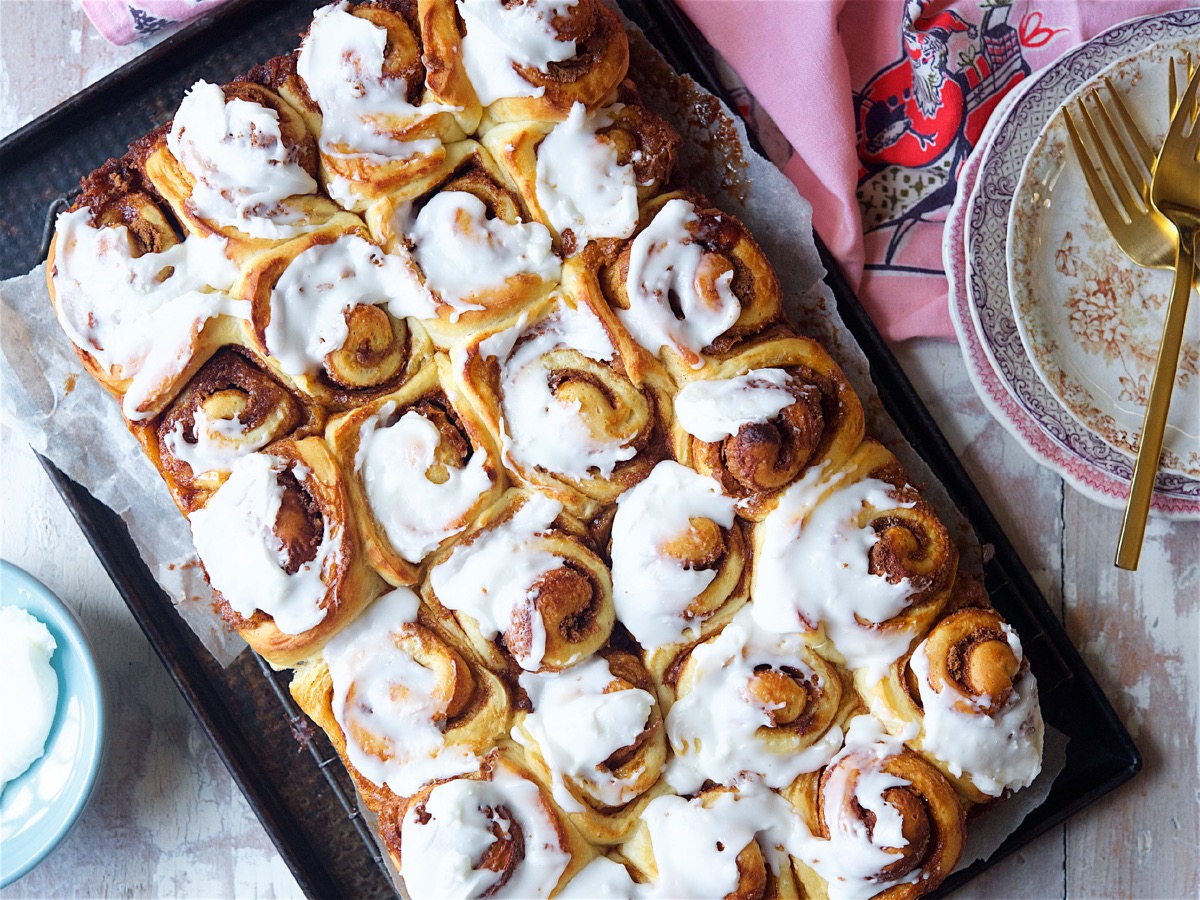
One of our current recipes using tangzhong is Soft Cinnamon Rolls. An enthusiastic reader review recently caught our eye:
“This is the best cinnamon roll recipe ever! I have been making cinnamon rolls for 55 years and have never found a recipe quite like this. These rolls stay soft a long time — up to a week… I mail cinnamon rolls to childhood friends who live a great distance from me. Even if it takes the postal service a week to deliver the rolls, they are still soft!” — Retired editor from Upper Sandusky, OH
That’s tangzhong in a nutshell: soft rolls (or bread) that stay soft for an extended period, making them perfect for shipping, or simply for making one day, then enjoying the next. And the next, and the next…
While nothing beats a freshly baked, oven-warm roll, tangzhong delivers results that are a very close second — without the pressure of having to bake right before serving.
Putting tangzhong to the test
Let’s see how this works with our recipe for Easy Hot Cross Bunsong,.
As directed in a tip at the bottom of the recipe, I measure out the total amount of flour and milk I'll be using in the recipe.
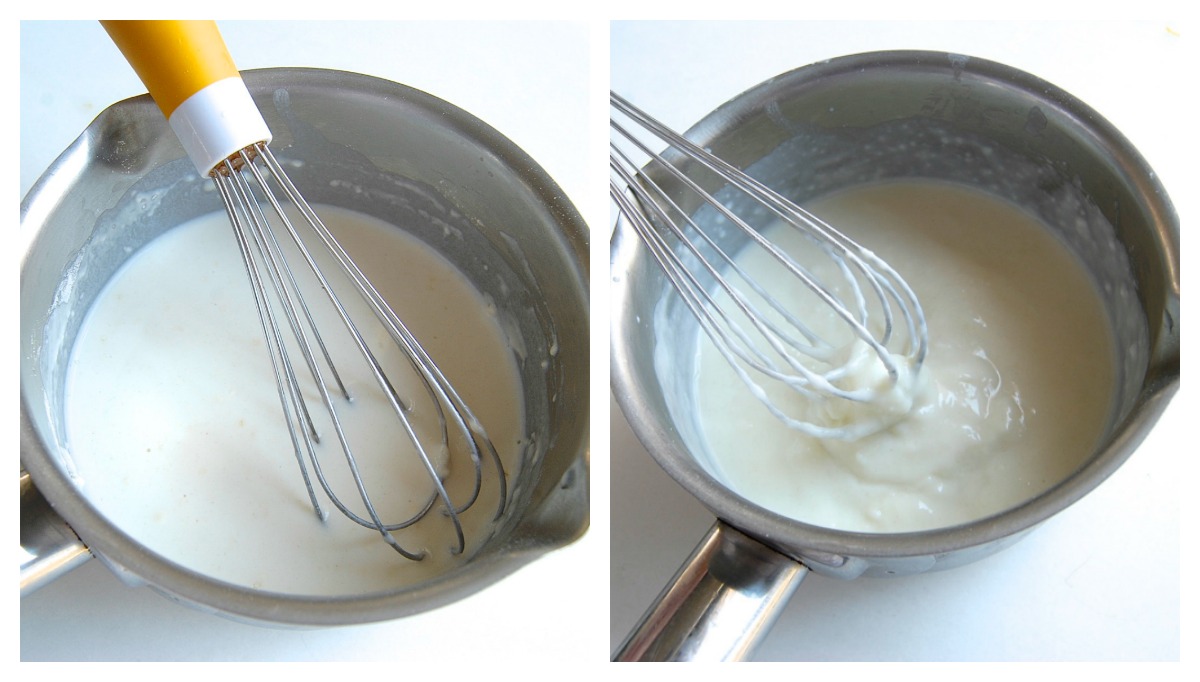
Now I take 3 tablespoons of the measured flour and 1/2 cup of the measured milk and put them in a saucepan set over medium-high heat (left, above). I cook the mixture, whisking constantly; it quickly starts to thicken (right, above).
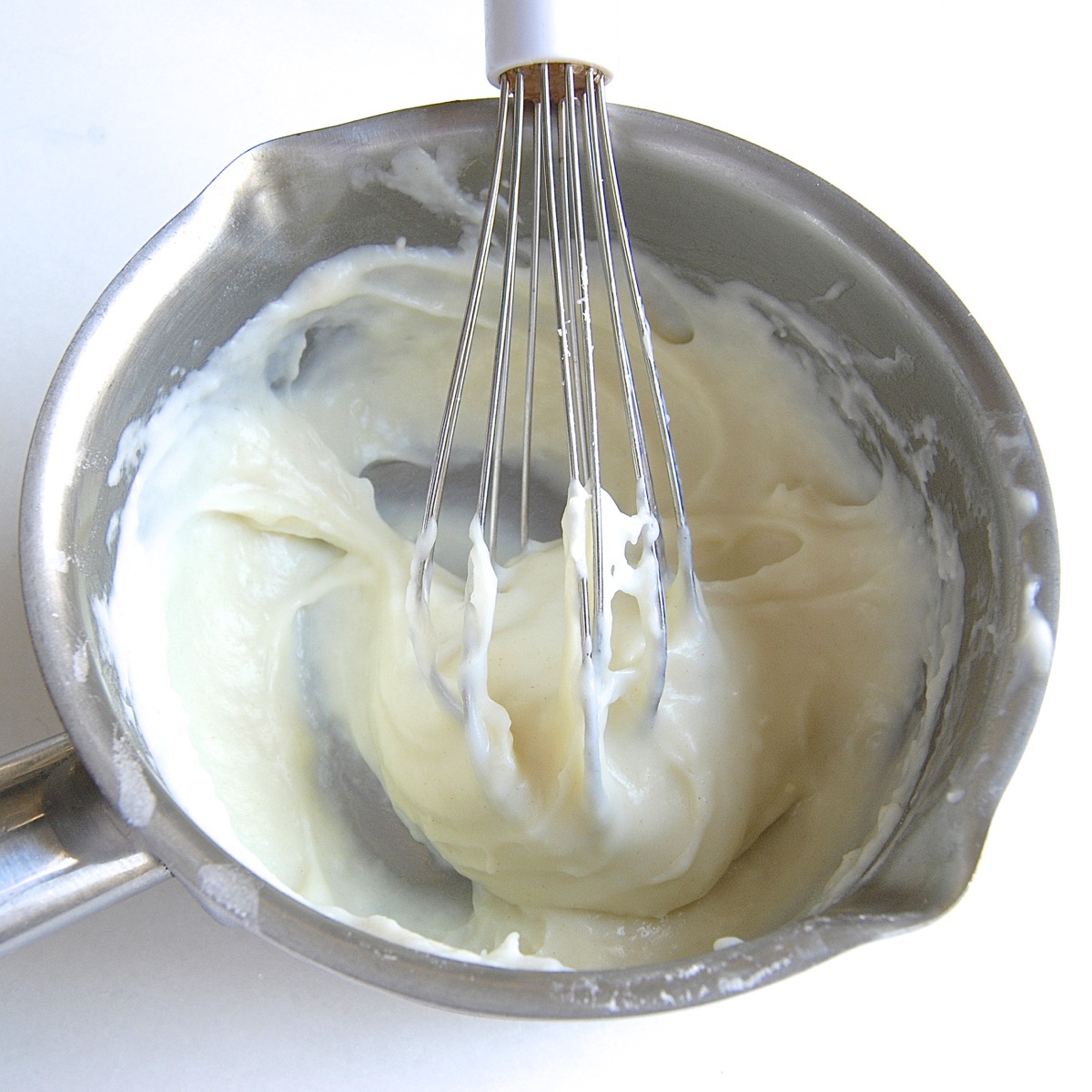
Within a minute or so the mixture becomes a thick slurry.
I transfer the cooked mixture to a bowl, let it cool to lukewarm, then combine it with the remaining flour, milk, and other dough ingredients.
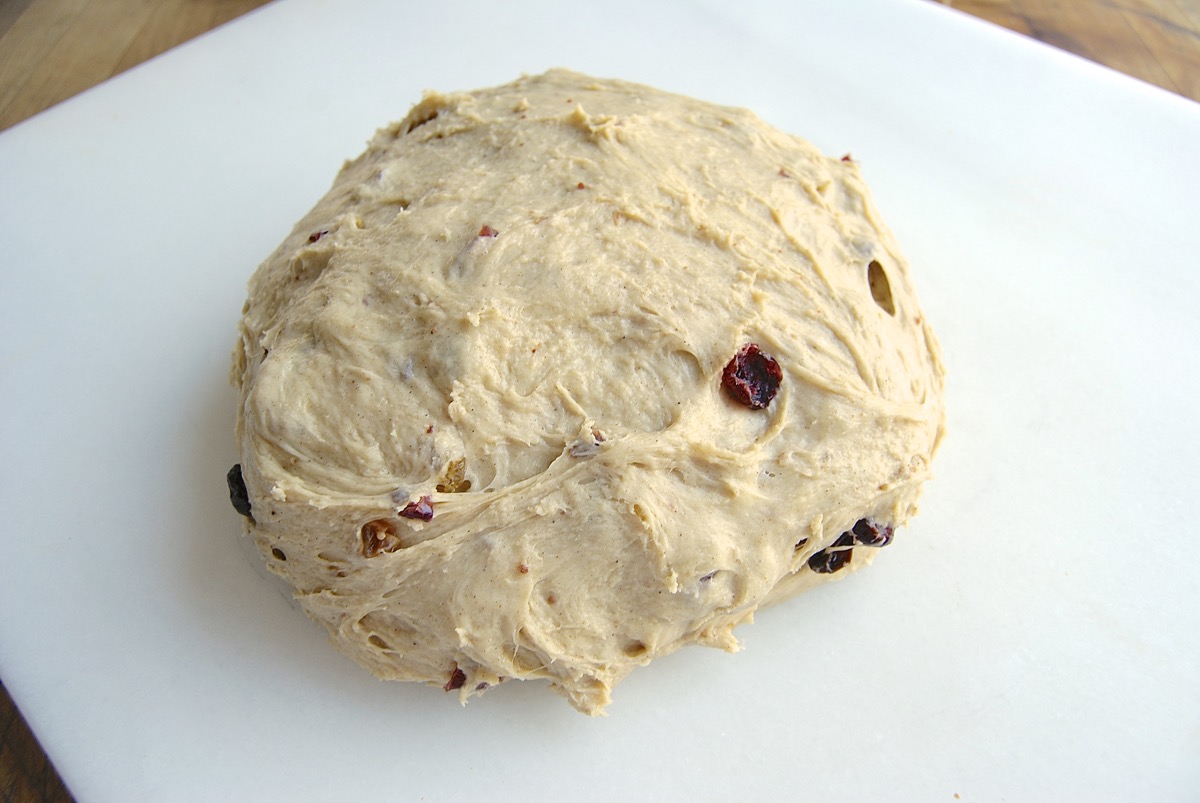
I proceed with the recipe as directed: kneading the dough (above); letting it rise; shaping the buns; letting them rise, and baking.
How to convert a bread recipe to tang zhong. A sure fire path to softer bread and rolls.
Copied from King Arthur Flour site. "Our Favorite Sandwich Bread.
How to convert a bread recipe to tang zhong. A sure fire path to softer bread and rolls.
Copied from King Arthur Flour site. "Our Favorite Sandwich Bread.
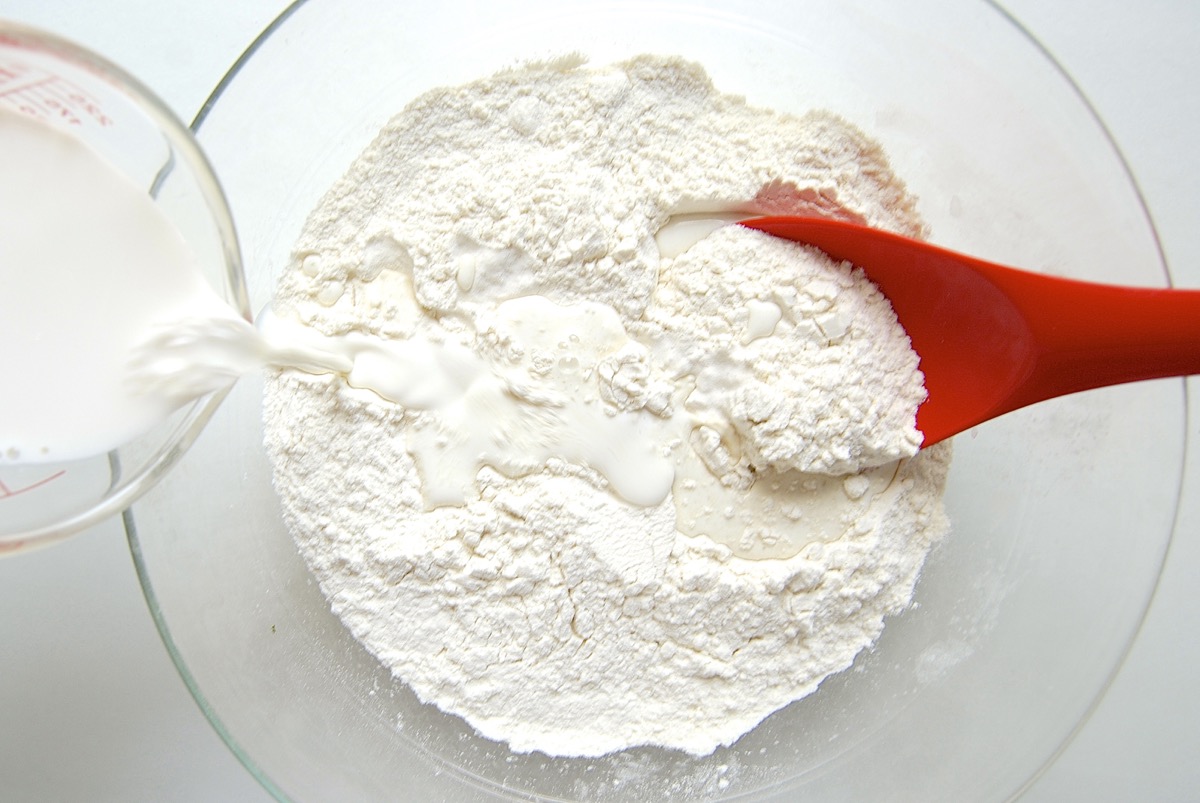

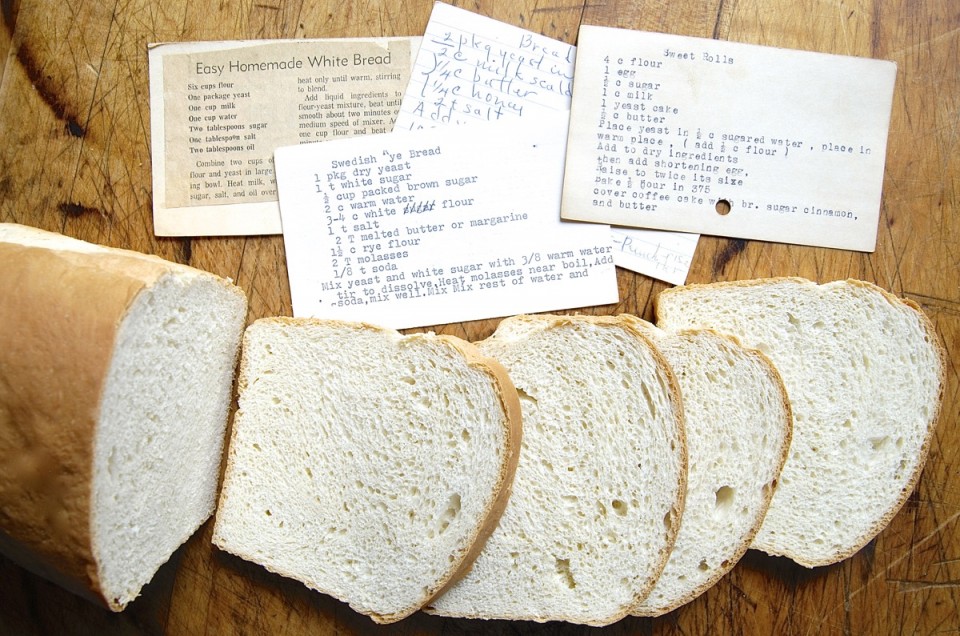
Tangzhong, an Asian technique for making soft, fluffy yeast bread, involves cooking a portion of the flour and liquid in the recipe into a thick slurry prior to adding the remaining ingredients.
This pre-cooking accomplishes two positive things: it makes bread or rolls softer and more tender, and extends their shelf life.
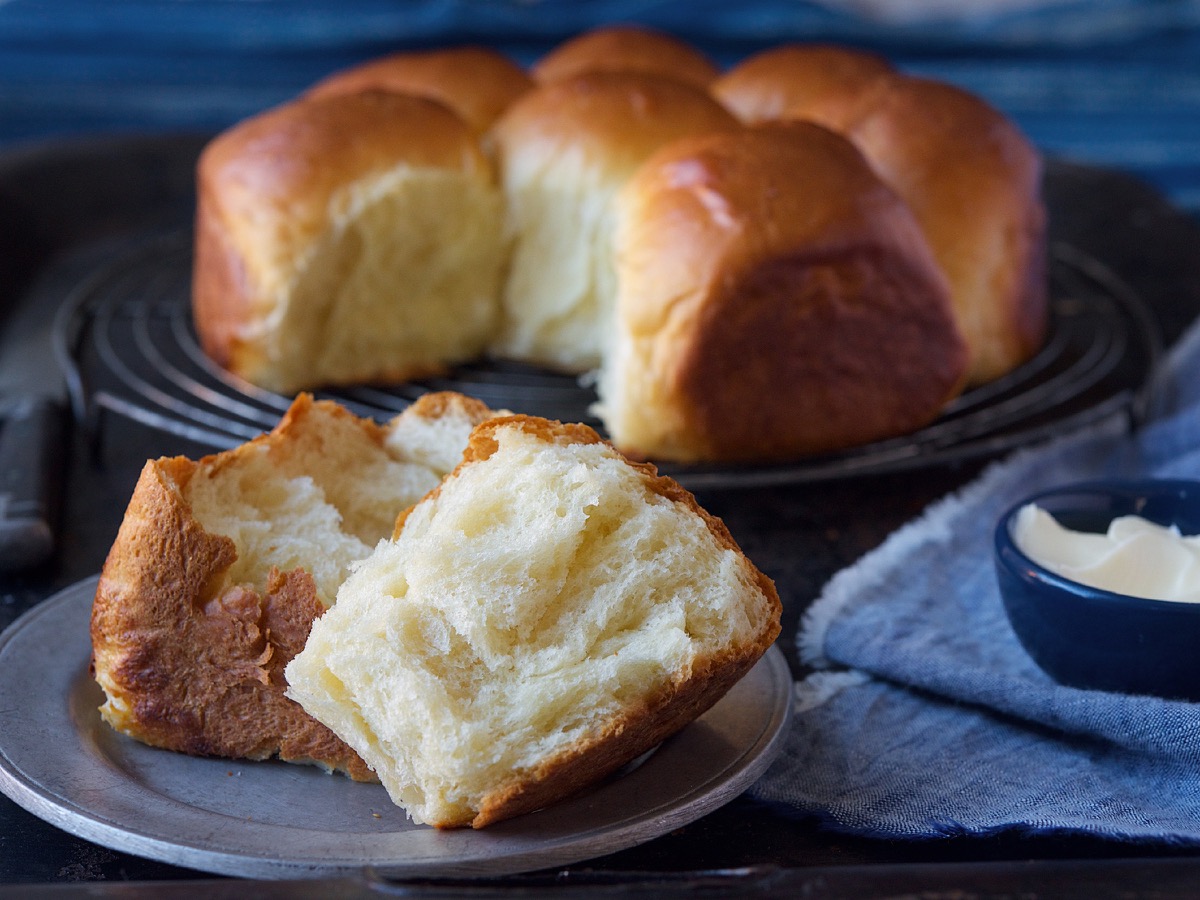
If you’ve tried our Japanese Milk Bread Rolls or Soft Cinnamon Rolls, you know how deliciously tender they are. And you’ve probably thought about trying tangzhong with some of your own favorite yeast recipes. Softer, moister dinner rolls? Nothing wrong with that.
How to build tangzhong into your favorite recipes So how, exactly, do you convert a standard yeast bread recipe to use tangzhong?
Thoughtfully.
Start by managing your expectations. Do you really want to pair tangzhong (soft, tender bread) with crusty baguettes or chewy bagels? That would be like making potato chips in a steamer: it goes against the nature of the beast.
It's important to choose an appropriate recipe: a yeast bread that’s inherently soft, tender, and light. Be it a white sandwich loaf or buttery dinner rolls, tangzhong will enhance bread’s texture, and keep it fresher longer
It all starts with hydration
Once you've chosen a recipe, you need to determine its hydration: the percentage of water (or other liquid) compared to flour, by weight. A dough’s hydration determines how stiff or soft it’ll be, and also influences how vigorously it rises. Finished loaves with low hydration are usually dense and dry; those with higher hydration, soft and moist.
To take a simple example, a recipe that includes 75g of water and 100g of flour has a hydration of 75%. Or here’s an example in American weights: a recipe using 1 cup water (8 ounces) and 3 cups flour (12 3/4 ounces) has a hydration of 63% (8 divided by 12 3/4).
Don’t have a scale? I highly recommend you acquire one, because trying the tangzhong technique without a scale requires quite a lot of extra effort converting volume to weight.
And by the way, if you are using an older recipe that most likely doesn't include ingredient weights, see our handy ingredients weight chart.

The typical sandwich bread or dinner roll recipe (like these Golden Pull-Apart Butter Buns) has a hydration level of around 60% to 65%.
But when you’re using the tangzhong method, you want your recipe’s hydration to be about 75%.
Why? Because when using tangzhong, some of the liquid in the dough is “trapped” by the pre-cooked slurry (the tangzhong), and thus plays no part in the dough’s texture; as far as hydration is concerned, it’s as if that liquid isn’t even there.
Let’s say your original recipe’s hydration is 60%. When you transfer some of its liquid to the tangzhong, the resulting dough will behave as if its hydration is much lower.
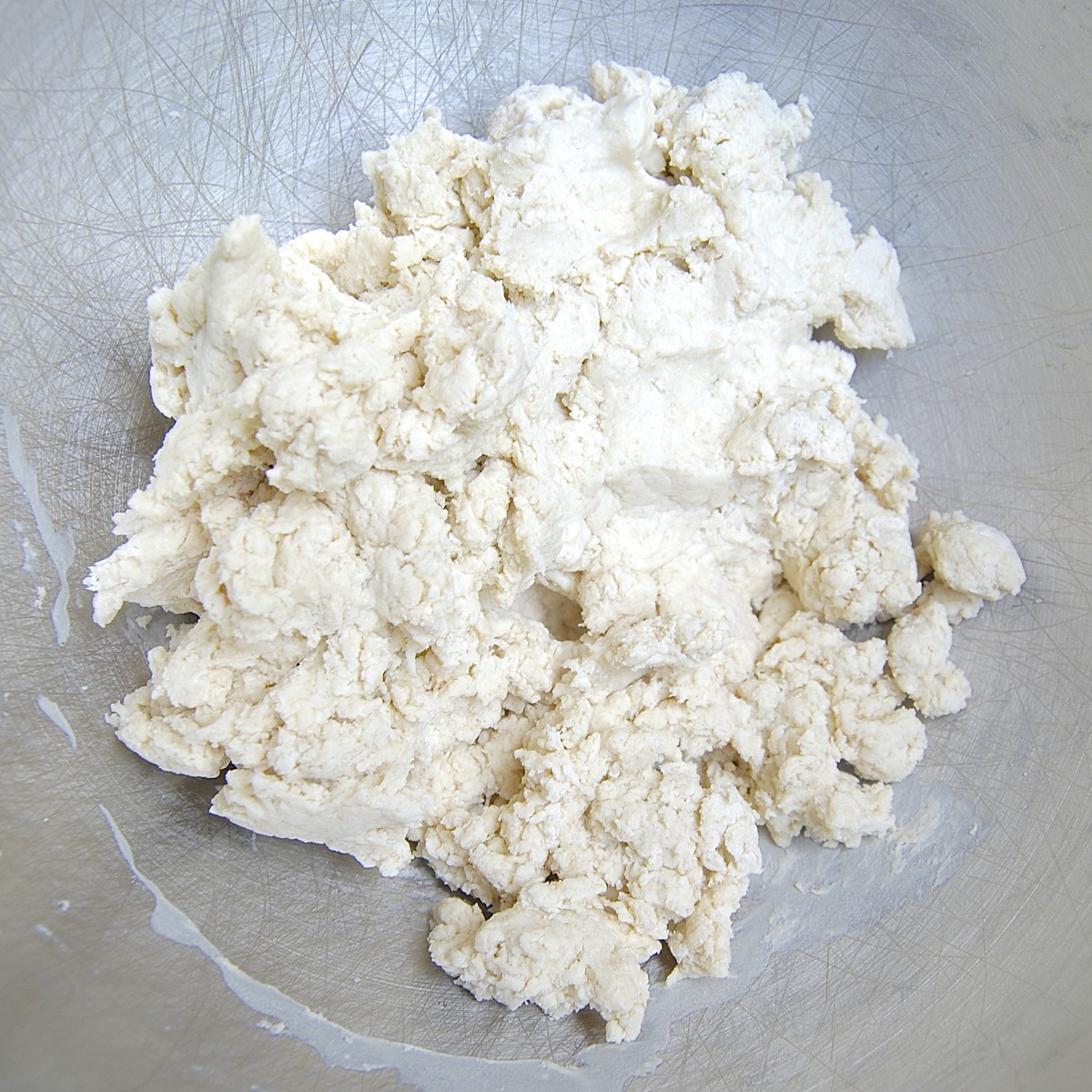
The dough will be stiff and dry, which can inhibit its rise and lead to dense, heavy bread.
So in order to wind up with dough that’s as soft and smooth as the original, you need to add more liquid initially.
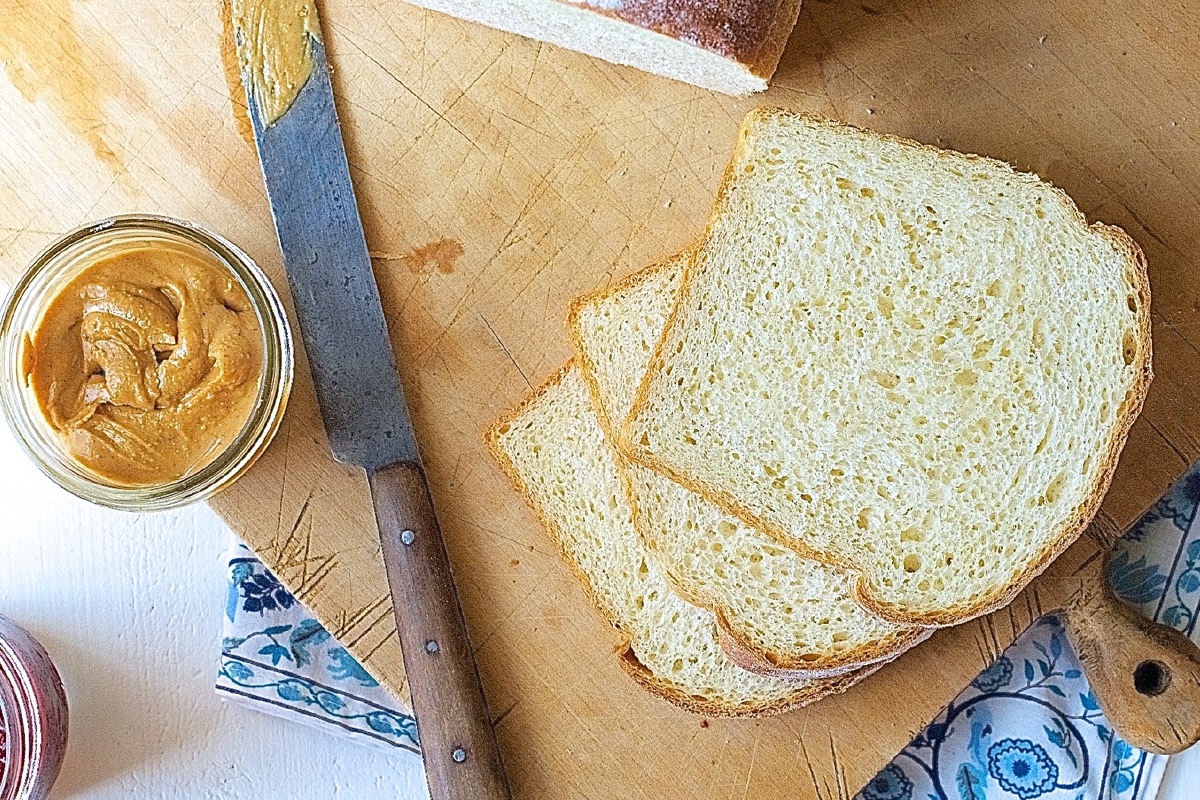
Test case: Our Favorite Sandwich Bread
Let’s convert this popular recipe to use tangzhong and see how it goes.
1 cup (227g) milk
2 tablespoons (28g) butter
2 teaspoons instant yeast
2 tablespoons (25g) sugar
1 1/4 teaspoons salt
3 cups (361g) King Arthur Unbleached All-Purpose Flour
What’s this dough’s hydration? 227g (weight of milk) divided by 361g (weight of flour) = 63% hydration.
But remember, in order to use tangzhong you want your hydration to be 75%: the liquid should equal 75% of the weight of the flour.
Do your arithmetic: 361g x .75 = 271g. So you want the amount of milk in the recipe to be 271g, not 227g. Result? You’ll add 44g additional milk to your recipe.
Making the dough
Let’s see how this works. I’ll make the recipe three ways:
First I make the tangzhong slurry, the cooked mixture of flour and liquid. A standard slurry uses between 5% and 10% of the flour in the recipe and is composed of one part flour to five parts liquid (by weight).
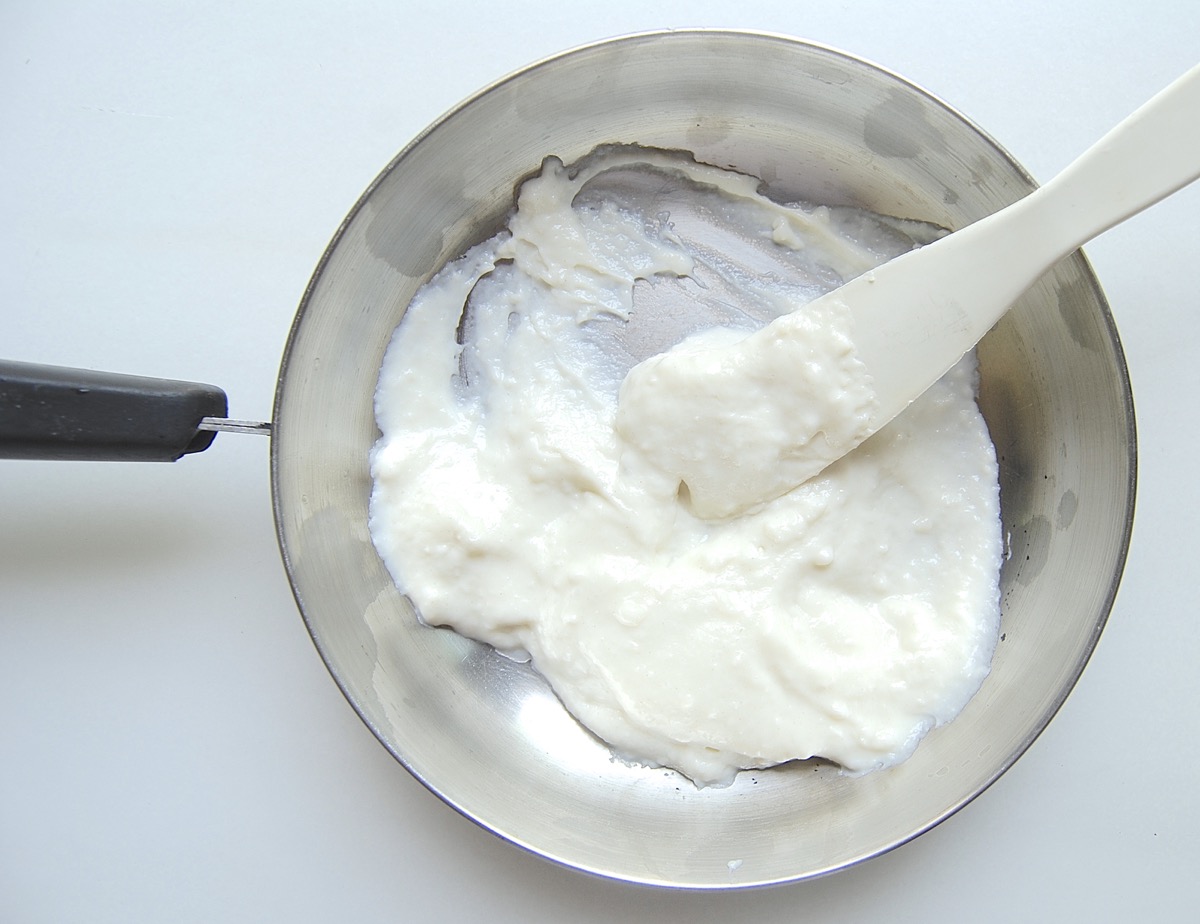
This slurry was made in a saucepan, but it's quickly and easily done in a microwave as well.
I’ve now made this standard slurry often enough that this is what I use for any yeast recipe calling for between 3 and 4 cups of flour: 3 tablespoons (23g) of the flour in the recipe + 1/2 cup (113g) of the liquid.
Remember, you're using flour and liquid from the recipe, not adding extra flour and liquid! Take that into account when you're measuring out the remaining flour and liquid for the dough.
For each of the test loaves using the slurry (B and C), I combine 23g of the recipe’s flour with 115g of the recipe’s milk. I cook the mixture over medium heat until it thickens, and put it into the mixing bowl to cool down a bit while I assemble the other ingredients.
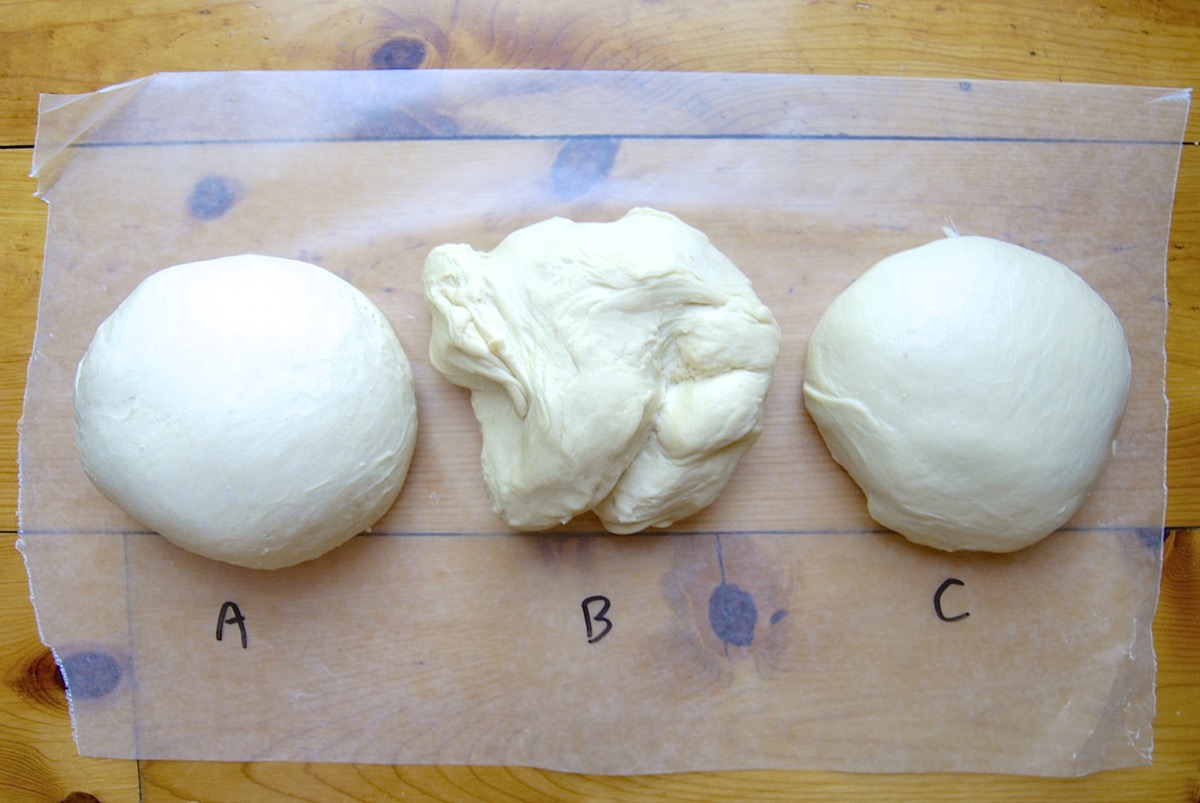
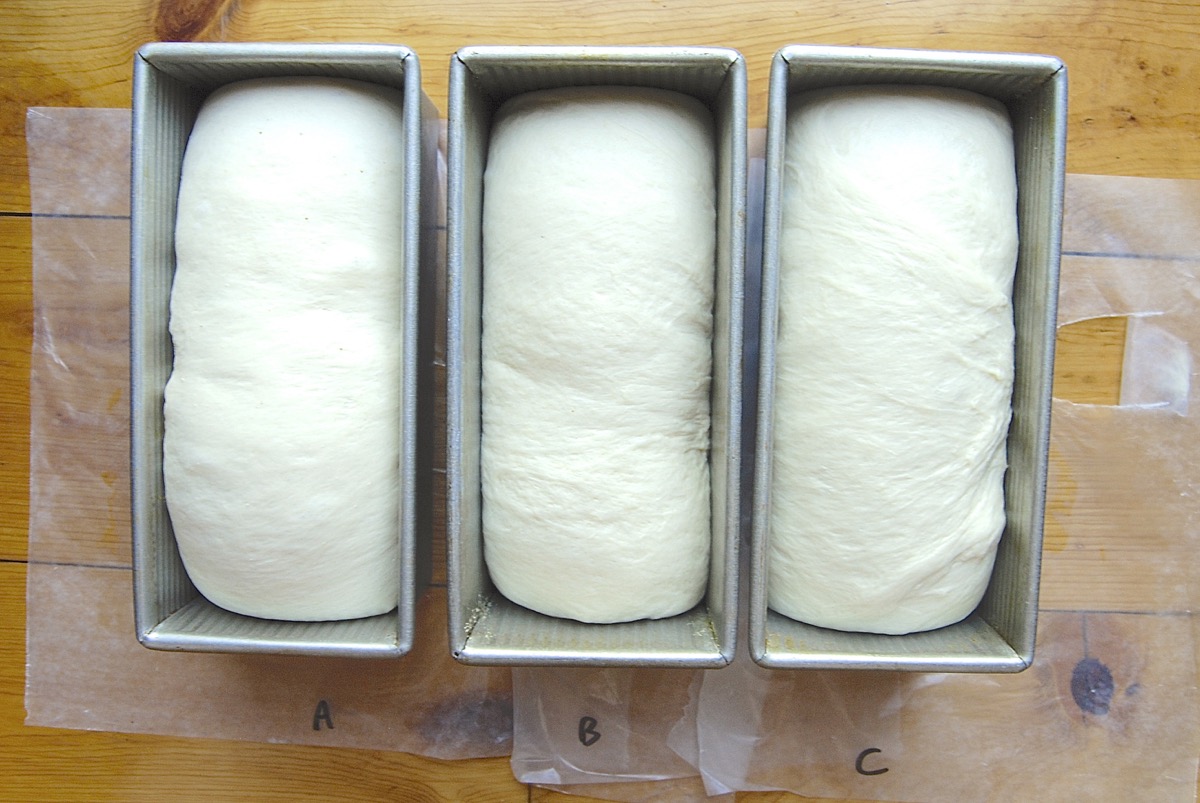
Next, I mix and knead the three doughs. (A), the control, is soft and smooth; (B), with the slurry but without any added milk, stiff and gnarly; and (C), with the slurry and added milk, very similar to (A), perhaps a bit softer.
Rising and baking
I let the doughs rise, then shape them into loaves and place each in an unlidded 9" pain de mie pan (my loaf pan of choice). I let the loaves rise, then bake them.
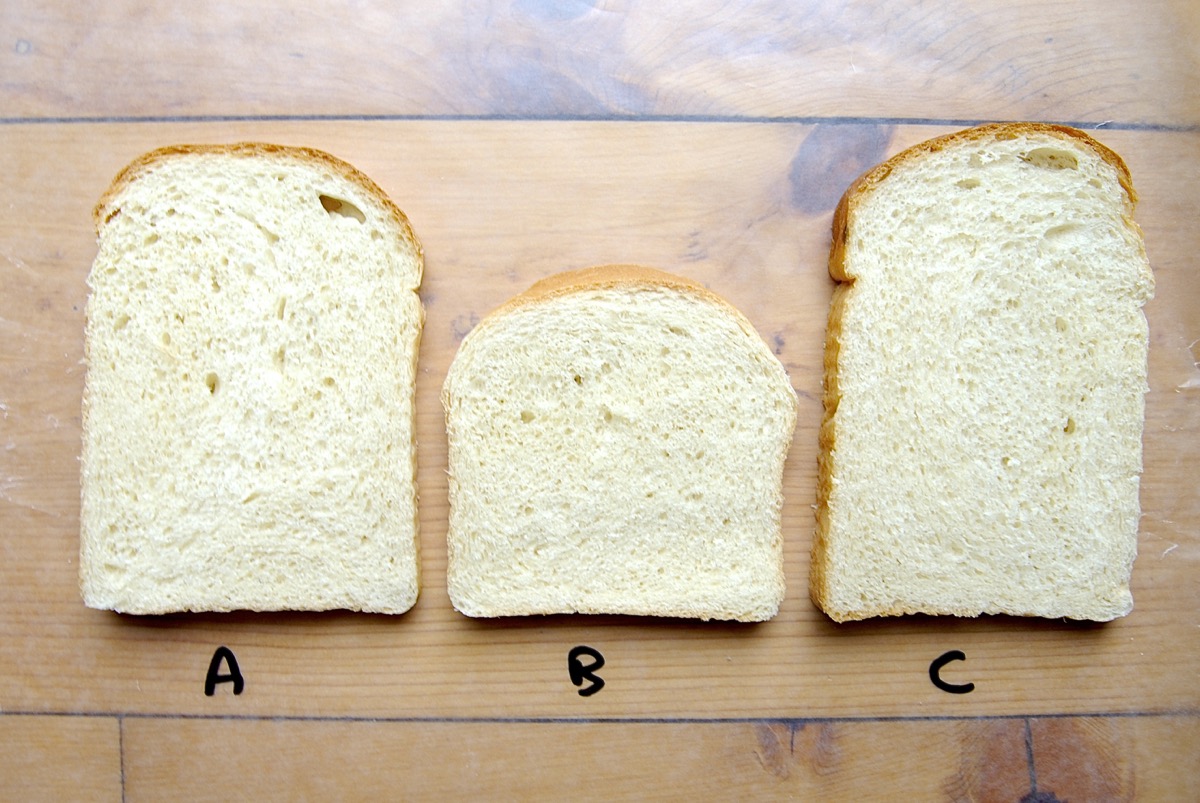
Look at the difference! (A), the original recipe, and (C), the added milk/slurry recipe, (C), rise beautifully. (B), the recipe using the slurry but without any added milk, rises much less.
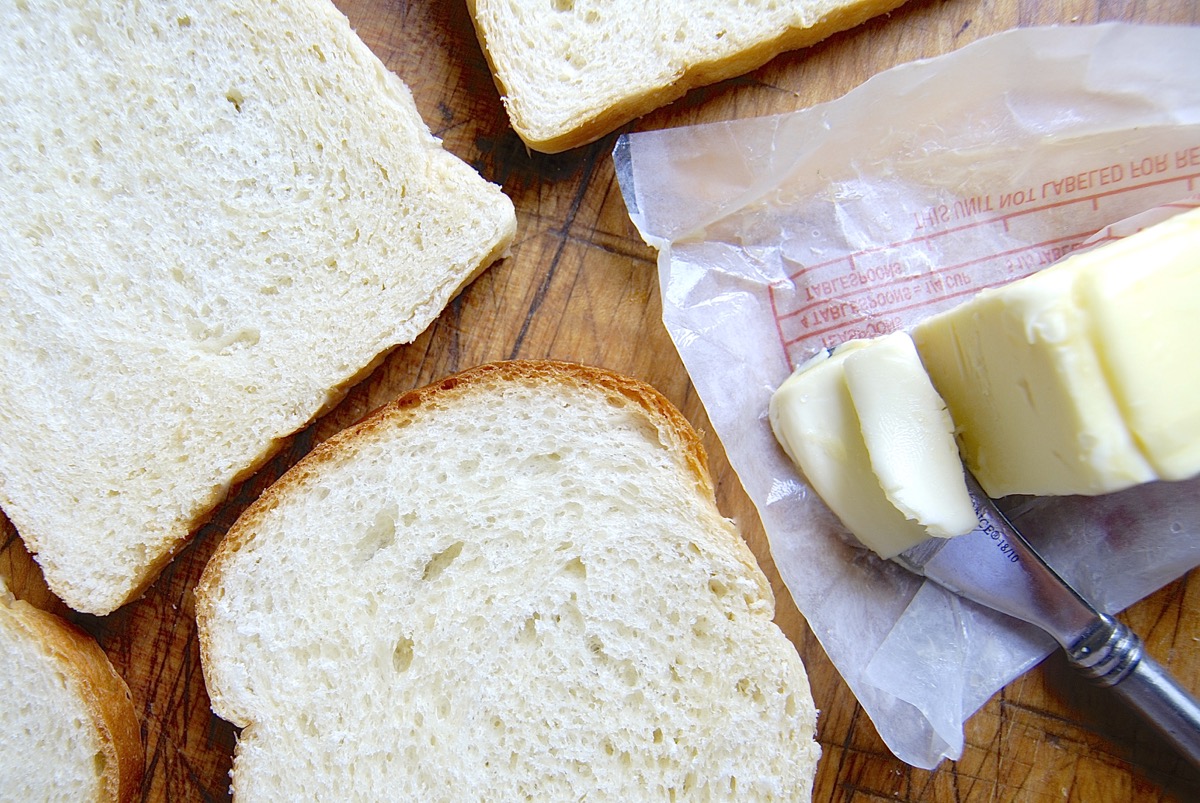
It’s impossible to photograph texture and moistness, but right out of the oven (C) is slightly moister and more tender than the original loaf (A). After a few days, (C), the loaf with the slurry, is still nice and fresh; while the original loaf is definitely showing signs of staleness.
Conclusion: 75% hydration + tangzhong is a winner
Bottom line: By bringing your favorite sandwich bread or dinner roll recipe to 75% hydration and then using tangzhong in the dough, you’ll make bread that’s softer, lighter, more tender, and with longer shelf life than the original.
Extra credit: determining water content
Once you feel comfortable with the basics of tangzhong, you can try fine-tuning your hydration math. While water is obviously 100% water, there may be other ingredients in your dough that are adding to its hydration: for instance, eggs or honey.
This fine-tuning is potentially only necessary in recipes that use a lot of butter and/or eggs, like brioche; or recipes with a significant amount of liquid sweetener.
Truthfully, most of my colleagues here at King Arthur consider simply the main liquid and flour when assessing a recipe's hydration. Because almost all of the time, that level of simplicity is fine: If your recipe includes just 2 tablespoons of butter, its minuscule water content isn't going to make or break your bread. Still, once you’ve got the calculator out, it’s fun to take this extra step towards accuracy.
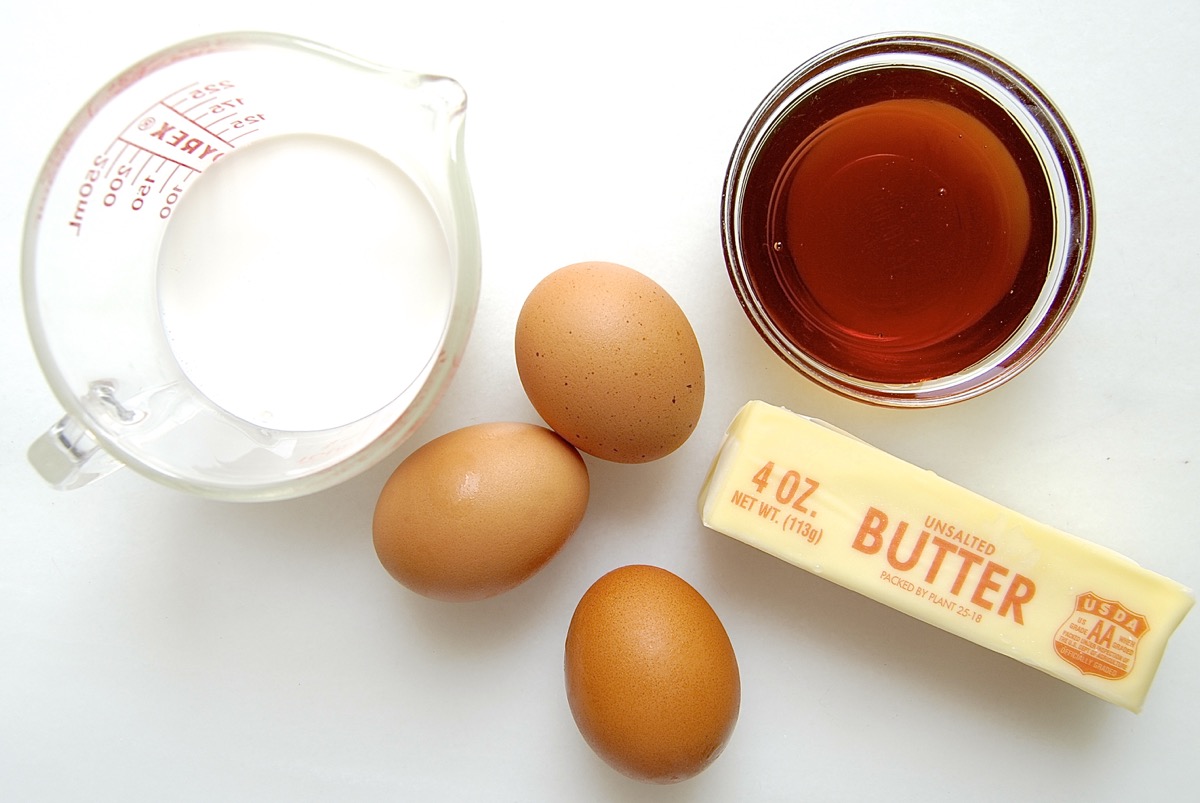
If you want to drill down with hydration, here’s a list of common yeast bread ingredients and their percentage of water:
Milk: 87% water
Large eggs: 74% water (1 large shelled egg weighs 50g)
Liquid sweeteners (e.g., honey): 17% water
American-style butter: 16% water
Vegetable oil: 0% water (100% fat)
Large eggs: 74% water (1 large shelled egg weighs 50g)
Liquid sweeteners (e.g., honey): 17% water
American-style butter: 16% water
Vegetable oil: 0% water (100% fat)
Use the information above to calculate how many grams of water are in any of these "rogue" ingredients in your recipe. Then add them to the total grams of the main liquid before calculating hydration.
A final note on hydration
A great variety of factors come into play when you're baking yeast bread, and some of these affect hydration. Keep the following in mind as you experiment with tangzhong:
Mashed potatoes or other mashed fruits/vegetables (pumpkin, squash) can affect dough's hydration. There's no way to judge their effect ahead of time; it's best to add them, then adjust dough's consistency with additional flour if necessary.
Hot/humid weather increases flour's moisture content; cold, dry weather makes flour drier. You'll typically use a bit less liquid in yeast recipes in summer, a bit more in winter; see our blog post, Winter to summer yeast baking.
Sourdough starter can be thick and viscous, quite thin, or anything in between. As with mashed vegetables, adjust the mixed dough's consistency as needed.
A final note on hydration
A great variety of factors come into play when you're baking yeast bread, and some of these affect hydration. Keep the following in mind as you experiment with tangzhong:
Mashed potatoes or other mashed fruits/vegetables (pumpkin, squash) can affect dough's hydration. There's no way to judge their effect ahead of time; it's best to add them, then adjust dough's consistency with additional flour if necessary.
Hot/humid weather increases flour's moisture content; cold, dry weather makes flour drier. You'll typically use a bit less liquid in yeast recipes in summer, a bit more in winter; see our blog post, Winter to summer yeast baking.
Sourdough starter can be thick and viscous, quite thin, or anything in between. As with mashed vegetables, adjust the mixed dough's consistency as needed.


No comments:
Post a Comment