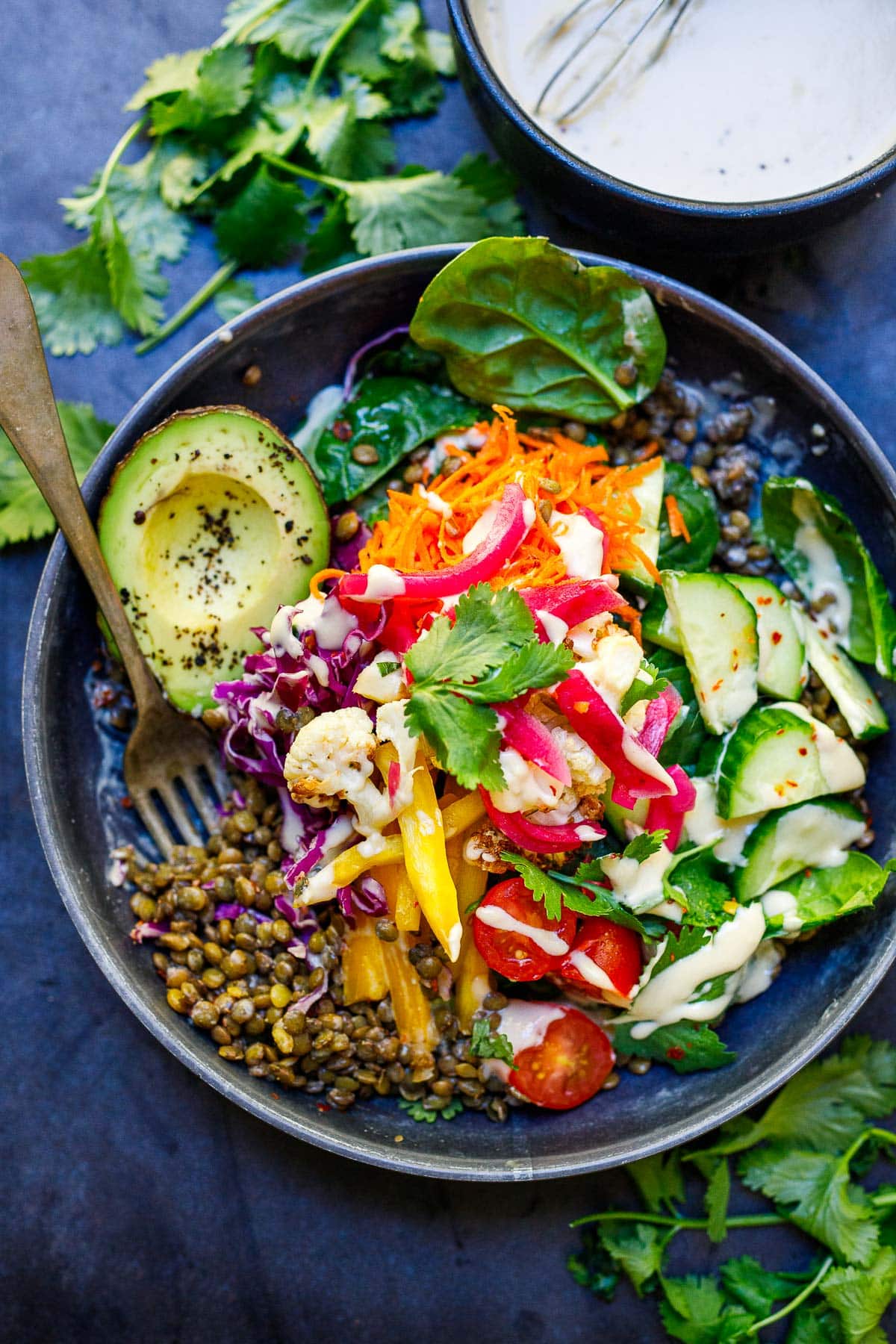
Buda Bowl With Lentils
These grain-free Lentil Bowls are so easy, nourishing and delicious! Made with seasoned lentils, fresh seasonal veggies, dark leafy greens, fresh herbs or micro-greens, nuts or seeds, avocado, and our favorite tahini sauce! Vegan, gluten-free and grain-free!What I enjoy about this Lentil bowl is how flavorful it is, how full of color, nutrients, and polyphenols it is, and how it feels satiating from all the fiber and protein. It is also very adaptable and can be altered depending on what you have in the fridge or what is in season.
Lentil Bowl Ingredients:Cooked Lentils- French green lentils, black lentils, brown lentils, or any whole, cooked lentils. We will season these simply with olive oil, salt, cumin, Aleppo chili flakes, and a squeeze of lemon juice.
Greens: Spinach, arugula, Lacinato kale, or Swiss chard, etc.
A rainbow of Vegetables: shredded carrots or beets, roasted cauliflower (I used this leftover roasted cauliflower from last night’s dinner), broccoli, bell pepper, cucumber, tomatoes, cabbage, etc.
Herbs or microgreens: cilantro, mint, dill, basil, Italian parsley, etc.
Nuts or seeds: toasted slivered almonds, sunflower seeds, hemp hearts, pumpkin seeds, walnuts, etc.
Tahini Sauce: Make a whole batch and use it for other things! You’ll need tahini paste, olive oil, lemon juice, fresh garlic, salt and pepper)
Optional additions: Avocado, Pickled Red Onion, fermented sauerkraut or this beet kraut,
Recipe from Feasting At Home!
Greens: Spinach, arugula, Lacinato kale, or Swiss chard, etc.
A rainbow of Vegetables: shredded carrots or beets, roasted cauliflower (I used this leftover roasted cauliflower from last night’s dinner), broccoli, bell pepper, cucumber, tomatoes, cabbage, etc.
Herbs or microgreens: cilantro, mint, dill, basil, Italian parsley, etc.
Nuts or seeds: toasted slivered almonds, sunflower seeds, hemp hearts, pumpkin seeds, walnuts, etc.
Tahini Sauce: Make a whole batch and use it for other things! You’ll need tahini paste, olive oil, lemon juice, fresh garlic, salt and pepper)
Optional additions: Avocado, Pickled Red Onion, fermented sauerkraut or this beet kraut,
Recipe from Feasting At Home!


