Showing posts with label Pie Crust. Show all posts

Friday, September 26, 2025

Shrimp Pie


Shrimp Pie

Shrimp pie, much like shrimp quiche, is a popular favorite in coastal regions of the South because it makes brilliant use of tender, meaty shrimp, and it provides an elegant alternative to more classic brunch choices. The Florida shrimp pie, however, elevates the more streamlined shrimp pie into one that's richly flavorful and creamy—thanks to one ingredient: Boursin cheese.

Ingredients
1/2 (14.1-oz.) pkg. refrigerated pie crust
1 Tbsp. butter
1 lb. uncooked large shrimp, peeled, deveined, and coarsely chopped
1 (5.3-oz.) package garlic and fine herbs spreadable cheese (such as Boursin)
1/4 tsp. kosher salt
1/4 tsp. black pepper
4 large eggs
3/4 cup half-and-half
2 oz. pepper Jack cheese, shredded (1/2 cup)

Chopped parsley, for garnish (optional)
Directions:
  1. Preheat oven to 375°F. Gather all ingredients.

    Unroll pie dough; roll into a 12-inch circle on a lightly floured surface. Fit dough into a 9-inch deep-dish pie plate. Fold edges under and flute. Pierce dough all over with a fork.
    Line dough with parchment paper and top paper with pie weights. Bake at 375°F for 15 minutes. Carefully remove parchment paper and pie weights and return pie crust to oven. Bake until lightly browned on the bottom, 7 to 9 minutes. Remove pie crust from oven.
    Reduce oven temperature to 350°F. Melt butter in a medium skillet over medium-high heat. Add shrimp to pan; cook until shrimp are just barely done, 2 to 3 minutes.
    Place spreadable cheese in a large bowl; beat with an electric mixer on medium speed until smooth, 1 to 2 minutes. Add salt, pepper, and eggs; beat on medium speed until well blended, about 1 minute. With mixer on low speed, gradually add half-and-half.
    Arrange shrimp in bottom of pie crust; top evenly with pepper Jack.Pour egg mixture into crust.
    Bake at 350°F until set, 35 to 40 minutes, shielding edges of pie crust after 25 minutes if necessary.
    Remove pie from oven; let cool for 10 minutes before serving. Sprinkle with parsley, if desired.

Friday, November 15, 2024

Patty's Pumpkin Chiffon Pie

 Patricia Ann Thompson\

Pa

Patty's Famous Pumpkin Chiffon Pie.

This post is not just a post of a pumpkin chiffon pie but the recipe of someone who was very special to me and everyone whoever met her.  Patty was a person who cared about you and your welfare.  No task was too great, she got it done.  Patty and her husband Tom had such an enviable loving relationship.  Tom would say they were going on a date.  That was how Tom described a trip to Costco.  Patty was the loving mother of three children and eight grandchildren and a neighbor with a heart of gold!
Ingredients:
1 9-inch pie crust, baked and reserve
1 envelope unflavored gelatin
1/2 cup sugar
1/2 teaspoon salt
1/2 teaspoon cinnamon
1/2 teaspoon allspice
1/4 teaspoon ginger
1/4 teaspoon nutmeg

Directions:
Combine the gelatin and spices in a bowl and set aside.

In a medium size pot combine:
3/4 cup milk
2 egg yolks slightly beaten, save the whites for later
1 cup canned pumpkin (not pie filling)
Stir to mix well, then add the spices and gelatin mixture.

Heat over medium-high heat stirring once or twice until mixture boils. Remove from heat and place in bowl.  Refrigerate until semi-firm,

Whip the two egg white to stiff peaks then turn the blender to low and gradually add 1/4 cup sugar.  In a big bowl fold the egg whites with 1/2 cup whipping cream whipped.  Blend the chilled pumpkin mixture into the Whipped Cream mixture.  Pour into 9 inch baked pie crust.  If you wish, top with whipped cream to make it more festive.

Patty Ann Thompson

11-15-1956  - 10-1-2024


Wednesday, June 7, 2023

Old Fashioned Sugar Cream Pie

Old Fashioned Sugar Cream PieThis Old Fashioned Sugar Cream Pie is creamy and sweet, with a texture similar to crème brûlée. It uses simple ingredients and takes just a few minutes to prepare. Ingredients:
1 pie crustCustard:1/3 cup cornstarch1 cup granulated sugar5 tbsp butter3 cups heavy cream1 tbsp vanilla1 pinch table saltTopping2 tbsp melted butter2 tbsp granulated sugar1 tsp cinnamon2 tbsp melted butter2 tbsp granulated sugar1 tsp cinnamonDirections:Roll pie crust dough into an 11-inch circle. Place in a pie pan, pressing out any air pockets. Prick the bottom and sides of the pie crust with a fork. Line with parchment paper and fill the crust with pie weights or dried beans. Bake according to your pie crust recipe directions for a single-crust baked pie shell, then cool completely.
In a medium saucepan, whisk sugar and cornstarch together. Add cream and butter to the pan and cook over medium heat, whisking continually. Bring the mixture to a boil and then cook one minute longer.
Remove from heat and whisk in the vanilla extract. Pour the cream mixture into the cooled pie crust and smooth using a spoon or spatula. Pour the melted butter over the top of the pie. Combine 2 tablespoons of sugar with 1 teaspoon of grond cinnamon and sprinkle evenly over the top of the butter. 
Place the pie on the top rack of your oven and broil for 1-2 minutes, until the sugar crystallizes and browns. Watch carefully so you don't burn your pie!
Remove from oven and cool to room temperature Store pie in the refrigerator.
Notes:Storage: Cover the pie tightly with plastic wrap and store in the refrigerator for up to 7 days.
Tips:Whisk the custard continuously, using care to scrape the bottom of the pan regularly, so that the mixture does not burn.
Place a pie shield over the crust before broiling. This step will keep your crust from burning.
Use a pie plate that is safe for broiling. I have never had a problem with a standard glass pie plate, but it is possible that the high heat could cause the glass to shatter.

Sunday, February 28, 2021

German Chocolate Pie


German Chocolate Pie
Ingredients
1 pie crust
1 package (4 oz) sweet baking chocolate, chopped
1/4 cup butter or margarine
1 can (12 oz) evaporated milk
1 1/2 cups sugar
2 tablespoons cornstarch
1/8 teaspoon salt
4 egg yolks
1/2 teaspoon vanilla
1/4 teaspoon almond extract
1 cup flaked coconut
1 cup chopped pecans

Directions:
Heat oven to 375°F. Place pie crust in 9-inch glass pie plate as directed on box for One-Crust Filled Pie. In 1-quart saucepan, heat chocolate and butter over medium-low heat until melted and mixture can be stirred smooth. Remove from heat; gradually stir in milk.

In medium bowl, mix sugar, cornstarch and salt. In small bowl, mix egg yolks, vanilla and almond extract. Gradually add chocolate mixture to egg mixture, stirring with wire whisk. Add chocolate-egg yolk mixture to cornstarch mixture, stirring with whisk. Pour filling into crust-lined plate.

In small bowl, mix coconut and pecans; sprinkle over filling.

Bake 45 to 50 minutes or until puffed and almost set. Cool completely on cooling rack, about 4 hours.

Tuesday, December 8, 2020

Dark Chocolate Peanut Butter Pretzel Crunch Pie.


Dark Chocolate Peanut Butter Pretzel Crunch Pie

Ingredients:

Pie Ingredients:

1 unbaked 9-inch piecrust

4-ounces bar dark chocolate

1/3 cup plus 2 tablespoons sugar

2/3 cups whole milk, divided

¾ cup smooth peanut butter

¼ teaspoon salt

1 teaspoon unflavored powdered gelatin

1.5 cups heavy cream


Pretzel Crunch

4 ounces pretzel sticks

1/3 cup packed light brown sugar

½ teaspoon salt

7 tablespoons unsalted butter, melted


Directions:


Prepare and bake the piecrust follow the directions in your recipe. Cool completely. 

Coarsely chop the chocolate and place in a medium sized bowl. 

Combine the sugar and 7 tablespoons milk in a saucepan. Heat over a low heat until steaming, but do not allow the mixture to boil. Whisk in the peanut butter until smooth. 

Take the pan off the heat and pour over the chocolate, whisking until the chocolate is melted and the mixture is smooth. Stir in the salt. 

Pour the remaining milk into a small microwavable bowl. Sprinkle the gelatin over the top and let it set for five minutes. Microwave at half-power for 10 seconds to ensure the gelatin is melted. If needed, whisk lightly.
Whisk the gelatin mixture into the chocolate mixture. Cool this new mixture to room temperature, stirring every once in a while to ensure it cools evenly. Do not leave this mixture sitting around after it cools or it will get too thick! 

Whip the whipping cream with an electric mixer until medium peaks form. Gently fold this mixture into the chocolate mixture in thirds, making sure no white streaks remain. Spoon this mixture into the prepared pie crust. Cover with plastic wrap and chill at least 8 hours, but preferably overnight.

To serve, remove the plastic wrap and sprinkle the pretzel crunch mixture over the top. Slice and serve.


To make the pretzel crunch:


Preheat the oven to 325 with a rack in the center of the oven. 

Line a baking sheet with parchment paper. 

In a medium bowl, toss all the ingredients until evenly coated.

Recipe shared by my cousin Carla Myers.

Saturday, November 21, 2020

Perfect Pie Crust

 Perfect Pie Crust

Ingredients:
For 9" Double Pie Crust
1 3/4 cups unbleached, all-purpose flour
1 teaspoon kosher salt, or 1/2 teaspoon table salt
1/2 cup plus 1 teaspoon vegetable, canola, or other neutral oil
4 tablespoons ice water
1/4 cup milk (of any sort, to top the unbaked pie to encourage browning)

For 10"Dlouble Pie Crust
2 2/3 cup unbleached, all-purpose flour
1 1/2 teaspoons kosher salt, or 3/4 teaspoon table salt
3/4 cup plus 1-2 teaspoons vegetable, canola or other 
   neutral oil.
5 - 6 tablespoons ice water
1/4 cup milk (of any sort)


Directions:
In a medium bowl, whisk together the flour and salt. Add the oil, all but the extra teaspoon, and lightly stir with a metal spoon until most of the flour is incorporated and pea-sized meal forms. There will be some larger clumps of dough too.

Add the water 1 tablespoon at a time, incorporating after each addition. The dough should be soft and pliable, not cracking and dry. Add another teaspoon of oil to get there if needed, but do not add extra water. Divide the dough in half.

Tear off two 15” sheets of waxed paper. Wipe the work surface with a sponge dampened with cold water to keep the paper from slipping. Place one sheet of waxed paper on the damp surface lengthwise in front of you, and place half of the dough in the center of the paper. Shape the dough into a flat disk and cover with the other sheet of paper lengthwise.

Roll the dough, starting from the center of the disk and working your way out in every direction (think of working around the clock). The dough and paper do not turn; they stay fixed. As the rolling pin moves to the outer edges of the dough, be careful not to press to hard or else the dough will get too thin at the edges. Press more in the center, less at the edges, as you roll.

Roll the dough 2 inches larger than the pie pan, making room for the dough to slide down into the pan and still cover the rim. The crosswise edges of the waxed paper can serve as a guide at 12 inches. Roll to that edge for a 10” crust, and just inside at 11 inches for a 9” crust. If the dough is rolled beyond the waxed paper, just scrape under it with a thin, sharp knife or spatula to loosen it before picking the crust up off the counter.

Peel off the top piece of waxed paper and discard. Place the pie plate right next to the crust. Pick up the crust with its paper and invert it over the pie plate. Move the crust to arrange it evenly over the rim of the plate. Remove the waxed paper and discard. Gently lift the edges of the crust and ease the crust into the pan. Trim the crust all the way around the rim right up against the rim. If an area is short of the rim, patch it with trimmings.

Fill the pie with filling (usually 5-6 cups of sugared fruit with some starch like flour or cornstarch or tapioca to hold it together), then roll the second half of the dough for the top crust just as you did the bottom crust, but roll this circle slightly smaller than the bottom crust (about an inch smaller). After the top crust has been arranged over the pie, trim the crust so that there is ½-1 inch overhang of the top crust beyond the rim. Tuck that overhang under the bottom crust all around the rim. This seals the pie and prevents drips.

Crimp the edges of the pie in a rope design: place your thumb on the pastry rim at an angle and firmly pinch the dough between thumb and bent index finger. Push down into the rim as you pinch. Make the next pinch with thumb resting against the last pinched edge.

Cut vents decoratively in the top. Rub or brush the entire top of the pie with milk. Cover the edges of the pie with a pie guard or pieces of foil, crunching it well so it stays in place. The foil is not a perfect science; just get it to cover as much of the edge as possible.

Bake as directed depending on your pie filling. A general rule is 425 degrees for 50 minutes or so, until a fruit filling is bubbling vigorously and the crust is golden brown. Remove from the oven and cool; the filling will firm up some as the pie cools, so it's always best to bake your pies early in the day on the day they will be served.. Serve lukewarm or at room temperature. The pie will keep on the kitchen counter for a couple of days, loosely covered with waxed paper or foil.


Sunday, August 18, 2019

Vegan Flakey Pie Crust


Ingredients:
1 3/4 cups unbleached, all-purpose flour
1 teaspoon kosher salt, or 1/2 teaspoon table salt
1/2 cup plus 1 teaspoon vegetable, canola, or other neutral oil
4 tablespoons ice water
1/4 cup milk (of any sort, to top the unbaked pie to encourage browning)
FOR 10” DOUBLE CRUST PIE:
2 2/3 cup unbleached, all-purpose flour
1 1/2 teaspoons kosher salt, or 3/4 teaspoon table salt
3/4 cup plus 1-2 teaspoons vegetable, canola or other neutral oil
5 - 6 tablespoons ice water
1/4 cup milk (of any sort)


Directions
In a medium bowl, whisk together the flour and salt. Add the oil, all but the extra teaspoon, and lightly stir with a metal spoon until most of the flour is incorporated and pea-sized meal forms. There will be some larger clumps of dough too.

Add the water 1 tablespoon at a time, incorporating after each addition. The dough should be soft and pliable, not cracking and dry. Add another teaspoon of oil to get there if needed, but do not add extra water. Divide the dough in half.

Tear off two 15” sheets of waxed paper. Wipe the work surface with a sponge dampened with cold water to keep the paper from slipping. Place one sheet of waxed paper on the damp surface lengthwise in front of you, and place half of the dough in the center of the paper. Shape the dough into a flat disk and cover with the other sheet of paper lengthwise.

Roll the dough, starting from the center of the disk and working your way out in every direction (think of working around the clock). The dough and paper do not turn; they stay fixed. As the rolling pin moves to the outer edges of the dough, be careful not to press to hard or else the dough will get too thin at the edges. Press more in the center, less at the edges, as you roll.

Roll the dough 2 inches larger than the pie pan, making room for the dough to slide down into the pan and still cover the rim. The crosswise edges of the waxed paper can serve as a guide at 12 inches. Roll to that edge for a 10” crust, and just inside at 11 inches for a 9” crust. If the dough is rolled beyond the waxed paper, just scrape under it with a thin, sharp knife or spatula to loosen it before picking the crust up off the counter.

Peel off the top piece of waxed paper and discard. Place the pie plate right next to the crust. Pick up the crust with its paper and invert it over the pie plate. Move the crust to arrange it evenly over the rim of the plate. Remove the waxed paper and discard. Gently lift the edges of the crust and ease the crust into the pan. Trim the crust all the way around the rim right up against the rim. If an area is short of the rim, patch it with trimmings.

Fill the pie with filling (usually 5-6 cups of sugared fruit with some starch like flour or cornstarch or tapioca to hold it together), then roll the second half of the dough for the top crust just as you did the bottom crust, but roll this circle slightly smaller than the bottom crust (about an inch smaller). After the top crust has been arranged over the pie, trim the crust so that there is ½-1 inch overhang of the top crust beyond the rim. Tuck that overhang under the bottom crust all around the rim. This seals the pie and prevents drips.

Crimp the edges of the pie in a rope design: place your thumb on the pastry rim at an angle and firmly pinch the dough between thumb and bent index finger. Push down into the rim as you pinch. Make the next pinch with thumb resting against the last pinched edge.

Cut vents decoratively in the top. Rub or brush the entire top of the pie with milk. Cover the edges of the pie with a pie guard or pieces of foil, crunching it well so it stays in place. The foil is not a perfect science; just get it to cover as much of the edge as possible.

Bake as directed depending on your pie filling. A general rule is 425 degrees for 50 minutes or so, until a fruit filling is bubbling vigorously and the crust is golden brown. Remove from the oven and cool; the filling will firm up some as the pie cools, so it's always best to bake your pies early in the day on the day they will be served.. Serve lukewarm or at room temperature. The pie will keep on the kitchen counter for a couple of days, loosely covered with waxed paper or foil.

Friday, September 21, 2018

Pie Crust

OUR FAVORITE, FORGIVING PIE CRUST
Prep: 20 minutes
Chill: 1 hour
Makes enough for a double crust 10-inch pie
2 1/2 cups unbleached flour
1 tablespoon sugar
1 teaspoon salt
1/2 cup unsalted butter, very cold
1/2 cup transfat-free vegetable shortening, frozen
1. Put flour, sugar and salt into a food processor. Pulse to mix well. Cut butter and shortening into small pieces and sprinkle them over the flour mixture. Use on/off pulses with the food processor to blend the fats into the flour. The mixture will look like coarse crumbs.
2. Put ice cubes into about 1/2 cup water and let the water chill. Remove the ice cubes and drizzle about 6 tablespoons of the ice water over the flour mixture. Briefly pulse the machine just until the mixture gathers into a dough.
3. Dump the mixture out onto a sheet of wax paper. Gather into two balls, one slightly larger than the other. Flatten the balls into thick disks. Wrap in plastic, and refrigerate until firm, about 1 hour. (Dough will keep in the refrigerator for several days.)

Monday, July 25, 2016

Pie Crust Mixture

1 lb shortening
5 cups flour
2 teaspoons salt
1 teaspoon baking powder*

When ready to make crust, add the water or ginger-ale.

Baking Powder optional.

Enough for 4 single crusts.

Sunday, August 16, 2015

Flaky Tender Pie Crusts: Two Quick Tips


Flaky, Tender Pie Crusts:  Two Quick Tips
IMG_6831


Who makes perfectly tender, flaky pie crust, time after time after time?

OK, don’t all raise your hands at once!

Making wonderful pie crust is one of those skills learned, honed, practiced, lost, and rediscovered over a lifetime. If you’re one of the lucky bakers who has the process down pat, congratulations – and bear with the rest of us, who are still on the path to enlightenment.

After over three decades of pie baking, I still occasionally produce a flop: a crust that’s hard as concrete, solid as sheet rock, and not at all worthy of its filling. But there are two things that, when I remember to do them, produce a reliably excellent crust.

OK, are you ready? Here goes.
1) I use this recipe: 


Classic Double Pie Crust.
2 ½ cups King Arthur Unbleached All-Purpose Flour or Perfect Pastry Blend**
  • 1 1/4 teaspoons salt*
  • ¼ cup vegetable shortening
  • 10 tablespoons very cold unsalted butter
  • 6 to 10 tablespoons ice water**
  • *Reduce the salt to 1 teaspoon if you use salted butter.
  • **Use the lesser amount of water if you use Perfect Pastry Blend.

topping (optional)


  • 1 teaspoon milk
  • 1 tablespoon coarse sparkling sugar
And what’s so special about this particular recipe?
•Its combination of two fats – butter and shortening. Shortening gives the crust structure, keeping those pretty crimps in shape and preventing the crust from sagging. And butter adds its signature flavor. Both fats contribute to flakiness.


•Its amount of flour – enough to roll out two generous crusts, crusts that’ll fill your 9” pan without having to be stretched, which is the root of all kinds of evil – did you know stretching is the chief reason crust shrinks as it bakes?


•Its amount of water. Read: not much. Water is the enemy of flakiness; the less water in your crust, the better.

2) Water is added sparingly, using a spray bottle.
Well, don’t you just kinda stir it in?
Yes, but simply adding water to your bowl of flour and fat encourages you to add too much. The dough won’t come together, so what do you do? Add another couple of tablespoons of water.


In my ongoing experience, if you add enough water for the dough to be lovely and silky and pliable – you’ve added too much.


So what’s the solution?

IMG_6259
A spray bottle.
Once your flour and fats are combined, and you’ve added enough water that large clumps have started to form – but the dough isn’t holding together yet – dump everything out onto a sheet of parchment or waxed paper.

pie2
Spray the crumbly dough with a light mist of water,
paying special attention to any dry/floury spots.

Using the paper, fold the dough over on itself a couple of times to make a rough rectangle. Fold the ends into the center, too, to make a fatter rectangle.

IMG_6262
Divide the dough in half.
pie3
Shape each rough square into a disk. The dough will still feel dry; little pieces will keep flaking off. Just gather them up and gently squeeze them back into the mass.

Wrap your dough disks in the paper or in plastic wrap, and refrigerate for at least 30 minutes.

pie4
During this step, the gluten in the flour will relax; the water will redistribute itself; and the fats will harden.
The result?
The relaxed gluten will allow you to roll the crust without it shrinking back and fighting you. The dough that seemed so dry just 30 minutes before will feel much smoother. And the hardened fats will work with the flour to form a flaky crust.

IMG_6122
Now, is this not a thing of beauty and a joy forever?
Not only is the crust a pleasure to roll (no tearing or falling apart); and large enough to cover the pan, even with a nice, tall crimp…
IMG_7824
…it makes a dynamite pie.
Now, this picture will never appear on the cover of Saveur
IMG_1539
…but look at that texture!
Now THAT’S a tender, flaky pie crust.

Wednesday, December 19, 2007

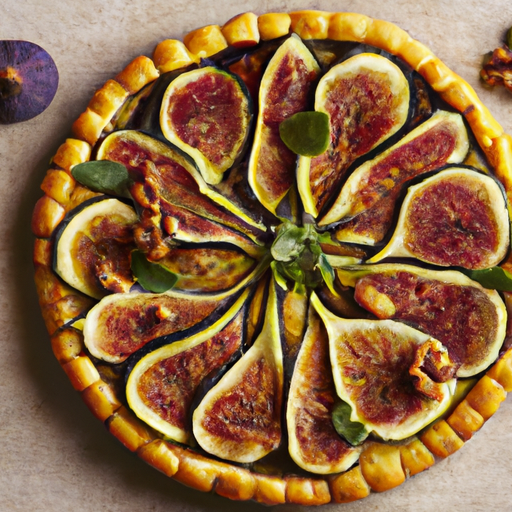
Roasted Fig And Walnut Tart ..... "Oh Bring Us Some Figgy Pu" .. Make it Tart!

Mediterranean Fig And Walnut Tart Recipe
Roasted Fig And Walnut Tart
My mother believed in the medicinal benefits of eating figs. She often purchased Fig Newtons at the A and P Store. I grew up liking the bar cookies. On one of my first trips to Milano, our son-in-law Silvano treated me to fresh figs and prosciutto. That was a delightful treat. As you can tell I do enjoy figs. Several years ago, I read a book written by a distant cousin on the genealogy of my paternal grandfather's lineage. One of my granddad's great aunts was a cook for Queen Victoria as the family originated in London. I have wondered what capacity she served. Was she the pastry chef who prepared the Queen's High Tea with sandwiches and crumpets? The author wrote the family had the queen's recipe for the either Plum Pudding or the Figgy Pudding from the kitchen of Queen Victoria. I read this several years ago so I can't recall just which it was. I sometime later telephoned the late author to learn if she knew of anyone who might have that recipe. The author was 94 at that time and in a Nursing Home living in the assisted living area. She was unable to know if the recipe survived the years and generations. Good try on my part!!! This recipe is as close as I will come to Figgy Pudding. The Mission Fig which is black grows so abundantly here in California? Oh, are they sweet and juicy!
***
Ingredients:
Pastry:
1 cup all purpose flour
1/4 cup icing sugar
pinch salt
1/3 cup cold unsalted butter, cut into pieces
2 Tablespoons cold water
1 large egg yolk
***
Filling:
2/3 cup walnuts
1/3 cup sugar
1/4 cup unsalted butter, softened
2 large egg yolks
1/2 teaspoon lemon zest
1 Tablespoon flour
12 to 15 large black figs
1/4 cup apricot jam
***
Directions:
Combine flour, sugar and salt in a medium bowl or a food processor, add butter and cut or pulse in in until it resembles small peas. Beat water and egg yolk together until uniform and add just enough to bring the pastry together into a ball (it may be slightly more or less liquid depending on the level of humidity in air). Wrap pastry in plastic and chill for at least 30 minutes.
Preheat oven to 350 F.
Roll out pastry on a floured work surface and fit into a 9" tart pan. Cut away excess pastry. Prick pastry base with a fork, line with foil and fill with weights. Place tart pan on a baking sheet and bake for 15 minutes, remove weights and bake for 8 minutes or more until pastry looks pale and dry but not baked through. Remove weights and foil and cool.
Increase oven temperature to 400 F.
Place walnuts (which you have heated in the oven at 350 about 8 minutes until the skin blisters. Place in a towel to cool, then rub with towel to remove skins.) and 2 tablespoons of the sugar in the bowl of the food processor and pulse until the walnuts are finely ground.
Place the butter and remaining 1/4 cup sugar in a mixing bowl and beat until fluffy. Add walnut mixture and beat until well combined. Add yolks and lemon zest to mixture and beat until mixture is uniform. Stir in flour. Scrape walnut cream into pre-baked shell and spread in an even layer.
Cut the figs into quarters, but not all the way through the base. Fit the figs into the tart shell, allowing them to stand slightly open at the top (like flowers), but without leaving any large gaps between them.
Place the tart pan on a baking sheet in the lower third of the oven and bake for 40 to 45 minutes or until walnut cream is puffed and slightly golden, and tips of the figs are slightly crisped.
Heat apricot jam in the microwave or a small pot over a low heat. Strain out and discard any bits of the apricot. Use a pastry brush to coat the figs with apricot glaze. Serves 8