Showing posts with label Raisins. Show all posts

Saturday, June 20, 2026

Eggplant and Burrata Sandwiches With Pepper Relish ~ Vegetarian

Eggplant And Burrata Sandwiches With Pepper Relish 

Eggplant is an excellent vegetarian substitute for chicken or veal to make cutlets for a classic hot Italian sandwich. The crispy rounds are paired with creamy burrata, peppery arugula and a sweet-sour pepper condiment. Instead of focaccia, you could also serve it on ciabatta or crusty kaisers. Serves 4

Ingredients:
1 medium-size eggplant, about 14 oz (395 g)
Salt to taste
Pepper Relish
4 tbsp (60 mL) olive oil, divided
3/4 cup (175 mL) chopped onion
3 jarred roasted red peppers, drained, cut into 1/2-inch (1-cm) dice
3 tbsp (45 mL) capers, drained, rinsed
4 tsp (20 mL) raisins
3 tbsp (45 mL) sherry vinegar
3 tbsp (45 mL) honey
3 tbsp (45 mL) water
1/4 cup (60 mL) roughly chopped basil


3/4 cup (175 mL) flour
2 large eggs
3/4 cup (175 mL) bread crumbs
4 cups (1 L) canola oil
1 focaccia, about 7 x 9 inches (18 x 23 cm), cut into four, split
1 container (250 g) burrata, drained, quartered
1 cup (250 mL) loosely packed arugula, divided

Directions:
Slice eggplant into 1/2-inch (1-cm) thick rounds. Season both sides with salt and place on a baking sheet lined with paper towel. Let stand for 25 minutes.


Meanwhile, heat 2 tbsp (30 mL) olive oil in a medium-size saucepan over medium heat. Add onions. Cook, stirring occasionally, until softened but not browned, about 5 minutes. Add peppers, capers, raisins, vinegar, honey and water. When it comes to a simmer, cover partially with lid and reduce heat to low. Cook, stirring occasionally, until most liquid has evaporated, about 10 minutes. Remove from heat and stir in remaining 2 tbsp (30 mL) olive oil. Cool completely then stir in the basil.

Firmly blot eggplant with paper towel to remove as much moisture as possible. Set aside.

In three shallow dishes, place flour, eggs beaten with 2 tbsp (30 mL) water, and bread crumbs.

In a large heavy-duty pot or Dutch oven, heat canola oil on medium to medium-high heat to 375°F (191°C).

Working in batches, dip eggplant in flour (shaking off excess), then egg (letting excess drip off), then bread crumbs. Fry until well browned and cooked through, about 1 1/2 minutes per side. (Adjust heat as necessary and don’t crowd the pan.) Drain on a baking sheet lined with paper towel.

To assemble sandwiches, lay out four bases of focaccia. On each, place 1/8 of pepper relish, 1/4 of fried eggplant, 1 portion of burrata, another 1/8 of pepper relish, 1/4 of the arugula and top piece of bread. Serve immediately.

Thursday, April 2, 2026

Hot Cross-Buns Tangzhong

Hot Cross Buns
Classic hot cross buns—soft, lightly spiced, and studded with rum-soaked raisins for extra flavor.
Ingredients
For the Buns
 cups all-purpose flour, spooned into measuring cup and leveled-off, plus more as needed
1 cup warm water, divided
1 cup raisins
3 tablespoons rum (or water)
½ cup granulated sugar
1 tablespoon instant or rapid-rise yeast (this is more than one packet)
 teaspoons ground cinnamon
¼ teaspoon ground nutmeg
¼ teaspoon allspice
2 teaspoons salt
6 tablespoons unsalted butter, melted and cooled slightly
3 large eggs, divided (1 for brushing the buns)
1 large egg yolk
For the Icing
1 cup (4 oz) confectioners' sugar
3 to 4 teaspoons milk
Pinch salt
Directions:
Make the Tangzhong:  Take 3 tablespoons of measured flour out of the mixing bowl and combine it in a small saucepan with 1/2 cup of the warm water (from the 1 cup): whisk until smooth.  Cook over medium heat, whisking constantly, until the mixture thickens to a smooth paste resembling pudding or thin mashed potatoes, about 2 minutes.  Scrape into a medium bowl and let cool until just warm.

Plump the raisins and rum in a small bowl.  Cover and microwave until steaming about 1 minute.  Let set until softened, about 15 minutes.  Drain the raisins and discard the liquid, and blot dry with a paper towel.

Mix the dry ingredients:  In a stand mixer fitted with the dough hook, add the sugar, yeast, cinnamon, nutmeg, allspice,  and salt to the flour in the mixing bowl.  Mix on low speed for about 30 seconds to combine.

 To the bowl with the tangzhong paste, add remaining 1/2 cup warm water and melted butter and whisk to combine.  Add 2 of the eggs and the egg yolk and whisk until smooth.

Add the wet ingredients to the dry ingredients and knead on medium-low speed until you have a soft elastic dough that clings to the bottom of the bowl, 8 or 9 minutes.  The dough will be sticky, which is normal--this is what gives the buns their light, tender texture.  Reduce the speed to low,  add the raisins, and mix until incorporated, about 2 minutes.  If the raisins and fully incorporated, finish mixing the dough by hand to distribute them evenly.  

At this point, the dough will still be quite sticky, but you should be able to handle it and shape into a ball.  If needed sprinkle in additional flour, 1 tablespoon at a time, mixing briefly just until incorporated, (you may need up to 1/4 cup more flour, add only as much as needed to make the dough easy to handle.  Lightly flour your hands and gather the dough into a smooth ball.  Transfer to a lightly oiled bowl, cover with plastic wrap, and let rise in a warm, draft free spot until noticeably puffy and lighter in texture (it may not be double in bulk 2 to 3 hours.)

Grease a 9x13-inch baking pan with non stick spray.  Turn the dough out onto a floured counter and divide into 12 equal pieces, (about 100gm each.  To shape, pull the edges of each piece into the center to form a little pouch to seal.  Flip seam-side down, then gently roll to create a smooth ball.  Tuck any exposed raisins underneath as best you can: if some peak through, that's perfectly fine.  Arrange the balls in the prepared pan, smooth side up, in 3 rows of 4.  Cover loosely and let rise until puffy and pressing against one another.  1 1/2 hours.

Adjust an oven rack to the middle position and preheat the oven to 350*F.

In a small bowl, beat the remaing egg and brush the buns with it,  Bake until golden brown and the centers register 190*F with an instant read thermometer, 24 to 26 minutes.

Transfer pan to a wire rack and let cool until just warm, about 1 hour.Run a thin knife around the edges to loosen.  You can either lift the buns out of the pan and separate them, or leave them in the pan for a more rustic presentation.

For the Icing:  
Combine the confectioners sugar, 3 tablespoons milk, and salt in a small bowl and whisk until smooth, adding more milk as needed.  The icing should be very thick, like a soft paste.

Transfer the icing to a zipper-lock sandwich bag and snip the corner, about 1/8 inch opening in one of the bottom corners and pipe lines across the buns to form crosses.  If the buns are still in the pan, pipe directly over the top; if removed, pipe over the individual buns.  Serve.

Monday, March 30, 2026

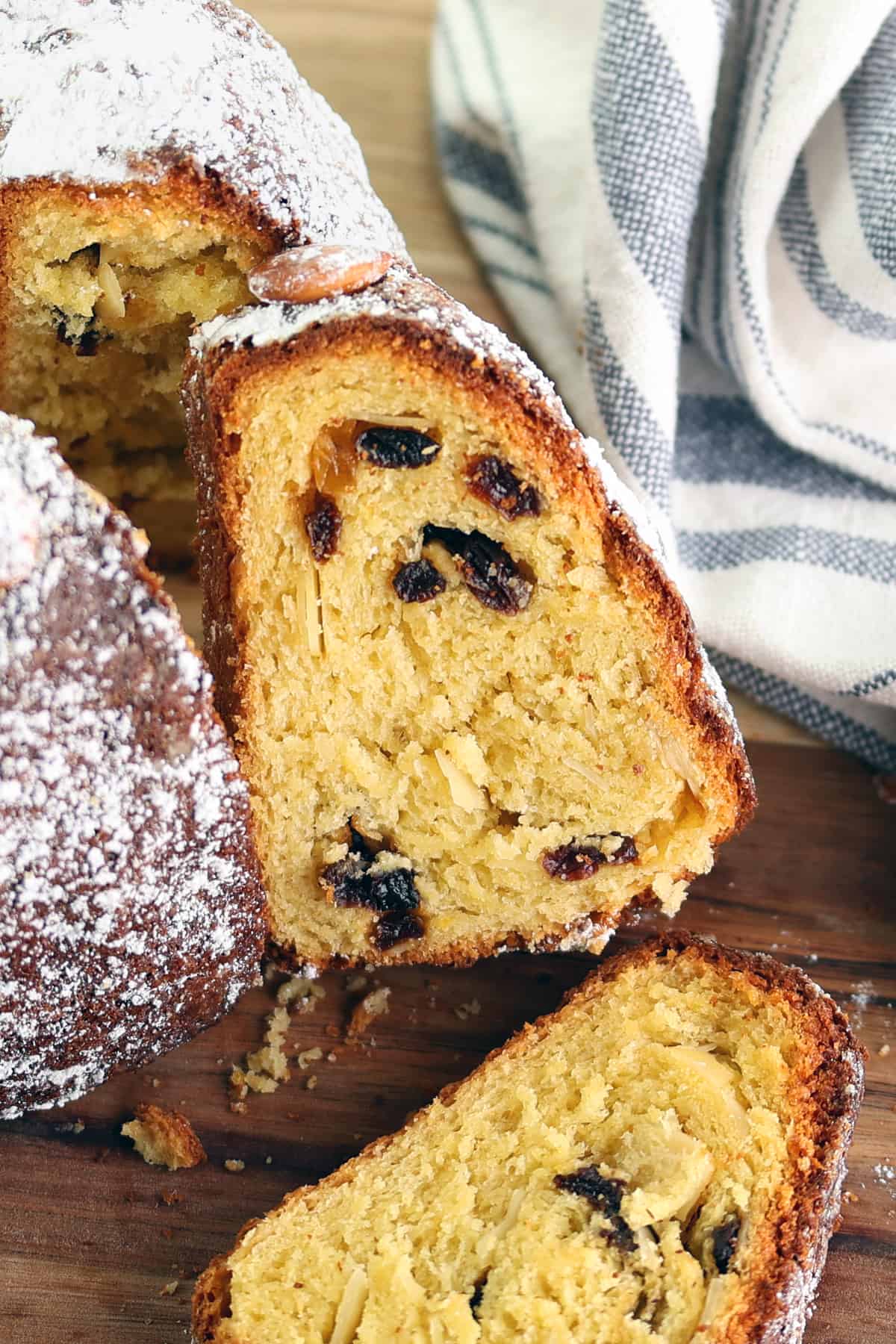
Gigelhupf or Gugelhupf Cake

 
                                  Gugelhupf  or Kugelhopf Cake                                                                                                                           Combining the delicious flavors of lemon, rum, raisins, almonds and butter in a wonderfully fragrant yeasted cake, look no further for a thoroughly traditional Gugelhupf recipe! Also known as Kugelhopf, this special cake has been known and loved for literally centuries throughout Germany, France, Austria and Switzerland.
Ingredients:
12 whole blanched almonds 
   (to blanch/remove the skins, place the almonds in boiling water, let
    sit for one minute, drain, and squeeze the almonds between your  
    fingers to slip the skins off)
1 cup heavy cream
2 1/4 teaspoons active yeast
1/2 cup granulated sugar
4 cups all-purpose flour
1/2 teaspoon salt
2/3 cup unsalted butter
1/3 cup lard or butter
5 large egg yolks
1 1/2 teaspoon vanilla extract
zest one lemon
3/4 cup raisins 
1 tablespoon rum
1/3 cup slivered almonds
12 whole almonds
    Directions:
    Butter a 8.5 inch Kugelhopf pan or a bundt pan  (8 to 9 cup capacity).
    Place the raisins and rum in a small bowl, stir to combine, and let the raisins soak for at least an hour or overnight.
    Place the lukewarm cream in a bowl or cup and stir in the yeast along with one tablespoon of the sugar. Let sit for 10-15 minutes until nice and frothy.

    In the bowl of a stand mixer fitted with a paddle attachment, cream butter, lard (if using) and sugar until pale and fluffy. Add lemon zest and vanilla and beat until combined. Add egg yolks and beat until combined.
    Add half of the flour and yeast mixture and mix until combined. Add the remaining half of the flour and yeast mixture and the salt and mix until combined. Once the mixture comes together continue to knead with the paddle attachment for 10 minutes, scraping down the sides as needed. If the mixture is too dry, add some additional egg yolk. If it's too wet, add some additional flour. Cover loosely with plastic wrap and put in a warm place (like a warm oven) to rise for up to two hours or until doubled in size.

    Roll out onto clean non-stick work surface. Press or roll out to for a rectangle about 1/4 inch thick. 
    Sprinkle evenly with the raisins and almonds. Roll it up from the widest side. Bring the ends together to form a circle, pressing the ends together, and place it into the Kugelhopf mold. Press gently down to ensure the dough is evenly spread in the pan. Cover loosely with plastic wrap and put in a warm place (like a warm oven) to rise for about another hour or until the dough has risen just barely above the mold. 
    In the meantime, preheat the oven to 350 F.

    Bake the Gugelhupf until it is nicely browned and a toothpick inserted into the middle comes out clean, about 30-40 minutes. Let the cake sit in the pan for 10 minutes and then invert onto a wire rack to cool completely. Dust with powdered sugar.

    Serve immediately. Best eaten the same day.
    To store leftovers, wrap well in plastic wrap (will keep up to 3 days) or freeze. (See blog post for ideas on how to use leftover Kugelhopf.)


Tuesday, December 30, 2025

Anita's Nut Roll.


Anita's Nut Roll
Barbara's former co-worker and very dear friend Anita who drove to Tahoe to visit and bring her Christmas wishes with the most wonderful Nut Roll.  What a fabulous friend!
Ingredients:
Soak a handful of raisins in hot water to plump
Chop 8 cups walnuts, set aside.

Mix and allow to proof:
1/4 cup warm milk
1 pkg yeast
1 teaspoon sugar

In a small bowl:
Whisk 3 egg yolks beaten (save egg whites for later use.) with
1 cup plus 1 tablespoon half and half, set aside

Measure in a large bowl:
4 1/2 cups flour 
1 teaspoon salt
1 cup sugar
2 sticks butter
                                                                                                                                                                                                             
Directions for dough;
Work 2  sticks softened butter into flour  into flour mixture:  Use hands to blend.  

Add proofed yeast mixture of yeast, sugar and milk, and mixed egg yolk, and half and half: mix well. 
then add to flour mixture creating the dough.

Knead about 10 minutes until all butter is well incorporated in dough.
Separate into 4 rounds of dough; allow to rest until double in size

Meanwhile mix: 
8 cups finely chopped walnuts
1 cup sugar
2 tablespoons vanilla
Toss to coat well.

Drain raisins and pat dry.

When ready, roll dough thin to 12" X 18" rectangle on a lightly floured surface.                                                                         

Pat down firmly 
2 cups of nut mixture to the ends of dough.   Next sprinkle a few handful of the plumped golden raisins which have 
been patted dry. Generously drizzle honey.  Begin to roll so that your finished roll is approximately 18" X 3".  Place seam side down on parchment paper lined baking sheet.  Check that the ends of each roll are sealed.

Brush top with whipped egg whites   Let set for one hour in a draft 
free space.   Bake at 325*F for 35 to 38 minutes.  When cool, dust with confectioners sugar.

Thursday, December 18, 2025

Carrot Cake Scones

Carrot Cake Scones
These carrot cake scones are loaded with all of the good stuff – plenty of shredded carrots, coconut, pecans, raisins and some candied ginger for a fiery kick. Finished with a tangy cream cheese glaze, these scones are not too sweet and they're perfect for breakfast.
Ingredients:
2 ¼ cups all-purpose flour
¼ cup light brown sugar
½ tsp salt
1 tbsp baking powder
1 tsp cinnamon
¼ tsp nutmeg
⅛ tsp cloves
1 cup grated carrots
½ cup raisins
½ cup shredded sweetened coconut
½ cup chopped nuts (we used pecans)
3 tbsp crystallized ginger, finely chopped (optional)
½ cup heavy cream + more for brushing the scones
1 large egg
1 ½ teaspoons vanilla extract
½ cup unsalted butter, frozen
Optional: 2 tablespoons coarse (turbinado) sugar for
topping
Cream cheese glaze recipe follows:

Directions: 
Preheat the oven to 350˚F. In a large bowl. whisk
together the flour, brown sugar, salt, baking powder,
cinnamon, nutmeg and cloves.

Add in the grated carrots, raisins, coconut, nuts, and
ginger, tossing to coat in the flour mixture.

In a separate medium bowl, whisk together the heavy
cream, egg, and vanilla.

Using a box grater, grate the frozen butter into the
bowl with the flour mixture. Gently work the
ingredients together with a spatula or your hands so
butter is evenly distributed, but don’t over-mix.

Add in the heavy cream mixture and gently mix just
until a shaggy dough forms. Avoid over-mixing – you
should still be able to see the butter pieces throughout
the dough.

Transfer the dough to a clean, lightly floured surface.
Using floured hands, shape the dough into a roughly
10-inch disk. Using a sharp knife or bench scraper, cut
the dough into 8 triangle wedges.

Transfer the scones to a parchment paper-lined baking
sheet. Place the scones in the freezer for 15 minutes,
or in the refrigerator for 30 minutes to chill.

Before baking, brush the tops with more heavy cream,
then sprinkle with coarse sugar. Bake for 20-25
minutes, until light golden brown on top.


Cream Cheese Glaze (optional):
1 tablespoon cream cheese, softened to room temp
1 tablespoon unsalted butter, softened to room temp
1/2 cup powdered sugar
2 tablespoons heavy cream

Mix ingredients until you have a lump free glaze.

Thursday, December 11, 2025

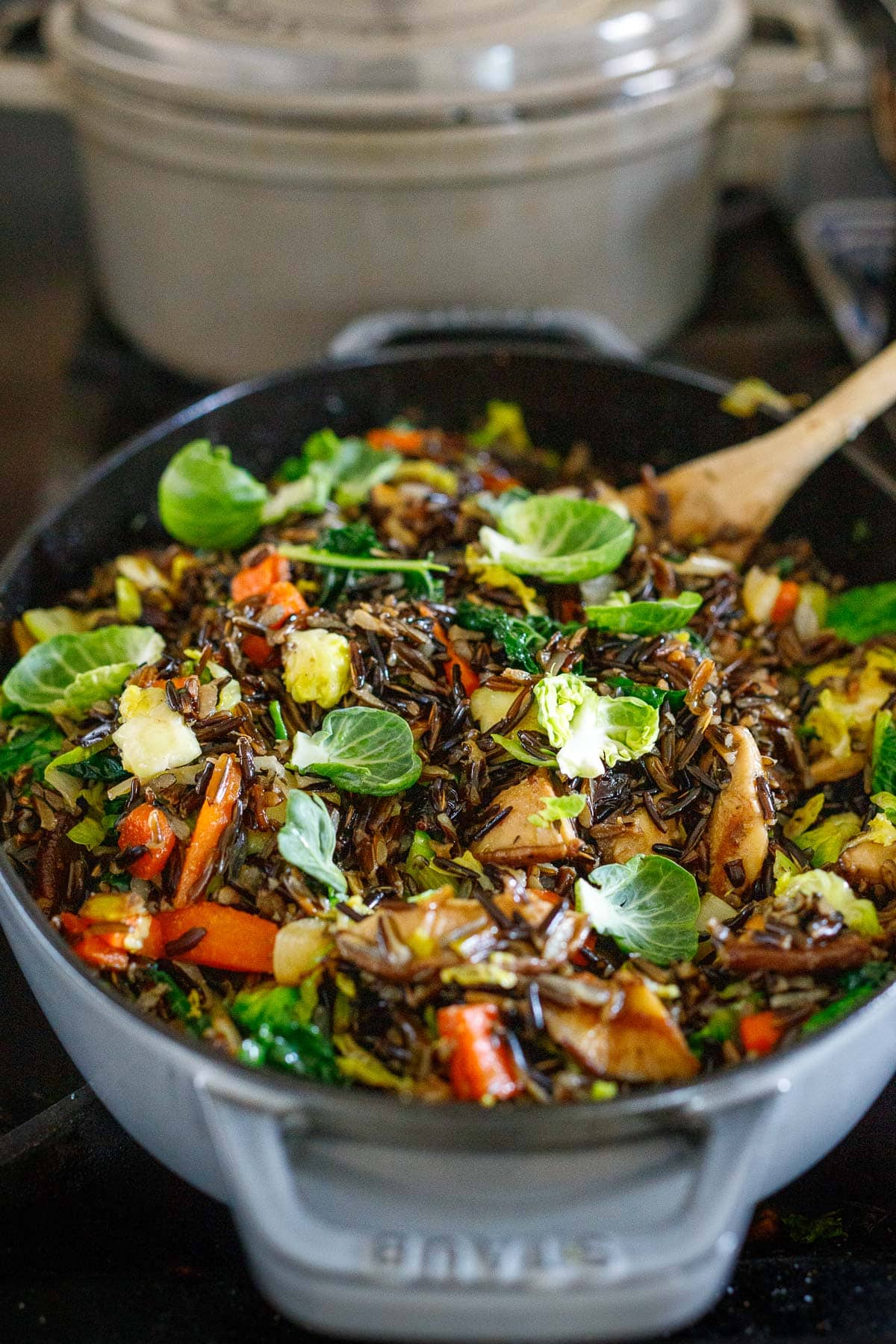
Wild Rice Pilaf


                                                   Wild Rice Pilaf
Wild Rice: A nutrient-rich grain that has a robust, nutty flavor and a slightly chewy texture. It adds depth and complexity to the pilaf. Use true wild rice or a wild rice blend. I chose Rancho Gordo Wild Rice.
Ingredients:
2 cups true wild rice (uncooked) *See notes for wild rice blend
6 cups vegetable broth, or chicken stock
1/2 teaspoon salt
3–4 tablespoons olive oil (or use half butter)
8 ounces mushrooms, cut or torn (wild or tame mushrooms)
1 1/2 cups carrot, small diced
1 1/2 cups celery, diced
1 1/2 cup leeks, sliced (or one onion, diced)
4 garlic cloves, roughly chopped
1–2 tablespoons fresh thyme, or use rosemary or sage
splash of white wine, or water
1/4– 1/2 cup craisins (or dried cherries or currants)
2 cups shredded Brussels sprouts, or lacinato kale (or a mix)
salt and pepper to taste
1/4– 1/2 cup toasted pecans (or sliced almonds)
Optional Garnish: fresh parsley, pomegranate seeds
Directions
Step one: 
Set wild rice to cook in flavorful veggie broth or chicken stock. Simmer on the stovetop or in an Instant Pot pressure cooker until tender.     

Step two:
While the wild rice cooks, saute the mushrooms, then add the leeks, carrots and celery. Cover for a few minutes, add garlic and herbs, and deglaze the pan. 

Step Three:
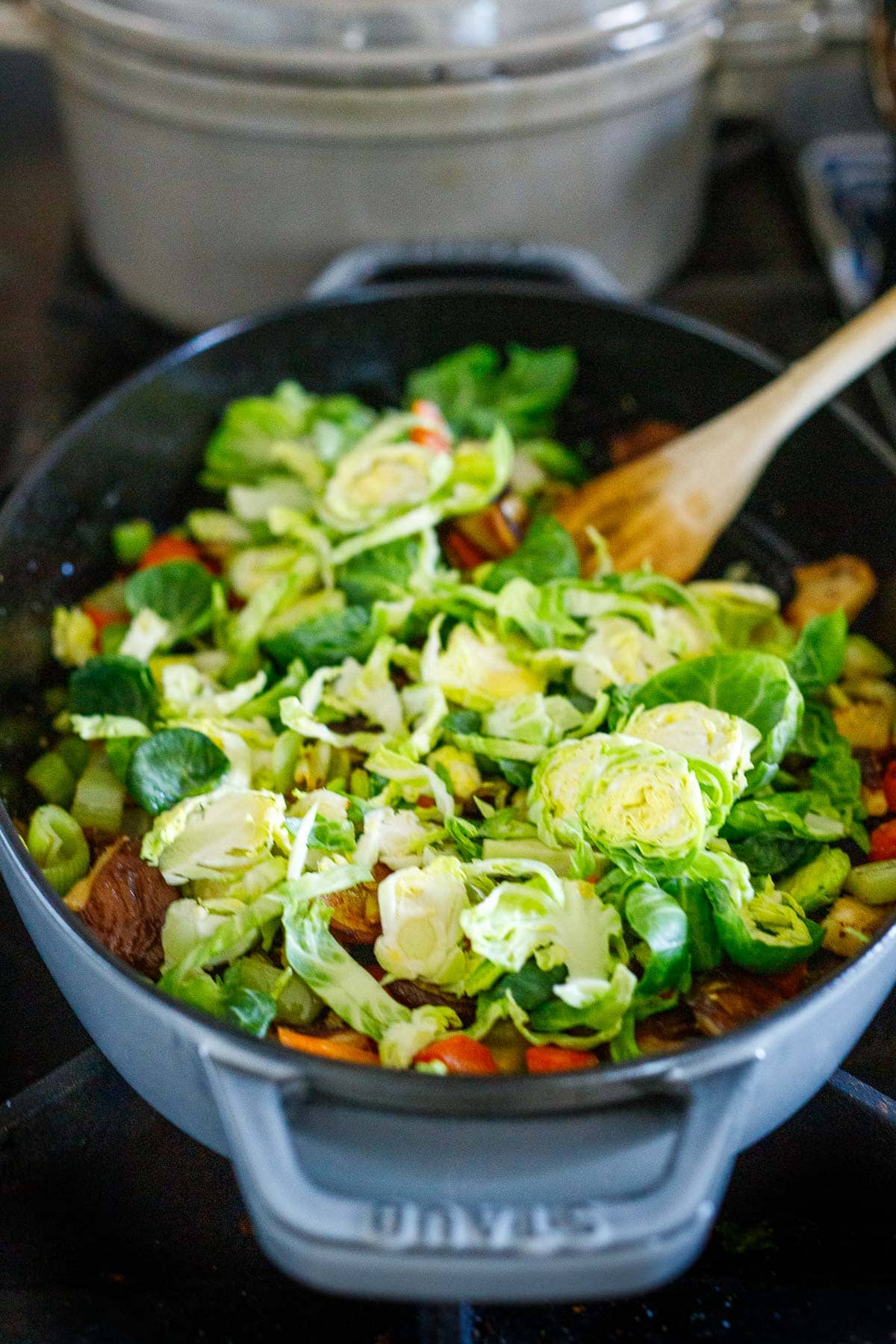
Add the dried cranberries and Brussels Sprouts (or kale) and wilt.  Blend in the cooked vegetables with the rice and adjust seasoning 
with salt.. the dried cranberries and Brussels sprouts (or kale) and wilt. l add in the cooked wild rice (save any extra broth). Season, adjusting salt to taste.

Monday, November 24, 2025

German Stollen. (Christstollen)

 
German Stollen
This Authentic German Stollen (Christstollen) is a holiday favorite filled with rum-soaked fruits, almonds, and a touch of marzipan, all wrapped in a buttery, slightly sweet dough. It’s perfect for gifting or enjoying as a Christmas treat.
Ingredients:
4 cups all-purpose flour
1 packet (2 1/4 tsp) active dry yeast
3/4 cup whole milk, warmed
1/2 cup granulated sugar
1/2 tsp salt
1/2 cup unsalted butter, softened
2 large eggs
1/4 cup dark rum
1/2 cup raisins
1/2 cup currants
1/4 cup candied orange peel
1/4 cup candied lemon peel
1/2 cup almonds, chopped
1/2 tsp ground cardamom
1/4 tsp ground mace
4 oz marzipan (optional)
Additional butter and powdered sugar for topping
Directions:
Soak the Fruits: In a small bowl, combine the raisins, currants, and candied peel. Pour the rum over the mixture, stir, and soak for at least 1 hour, or overnight if possible.

Prepare the Dough: Warm the milk and dissolve a pinch of sugar in it. Add yeast and let it activate. Combine flour, sugar, salt, butter, eggs, and spices. Knead until smooth.

Add Fruits and First Rise: Add the soaked fruits and almonds. Cover the dough and let it rise until doubled.

Shape the Stollen: Flatten dough, place marzipan in the center, fold, and shape. Let rise again for 30-45 minutes.

Bake and Butter Topping: Bake at 350°F (175°C) for 40-50 minutes. Brush with melted butter and dust with powdered sugar.

    Tuesday, November 11, 2025

    Carrot Cake Scones

    Carrot Cake Scones
    These carrot cake scones are loaded with all of the good stuff – plenty of shredded carrots, coconut, pecans, raisins and some candied ginger for a fiery kick. Finished with a tangy cream cheese glaze, these scones are not too sweet and they're perfect for breakfast.
    Ingredients:
    2 ¼ cups all-purpose flour
    ¼ cup light brown sugar
    ½ tsp salt
    1 tbsp baking powder
    1 tsp cinnamon
    ¼ tsp nutmeg
    ⅛ tsp cloves
    1 cup grated carrots
    ½ cup raisins
    ½ cup shredded sweetened coconut
    ½ cup chopped nuts (we used pecans)
    3 tbsp crystallized ginger, finely chopped (optional)
    ½ cup heavy cream + more for brushing the scones
    1 large egg
    1 ½ teaspoons vanilla extract
    ½ cup unsalted butter, frozen
    Optional: 2 tablespoons coarse (turbinado) sugar for
    topping
    Cream cheese glaze recipe follows:

    Directions: 
    Preheat the oven to 350˚F. In a large bowl. whisk
    together the flour, brown sugar, salt, baking powder,
    cinnamon, nutmeg and cloves.

    Add in the grated carrots, raisins, coconut, nuts, and
    ginger, tossing to coat in the flour mixture.

    In a separate medium bowl, whisk together the heavy
    cream, egg, and vanilla.

    Using a box grater, grate the frozen butter into the
    bowl with the flour mixture. Gently work the
    ingredients together with a spatula or your hands so
    butter is evenly distributed, but don’t over-mix.

    Add in the heavy cream mixture and gently mix just
    until a shaggy dough forms. Avoid over-mixing – you
    should still be able to see the butter pieces throughout
    the dough.

    Transfer the dough to a clean, lightly floured surface.
    Using floured hands, shape the dough into a roughly
    10-inch disk. Using a sharp knife or bench scraper, cut
    the dough into 8 triangle wedges.

    Transfer the scones to a parchment paper-lined baking
    sheet. Place the scones in the freezer for 15 minutes,
    or in the refrigerator for 30 minutes to chill.

    Before baking, brush the tops with more heavy cream,
    then sprinkle with coarse sugar. Bake for 20-25
    minutes, until light golden brown on top.


    Cream Cheese Glaze (optional):
    1 tablespoon cream cheese, softened to room temp
    1 tablespoon unsalted butter, softened to room temp
    1/2 cup powdered sugar
    2 tablespoons heavy cream

    Mix ingredients until you have a lump free glaze.

    Monday, November 10, 2025

    Figgy Pudding

    Figgy Pudding. NY Times
    Also known as plum pudding or Christmas pudding, figgy pudding is a traditional British dessert served on Christmas. (“Pudding” in the United Kingdom is what “dessert” is called elsewhere.) Many families boast their own recipes, but in general, this rich cake-like dessert is made with a mix of dried fruits soaked in liquor, warm spices, fresh breadcrumbs, nuts and sometimes candied citrus. Beef suet, which is available online, is the traditional fat used, but it can be substituted with butter.  Figgy pudding preparations often begin the Sunday before Advent, on Stir-up Sunday, when family members take turns stirring the pudding. Figgy pudding requires planning, so start shopping for ingredients at least one month before Christmas. After the initial steam, the pudding rests at least 3 weeks for the flavors to meld. The pudding can also be made months in advance, stored in the freezer and reheated before serving. The final presentation of drizzling it with liquor and setting it on fire is worthy of a grand holiday celebration.
    9 hours cooking  3 weeks resting. 10 servings
    Ingredients:
    For The Pudding
    1cup/150 grams dried currants, (see Tip 1)
    1cup/150 grams raisins
    1cup golden raisins or sultanas
    3/4 cup brandy plus more for serving
    5 ounces/150 grams packaged, not fresh, beef suet, or
        ¾ cup/172 grams unsalted butter
    120 grams fresh white bread (3 to 4 slices)
    8 tablespoons unsalted butter softened at room temperature
    1cup/150 grams packed dark brown sugar
    ½cup/70 grams all-purpose flour
    ½teaspoon baking powder
    1teaspoon pumpkin pie spice (see Tip 3)
    ½teaspoon kosher salt (such as Diamond Crystal)
    1medium tart apple, preferably Granny Smith
    2 large eggs
    1tablespoon black treacle or molasses, to taste (optional)
    ½teaspoon lemon zest
    ⅓cup/50 grams blanched slivered almonds
    Unsalted butter, for greasing
    Hard sauce, ice cream, fresh heavy cream or English custard, for serving (optional)

    For The Hard Sauce
    8 tablespoons/115 grams unsalted butter, softened at room temperature
    ¾ cup/93 grams confectioners’ sugar, plus more to taste
    2 to 3 tablespoons brandy, to taste.

    Directions:
        Set aside a 2 liter pudding or a heat-proof bowl as well as a lidded pot of similar size.

        Place the currants and both types of raisins in a medium bowl. Add the brandy, mix, cover with plastic wrap and set aside at room temperature to soak overnight. Place the suet or butter in the freezer to make grating easier later.

      The following day, cube the bread, including the crust, transfer it to a food processor and pulse until you have fine crumbs. (Alternatively, you can shred the bread by hand.

      Transfer the bread crumbs to a large mixing bowl. Add the brown sugar, flour, baking powder, pumpkin spice and salt; mix, breaking up any clumps of brown sugar. Peel the apple, then grate it and the suet (or butter) on the large hole of a box grater over the dry ingredients. Add the eggs, black treacle and lemon zest. Mix well with a wooden spoon; the mixture will be thick. Stir in the almonds and the brandy-soaked currants and raisins, along with any of the liquid.

    At this point, the pudding can be steamed; or covered and refrigerated for up to 1 week for the flavors to deepen, and then steamed. To steam: Generously butter the pudding mold and transfer the mixture to it, filling the mold only ¾ of the way (the pudding will expand as it cooks). Pack down the mixture and smooth the top.   

    Cut a round piece of parchment that will fit on top of the pudding mixture; butter one side and place it, buttered-side-down, on top. Cover the top of the mold with another piece of parchment that has a little overhang. Secure the parchment tightly to the rim of the mold with a rubber band or string, then trim the overhang. (Two sets of hands make this job easier.) Repeat with another piece of parchment paper. (This is important to do even if your mold comes with a lid. If a lid is included, place it over the parchment and cover the top of the lid tightly with foil. If you don’t have a lid, cover the parchment with 2 pieces of foil. You want to ensure you have a water-tight seal on the mold as it steams.)

    Place the steamer basket in the pot. (If not using a steamer basket, place an inverted heat-proof plate or trivet, a folded cotton kitchen towel, or a couple of layers of aluminum foil on the bottom of the pot. Anything heat-proof that the pudding mold can safely sit on to prevent direct contact with the heat source will work.) Fill the pot ¼ of the way with water and bring to boil. Bring a separate kettle or small pot of water to boil. Carefully lower the pudding mold into the steamer basket, or rest it on top of whatever is in the bottom of the pot to prevent scorching. The water should come halfway up the sides of the mold. If it doesn’t, slowly add more boiling water from the kettle along the sides of the pot. Cover the pot, adjust the heat to medium-low or low —the water should be at a constant gentle simmer, but not boiling — and steam the pudding for 6 hours.

    Check the pudding every 30 minutes to make sure the water is always at the halfway mark, adding more boiling water as needed. After 6 hours, carefully remove the mold from the pot and cool to room temperature. Store the pudding, covered in its mold, in the fridge for at least 3 weeks and up to 6 weeks, or in the freezer for up to one year (see Storage Tips).

    Prepare the hard sauce, if using: Two days and up to 1 week before serving, place the butter in the bowl of a stand mixer fitted with the paddle attachment. (Alternatively, use a hand-held beater and a mixing bowl.) Beat on medium until light and creamy, about 2 minutes. Add the confectioners’ sugar and beat on medium just until smooth. Taste and add more sugar, if desired. Add the brandy, to taste, 1 tablespoon at a time, and mix by hand with a spatula until combined. Transfer to a serving dish, smooth the top, cover and refrigerate until hard.

    About 2 hours before serving the pudding, reheat the pudding by steaming as directed in Step 7, this time for 1 hour. Remove the mold from the pot and peel off all the coverings, being mindful of the steam. Place a serving dish over the mold and invert the pudding. Don’t remove the mold right away. Give it a little time and a jiggle to help release the pudding.
                                                                                                              Pour 2 to 3 tablespoons of brandy in a heat-proof ladle. Hold the ladle over the pudding and carefully light it. As soon as the brandy catches fire, pour it over the pudding. The pudding will light up in a blue haze; it will extinguish quickly on its own.                                                                                                                                                                       Slice the pudding and serve it warm with hard sauce, ice cream, or drizzled with heavy cream or custard. The pudding will keep in the fridge for up to 1 week, wrapped well in parchment and again in plastic wrap or aluminum foil.                                                           TIPS                                                                                       Feel free to substitute a variety of dried fruits for the currants and raisins, such as diced figs, apricots or cherries.                                                                                                                                                       Beef suet, a fat used in many British recipes, is traditional here. It comes packaged in a hard block or pellets. Fresh suet has a strong, meatier odor and taste, so it is not recommended here.                                                                                                                      Traditionally, an English spice mix is used that includes many of the spices used in American pumpkin spice mix, as well as ground coriander and mace. If you like, you can add a tiny pinch of those to the pumpkin spice.                                                                                                                                                                                                                                             If you’d like to remove the steamed pudding from the mold before storing it, wrap it very tightly with plastic wrap, then in foil. Before reheating, unwrap the pudding and transfer it back to the mold.


    Step 1

    Set aside a 2-liter pudding mold or similarly sized heat-proof bowl, as well as a lidded pot or steamer large enough to hold the mold. (A tall pot, like a stock pot or a pasta pot with a steamer basket, works well.)
    Step 2


    Place the currants and both types of raisins in a medium bowl. Add the brandy, mix, cover with plastic wrap and set aside at room temperature to soak overnight. Place the suet or butter in the freezer to make grating easier in Step 4.
    Step 3


    The following day, cube the bread, including the crust, transfer it to a food processor and pulse until you have fine crumbs. (Alternatively, you can shred the bread by hand.)

    Step 4


    Transfer the bread crumbs to a large mixing bowl. Add the brown sugar, flour, baking powder, pumpkin spice and salt; mix, breaking up any clumps of brown sugar. Peel the apple, then grate it and the suet (or butter) on the large hole of a box grater over the dry ingredients. Add the eggs, black treacle and lemon zest. Mix well with a wooden spoon; the mixture will be thick. Stir in the almonds and the brandy-soaked currants and raisins, along with any of the liquid.


    Step 5


    At this point, the pudding can be steamed; or covered and refrigerated for up to 1 week for the flavors to deepen, and then steamed. To steam: Generously butter the pudding mold and transfer the mixture to it, filling the mold only ¾ of the way (the pudding will expand as it cooks). Pack down the mixture and smooth the top.
    Step 6


    Cut a round piece of parchment that will fit on top of the pudding mixture; butter one side and place it, buttered-side-down, on top. Cover the top of the mold with another piece of parchment that has a little overhang. Secure the parchment tightly to the rim of the mold with a rubber band or string, then trim the overhang. (Two sets of hands make this job easier.) Repeat with another piece of parchment paper. (This is important to do even if your mold comes with a lid. If a lid is included, place it over the parchment and cover the top of the lid tightly with foil. If you don’t have a lid, cover the parchment with 2 pieces of foil. You want to ensure you have a water-tight seal on the mold as it steams.)
    Step 7


    Place the steamer basket in the pot. (If not using a steamer basket, place an inverted heat-proof plate or trivet, a folded cotton kitchen towel, or a couple of layers of aluminum foil on the bottom of the pot. Anything heat-proof that the pudding mold can safely sit on to prevent direct contact with the heat source will work.) Fill the pot ¼ of the way with water and bring to boil. Bring a separate kettle or small pot of water to boil. Carefully lower the pudding mold into the steamer basket, or rest it on top of whatever is in the bottom of the pot to prevent scorching. The water should come halfway up the sides of the mold. If it doesn’t, slowly add more boiling water from the kettle along the sides of the pot. Cover the pot, adjust the heat to medium-low or low —the water should be at a constant gentle simmer, but not boiling — and steam the pudding for 6 hours.
    Step 8


    Check the pudding every 30 minutes to make sure the water is always at the halfway mark, adding more boiling water as needed. After 6 hours, carefully remove the mold from the pot and cool to room temperature. Store the pudding, covered in its mold, in the fridge for at least 3 weeks and up to 6 weeks, or in the freezer for up to one year (see St
    1. orage 


      Tips).Step 9

    2. Prepare the hard sauce, if using: Two days and up to 1 week before serving, place the butter in the bowl of a stand mixer fitted with the paddle attachment. (Alternatively, use a hand-held beater and a mixing bowl.) Beat on medium until light and creamy, about 2 minutes. Add the confectioners’ sugar and beat on medium just until smooth. Taste and add more sugar, if desired. Add the brandy, to taste, 1 tablespoon at a time, and mix by hand with a spatula until combined. Transfer to a serving dish, smooth the top, cover and refrigerate until hard.

    3. Step 10

      About 2 hours before serving the pudding, reheat the pudding by steaming as directed in Step 7, this time for 1 hour. Remove the mold from the pot and peel off all the coverings, being mindful of the steam. Place a serving dish over the mold and invert the pudding. Don’t remove the mold right away. Give it a little time and a jiggle to help release the pudding.

    4. Step 11

      Pour 2 to 3 tablespoons of brandy in a heat-proof ladle. Hold the ladle over the pudding and carefully light it. As soon as the brandy catches fire, pour it over the pudding. The pudding will light up in a blue haze; it will extinguish quickly on its own.

    5. Step 12

      Slice the pudding and serve it warm, topped with hard sauce or ice cream, or drizzled with heavy cream or custard. The pudding will keep in the fridge for up to 1 week, wrapped well in parchment and again in plastic wrap or aluminum foil.

    TIPS
    • Tip 1: Feel free to substitute a variety of dried fruits for the currants and raisins, such as diced figs, apricots or cherries.
    • Tip 2: Beef suet, a fat used in many British recipes, is traditional here. It comes packaged in a hard block or pellets. Fresh suet has a strong, meatier odor and taste, so it is not recommended here.
    • Tip 3: Traditionally, an English spice mix is used that includes many of the spices used in American pumpkin spice mix, as well as ground coriander and mace. If you like, you can add a tiny pinch of those to the pumpkin spice.
    • Tip 4: If you’d like to remove the steamed pudding from the mold before storing it, wrap it very tightly with plastic wrap, then in foil. Before reheating, unwrap the pudding and transfer it back to the mold.