Showing posts with label Unsalted Butter. Show all posts

Friday, June 5, 2026

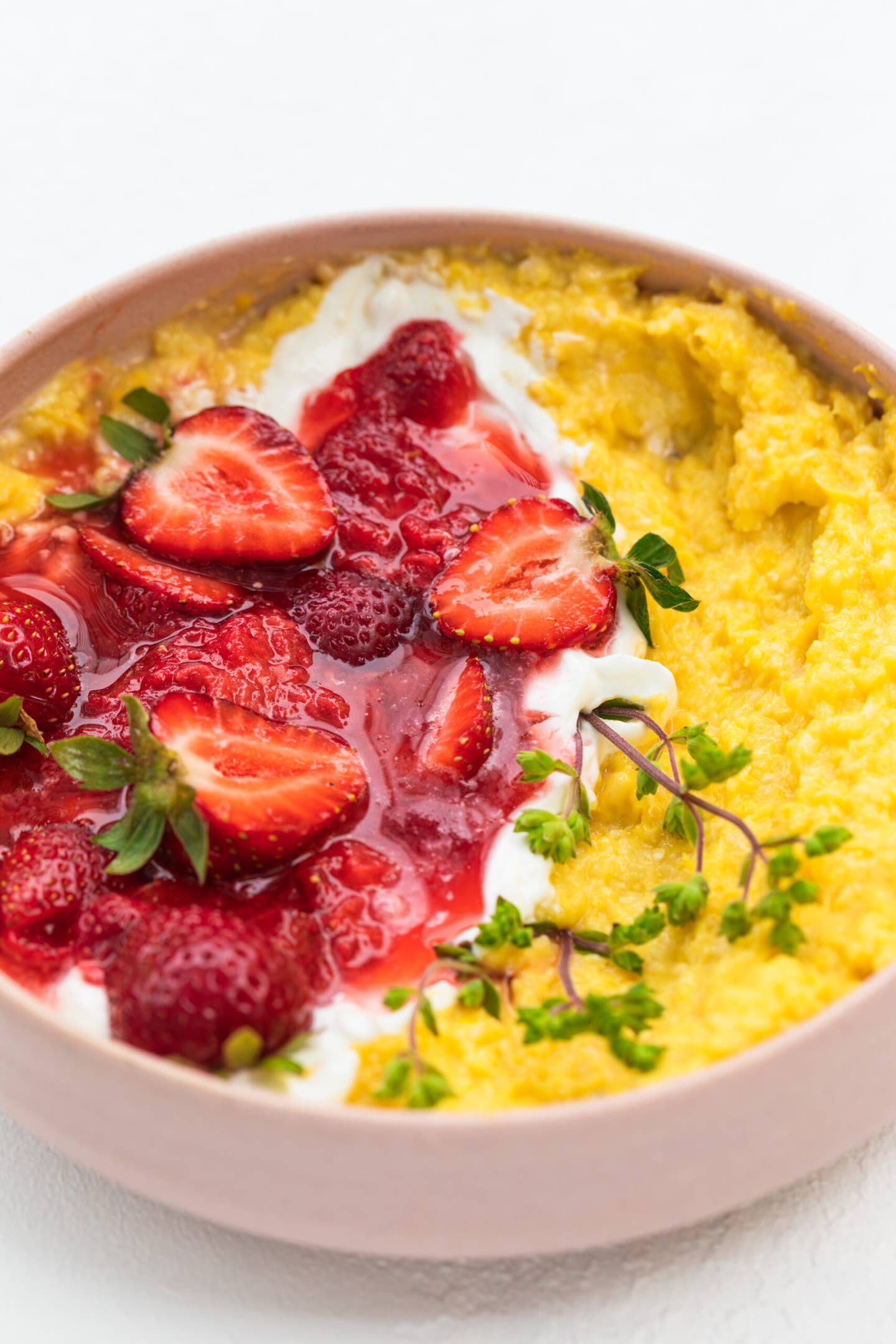
Sweet Corn Polenta With Sour Cream And Crushed Strawberries

This is not a traditional polenta recipe. In fact, it’s not polenta at all. You may now be wondering why I called this recipe Sweet Corn Polenta. Well, that’s because the starches in the corn act as a thickening agent, and cooking it results in a pudding that looks like polenta, but tasteslike the sweetest, butteriest, freshest summer corn you’ve ever had. The trick is a box grater. That’s right, you’re gonna grate the corn like it’s a block of cheese, all the way down to a nub. Be sure to extract as much corn milk as possible - that’s the good stuff (and the thickener).

This process does get a little messy. I have found that grating over a large rimmed baking sheet is the best answer to that. You can serve this dish hot, at room temperature, or even chilled. And if you need to feed more people, simply add an ear of corn per person and increase the butter a tad. Now, go forth and prepare to launch a new summer love affair - this time, corn is your muse.
Serves 4-6

Ingredients:
6 ears fresh corn, shucked
3 tablespoons unsalted butter
Kosher salt
Crushed strawberries, for serving (recipe above)
Sour cream, for serving
Directions:
Grate each ear of corn on the large side of a box grater. Be sure to grate all the way down to the cob and extract as much of the corn milk as possible. Once finished, you should have about 3 cups of grated corn.  A suggestion: freezing the cob of corn before grating.

Add the grated corn to a pot, along with the butter, and season with salt. Bring the mixture to a simmer over medium high heat (the butter will melt as it heats), stirring often. Once it starts to bubble, reduce the heat to medium low, and continue to simmer for another 2 - 3 minutes, stirring constantly, until it reaches a thick, pudding-like consistency.

Season with more salt, to taste. To serve, spread the polenta in a shallow bowl, then top it with generous dollops of sour cream and ladle the strawberries on top (recipe below)
Crushed Strawberries  makes about 2 cups

If you happen to have leftovers, the strawberries can be spooned over yogurt, mixed into pancake batter, drizzled over ice cream, or used for any type of strawberry snacking your heart desires.
Ingredients:
1 pound strawberries, husked
⅓ cup sugar
⅛ teaspoon kosher salt
¼ teaspoon sherry vinegar
Directions:
Combine the strawberries, sugar, salt and vinegar in a large bowl. Cover and macerate for at least 1 hour, up to overnight, then mash with a potato masher.

Friday, May 8, 2026

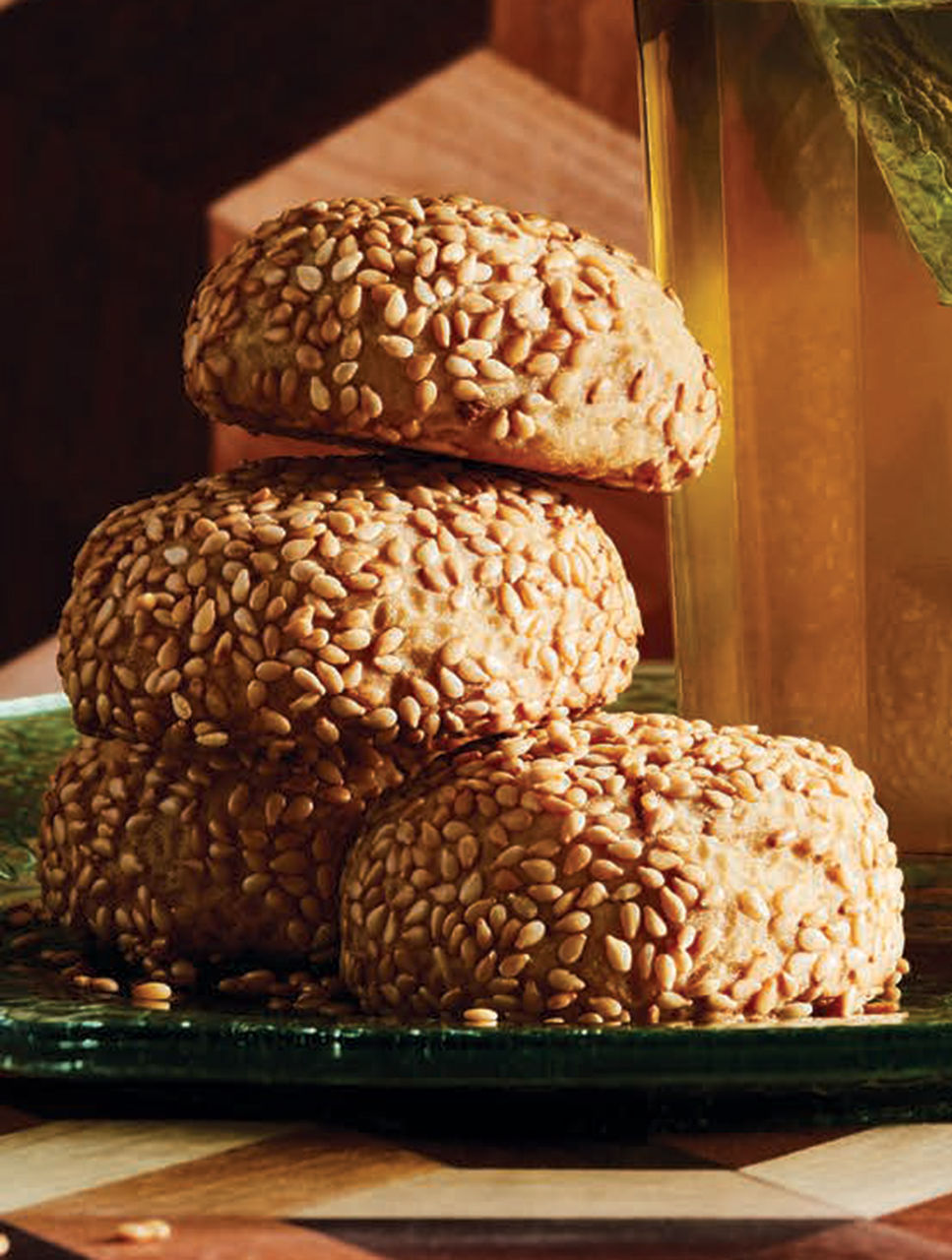
Moroccan Sesame Cookies

Ghoriba Dial Janjlane 
(Moroccan Sesame Cookies)
Golden, nutty and irresistibly crumbly, ghoriba dial janjlane are Moroccan sesame cookies that are humble yet celebratory. Toasted sesame seeds give them a deep, earthy flavor, while their rustic texture makes them the perfect companion to a cup of mint tea.
Ingredients:
1 1/4 cups (310 mL) sesame seeds
1 1/2 cups (375 mL) all-purpose flour
1 tsp (5 mL) baking powder
1/2 tsp (2 mL) salt
1/2 cup (125 mL) unsalted butter, softened
1/2 cup (125 mL) sugar
2 large eggs
1 tbsp (15 mL) orange blossom water
Finely grated zest of 1 medium-size lemon
Directions:
Arrange rack in middle of oven. Preheat to 350°F (177°C). Line two
baking sheets with parchment paper.

In a dry pan over medium heat, lightly toast sesame seeds, stirring
often, until golden brown and fragrant, about 5 minutes. Transfer to a
small, rimmed baking sheet. Stir occasionally, until completely
cooled.

Return pan to medium heat and add flour. Cook, stirring constantly
until lightly golden, 4 to 5 minutes. Transfer to another small,
rimmed baking sheet. Stir occasionally, until completely cooled.

When seeds are cooled, place 1 cup (250 mL) sesame seeds in a
food processor. Process until finely ground. Transfer to a mixing
bowl along with cooled flour. Add baking powder and salt. Stir until
combined.

In bowl of a stand mixer fitted with paddle, beat butter and sugar
on medium-high speed until light and fluffy, 3 to 4 minutes. Reduce
speed to medium. Add eggs one at a time, mixing well after each
addition. Stop and scrape down bowl. Add orange blossom water and
lemon zest. Mix until combined. With motor running on low speed,
gradually add dry ingredients, mixing just until a dough forms—it
should be soft but not sticky.

Place remaining 1/4 cup (60 mL) sesame seeds on a small plate.

Roll 1-tbsp (15-mL) portions of dough into balls. Roll balls in
sesame seeds to coat evenly. Place on lined baking sheet and gently
press to flatten slightly. Repeat with remaining dough, leaving at
least 1/2 inch (1 cm) between cookies.

Bake cookies, one sheet at a time, on middle rack until edges are
lightly golden, 13 to 15 minutes. They will still be soft in centres,
but will firm up as they cool. Remove from oven and cool
for 5 minutes before transferring to a wire rack to cool completely.

Transfer to an airtight container and store in a cool, dark place for up
to 5 days. Makes 30 cookies

Monday, April 20, 2026

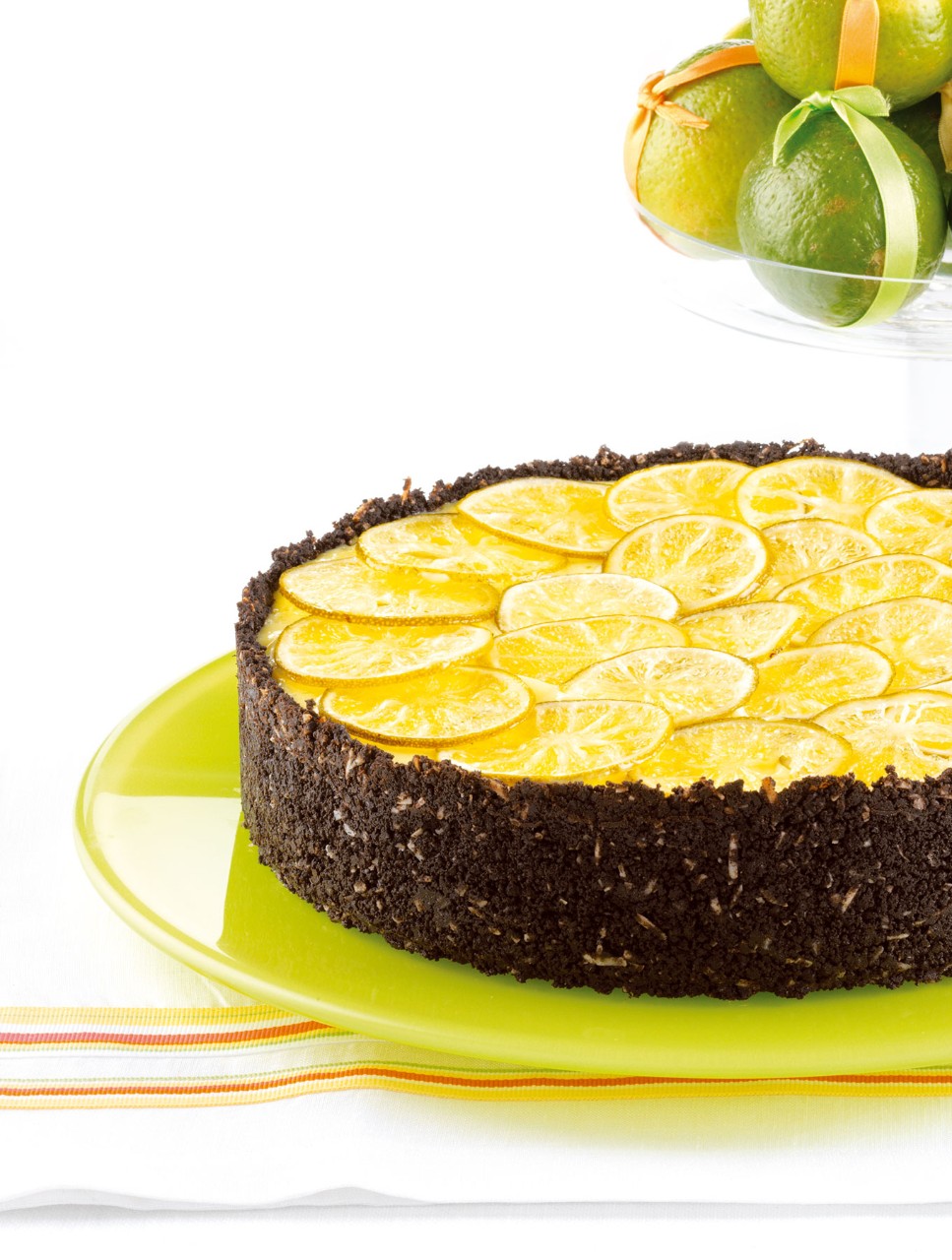
Key Lime Pie

Key Lime Pie
This classic key lime pie recipe follows the traditional technique of not baking the filling. The acidity in the lime juice cooks the eggs as the fillings chill. Pasteurized egg yolks are best for this recipe, but if fresh eggs are used bake the pie at 325ºF (160ºC) for 30 minutes to set the eggs.
Ingredients:
Crust
3 cups (750 mL) chocolate cookie crumbs 
1 cup (250 mL) sweetened coconut 
½ tsp (2 mL) fine salt 
¾ cup (175 mL) unsalted butter
Filling
Two 300 mL tins condensed milk 
12 pasteurized egg yolks 
1½ cups (375 mL) fresh lime juice 
4½ tsp (22 mL) lime zest
Candied Lime Slices
2 limes 
1 cup (250 mL) sugar 
1 cup (250 mL) water 
Sugar for sprinkling
Directions:
Crust, preheat oven to 375ºF (190ºC).

Combine chocolate cookie crumbs, coconut and salt. Stir in melted butter and blend to an even, crumbly texture. Press crust into an ungreased 9-inch (23-cm) springform pan. Bake for 7 to 8 minutes, until coconut browns. Allow to cool.

Filling, whisk together all ingredients until smooth and pour into baked pie shell. Chill for at least 4 hours before slicing.

Candied Lime Slices; slice limes into thin rounds Blanch first in a pot of boiling water for 2 minutes, then drain. In a saucepan, combine sugar and water, bring up to a simmer and add lime slices. Simmer for 10 to 15 minutes, until white pith of limes looks translucent. Drain and spread out on a cooling rack over a baking tray to dry for about an hour. Coat limes with sugar and store in an airtight container, layered between parchment or plastic until ready to use.

Top cake with candied lime slices and serve.  Serves 10 to 12

Thursday, April 16, 2026

Asparagus Soup With Lemon and Parmesan


                                Asparagus Soup with Lemon and Parmesan
This asparagus soup tastes rich, yet it's made without heavy cream – just veggies, broth, and a bit of Parmesan cheese puréed to silky perfection.  Serves 4 to 6
Ingredients:
 2 bunches asparagus (about 2¼ pounds/1 kg), bottom ends trimmed
 3 tablespoons unsalted butter
 2 medium yellow onions, chopped
 3 cloves garlic, peeled and smashed
 6 cups low-sodium chicken broth
 1 teaspoon salt
 1/4 teaspoon freshly ground black pepper
 2 tablespoons freshly squeezed lemon juice, from one lemon
 1/2 cup shredded Parmigiano-Reggiano
 Handful fresh herbs, such as thyme, dill or basil (optional, for garnish) 

Directions
Melt the butter in a large pot over medium heat. Add the onions and garlic and cook, stirring frequently, until soft and translucent, about 8 minutes. Do not brown; reduce the heat if necessary.In the meantime, cut the tips off of one bunch of the asparagus and set aside (you'll use those for a garnish). Cut the remaining spears and the other bunch of asparagus into ½-inch (13-mm) pieces.

Add the chopped asparagus to the pot (minus the reserved tips), along with the chicken broth, 1 teaspoon salt and ¼ teaspoon pepper. Bring to a boil, then cover and turn the heat down to low. Simmer for about 30 minutes, or until the vegetables are very tender.

Meanwhile, bring a small pot of salted water to a boil. Cook the reserved asparagus tips for a few minutes, or until tender-crisp. Drain the tips and then place them in a bowl of ice water to "shock" them—this stops the cooking process and preserves their bright green color. Once the tips are cool, drain them and set aside.

Purée the soup with an immersion blender until completely smooth. (Alternatively, use a standard blender to purée the soup in batches, then return the soup to the pot.) Bring the soup back to a simmer and stir in the lemon juice and Parmigiano-Reggiano. Taste and adjust seasoning, if necessary. To thicken the soup, allow it to simmer, uncovered, until the desired consistency is reached.

Ladle the soup into bowls, then top each bowl with asparagus tips, Parmigiano-Reggiano, herbs (if using), and freshly ground black pepper.  Serves 4 to 6

Saturday, March 28, 2026

Buttery Porcini Mushroom Pasta

                                         
Buttery Porcini Mushroom Pasta 
Dried mushrooms and smoked paprika 
brings a rich earthiness a hit of flavor.
Ingredients:
20g / 1/4 cup Dried Porcini Mushrooms
25g / 1 tablespoon + 2 teaspoons unsalted butter
2 tbsp olive oil
250g /  chestnut mushrooms, sliced also called cinnamon cap.
2 cloves garlic, finely chopped
3 tbsp double cream
200g / 8oz. fettuccine
20g / 1/4 cup Parmigiano Reggiano, finely grated, plus extra to serve
½ x 20g pack chives, finely chopped
smoked paprika
Directions:Put the porcini into a mug, pour over 150ml boiling water, then set aside for 25 minutes. Drain and reserve the liquid, leaving the sediment behind. Chop the mushrooms and set aside.

Melt the butter with the oil in a large frying pan over a high heat. Once foaming, add the chestnut mushrooms, season and fry for about 10 minutes, flipping occasionally, until golden. Stir in the garlic and soaked porcini, fry for about 3 minutes more, then add 4 tbsp soaking liquid and the cream. Bubble briefly, then remove from the heat.

Meanwhile, cook the pasta according to pack instructions. Reserve a cup of cooking water, then drain.

Tip the pasta into the sauce and toss to coat, then add the parmesan, most of the chives and a little pasta water, if needed, to loosen, so the sauce coats nicely. Serve topped with the remaining chives, some smoked paprika and extra cheese.

Cook’s tip
Soak the mushrooms earlier in the day if you have a busy evening coming up. Just keep in the fridge. until needed.

Saturday, March 21, 2026

Best Cornbread

 cornbread pieces on wooden board
Best Cornbread
Ingredients
2 large eggs
2 tablespoons honey
¾ cup milk (preferably whole but low-fat works too)
1¼ cups all-purpose flour, spooned into measuring cup and leveled-off
¾ cup yellow cornmeal
¼ cup plus 2 tablespoons sugar
1 tablespoon baking powder
1 teaspoon salt
½ cup (1 stick) unsalted butter, melted and cooled
Directions:
Preheat the oven to 350°F (175°C). Spray an 8-inch (20-cm) square baking dish with nonstick cooking spray.


In a medium bowl, break up the eggs with a whisk. Whisk in the honey, and then the milk. Set aside.


In a large bowl, whisk together the flour, cornmeal, sugar, baking powder, and salt. Add the milk mixture and the melted butter to the dry ingredients. Whisk until just blended. Do not overmix; it's okay if there are a few lumps. 

Spoon the batter into the prepared pan. Bake for 25 to 30 minutes, or until the top is set and golden. Cool the cornbread for 10 to 15 minutes in the pan, then cut into squares and serve warm.

Freezer-Friendly Instructions:
Cornbread tastes best when served fresh out of the oven, but it can be frozen in an airtight container or sealable plastic bag for up to 3 months. Thaw for 3 to 4 hours on the countertop before serving. To reheat, wrap cornbread in aluminum foil and warm in a 350°F (175°C) oven until hot. Alternatively, heat squares in the microwave at 50 percent power for 30 to 45 seconds, or until just hot; do not overheat or they will get tough.

You can easily switch up this basic cornbread recipe with add-ins to match any meal. For a savory kick, stir in diced jalapeños, shredded cheddar or pepper jack cheese, or a handful of chopped fresh herbs like chives or thyme. If you want extra texture and sweetness, mix in fresh, cooked, or frozen corn kernels—no need to thaw if using frozen. For a smoky twist, try adding crisped oven-cooked bacon bits or a sprinkle of smoked paprika.

Saturday, March 7, 2026

Sesame And Miso Cookies

Sesame & Miso Cookies
Miso paste is so good in bakes, especially when white chocolate and tahini are in the mix.
Ingredients:
1 cup unsalted butter, softened
7/8 cup light muscovado sugar
1/3 cup caster sugar
2 tablespoons Tahini
2 tablespoons white miso paste
1 medium egg
1 medium egg whites
2 1/2 cups plain flour
1 tsp baking soda
½ tsp fine sea salt
¼ tsp ground cinnamon
1 1/8 cup white chocolate, roughly chopped
1/2 cup sesame seeds
Sea salt flakes, for sprinkling
Directions:
In a large bowl, use an electric hand mixer to beat together the butter and both sugars for 2-3 minutes until light (or use a stand mixer). Add the tahini, miso, whole egg and egg white and mix again until smooth. Sift in the flour, bicarbonate of soda, salt and cinnamon; mix again until just combined. Stir in the chocolate until combined. Cover the bowl and chill the dough for at least 2 hours but preferably overnight.

When ready to bake, preheat the oven to 375*F, and line 2 large baking sheets with baking parchment.  Scoop and roll the chilled cookie dough into even-sized balls, each weighing 2 ounces (Golf ball size.  Place the sesame seeds onto a tray or into a large shallow bowl and roll each in the seeds to coat.

Place 5-6 dough balls on each lined baking sheet, leaving plenty of space for them to spread during cooking. Slightly flatten each with your fingers, sprinkle with a pinch of sea salt flakes and bake for 16-18 minutes until golden.

Sharply tap the underside of the baking sheets on the work surface to slightly deflate the cookies. Allow to cool for 5 minutes on the sheets, then transfer to a cooling rack. Repeat with the remaining dough.

Cook’s tip:
To give the cookies neat edges, one at a time, upturn a glass or ramekin over the top of them. With a circular motion, swirl the hot/warm cookies against the inside edge of the glass or ramekin.

Wednesday, February 25, 2026

Mushroom & Gorgonzola Tartiflette

    
Mushroom & Gorgonzola Tartiflette
A twist on the French classic. Add a zingy salad and pickles on the side to balance out all that cheesy richness.  Serves 4

5out of 5 stars
Ingredients:
3 pounds Baby Dutch Potatoes, scrubbed and cut into 1 1/4"    chunks
1 tbsp extra virgin olive oil
1 cup large flat mushrooms, cut into 3/4" chunks
2 tablespoon unsalted butter
2 leeks, finely sliced
3/4 cup white wine
7/8 cup crème fraîche
2 tablespoons Parmigiano Reggiano, grated
7/8 cup Gorgonzola dolce
Directions: Put the potatoes in a large pan of cold water with a pinch of salt. Set a large pan of water over a medium heat and bring to the boil, then reduce to a simmer and cook for 15 minutes or until the potatoes are easily pierced with a knife. Drain and leave to steam dry.
Meanwhile, put a large frying pan over a medium-high heat. Add the olive oil, then the mushrooms. Cook for 4-5 minutes until browned, then tip onto a plate and set aside. Wipe the pan clean with kitchen paper, then set back over a medium heat. Add the butter and, once melted, add the leeks and cook gently for 8-10 minutes until softened. Add the wine, turn up the heat and bubble until reduced by ½. Remove from the heat, stir through the crème fraîche and Parmigiano Reggiano, then season with salt.
Heat the oven to 200ºC, gas mark 6. Drain any liquid off the mushrooms, then add them to the leeks with the potatoes and ½ the Gorgonzola. Tip into a 30x20cm ovenproof dish and dot over the remaining Gorgonzola, then bake for 20 minutes until golden and bubbling. Enjoy with a green salad and pickles, if liked.

Friday, January 16, 2026

Peasant Bread

Peasant Bread
Enjoy fresh bread made quickly with a recipe that can be divided  to keep one on hand and one in the freezer.  Stimulate appetites with "fresh baked bread aroma" in your home at mealtime.
Ingredients
4 cups (482g) All-Purpose Flour
2 teaspoons kosher salt or 1 1/2 teaspoons table salt
2 teaspoons sugar
2 1/4 teaspoons active dry or instant yeast
2 cups (454g) lukewarm water
Softened unsalted butter, for greasing the baking dishes


Directions:
In a large bowl, whisk together the flour, salt, sugar, and yeast. Add the water and mix until the water is absorbed and the dough comes together in a sticky ball.

Cover the bowl and set aside in a warm spot to rise for 1 to 1 1/ 2 hours, until the dough has doubled in bulk.

Place a rack in the lower third of the oven and preheat it to 425°F. Use the butter to generously grease two 1-quart oven-safe bowls or a 3-quart casserole dish (for one large loaf).

Use two forks to deflate the dough by releasing it from the side of the bowl and pulling it toward the center. Rotate the bowl as you deflate, turning the mass into a rough ball. To make a single large loaf, pick up the mixing bowl, turn it over, and plop the dough into the larger casserole dish.

To make two small loaves, use your forks to separate the dough down the center, dividing it into two equal pieces. Use the forks to lift each half of the dough into the prepared bowls. If the dough is wet and hard to handle, try lightly greasing your hands and transfer each half to a bowl by hand.

Don't cover the dough. Let it rise on the countertop in a warm spot for 10 to 20 minutes, until the top of the dough just crests the rims of the small bowls, or is almost doubled in the larger casserole dish.

Bake the bread for 15 minutes. Reduce the heat to 375°F and bake for 17 to 20 minutes more for smaller loaves, or 25 to 30 minutes more for a single large loaf. When golden brown all over, remove from the oven and turn the bread out onto a cooling rack.

Store, well wrapped, at room temperature for several days; freeze for longer storage.

Saturday, December 20, 2025

Baked Salmon


                             The Best Baked Salmon
This is the salmon recipe you will turn to again and again. It's easy enough for a weeknight, but boasts smartly seasoned layers of flavor.  
This simple baked salmon really hits all the right notes: tangy, sweet, savory, a little spicy and crunchy. Cooking a larger piece makes for a nice presentation. Topped with buttery golden breadcrumbs and parsley, it's perfect for a weeknight dinner yet fancy enough to serve 

to guests.

Ingredients:

2 tablespoons light brown sugar
1/2 teaspoon paprika
1/2 teaspoon garlic powder
1/4 teaspoon cayenne pepper
Kosher salt and freshly ground black pepper
1/4 cup panko breadcrumbs
1/2 cup parsley leaves, chopped
2 tablespoons unsalted butter, melted
1 1/2 pounds skin-on salmon fillet, preferably center-cut
1 tablespoon Dijon Mustard

Directions

Preheat the oven to 425 degrees F. Line a baking sheet with foil. Mix the brown sugar, paprika, garlic powder, cayenne pepper, 1 teaspoon kosher salt and a generous amount of freshly ground black pepper in a small bowl. Mix the panko with the parsley, butter, 1/4 teaspoon kosher salt and a few grinds of black pepper in another small bowl.


Place the salmon skin-side down on the prepared baking sheet and spread the surface with the Dijon. Press the brown sugar mixture all over the salmon then top with the breadcrumb mixture. Crimp all four sides of the foil to create a border around the salmon, this will help collect the juices so they don't spread and burn. Bake until the breadcrumbs are golden brown, and the salmon is firm and flakes easily when pressed, 15 to 18 minutes. Cut into four equal portions for serving.

Thursday, December 18, 2025

Carrot Cake Scones

Carrot Cake Scones
These carrot cake scones are loaded with all of the good stuff – plenty of shredded carrots, coconut, pecans, raisins and some candied ginger for a fiery kick. Finished with a tangy cream cheese glaze, these scones are not too sweet and they're perfect for breakfast.
Ingredients:
2 ¼ cups all-purpose flour
¼ cup light brown sugar
½ tsp salt
1 tbsp baking powder
1 tsp cinnamon
¼ tsp nutmeg
⅛ tsp cloves
1 cup grated carrots
½ cup raisins
½ cup shredded sweetened coconut
½ cup chopped nuts (we used pecans)
3 tbsp crystallized ginger, finely chopped (optional)
½ cup heavy cream + more for brushing the scones
1 large egg
1 ½ teaspoons vanilla extract
½ cup unsalted butter, frozen
Optional: 2 tablespoons coarse (turbinado) sugar for
topping
Cream cheese glaze recipe follows:

Directions: 
Preheat the oven to 350˚F. In a large bowl. whisk
together the flour, brown sugar, salt, baking powder,
cinnamon, nutmeg and cloves.

Add in the grated carrots, raisins, coconut, nuts, and
ginger, tossing to coat in the flour mixture.

In a separate medium bowl, whisk together the heavy
cream, egg, and vanilla.

Using a box grater, grate the frozen butter into the
bowl with the flour mixture. Gently work the
ingredients together with a spatula or your hands so
butter is evenly distributed, but don’t over-mix.

Add in the heavy cream mixture and gently mix just
until a shaggy dough forms. Avoid over-mixing – you
should still be able to see the butter pieces throughout
the dough.

Transfer the dough to a clean, lightly floured surface.
Using floured hands, shape the dough into a roughly
10-inch disk. Using a sharp knife or bench scraper, cut
the dough into 8 triangle wedges.

Transfer the scones to a parchment paper-lined baking
sheet. Place the scones in the freezer for 15 minutes,
or in the refrigerator for 30 minutes to chill.

Before baking, brush the tops with more heavy cream,
then sprinkle with coarse sugar. Bake for 20-25
minutes, until light golden brown on top.


Cream Cheese Glaze (optional):
1 tablespoon cream cheese, softened to room temp
1 tablespoon unsalted butter, softened to room temp
1/2 cup powdered sugar
2 tablespoons heavy cream

Mix ingredients until you have a lump free glaze.

Monday, November 24, 2025

German Stollen. (Christstollen)

 
German Stollen
This Authentic German Stollen (Christstollen) is a holiday favorite filled with rum-soaked fruits, almonds, and a touch of marzipan, all wrapped in a buttery, slightly sweet dough. It’s perfect for gifting or enjoying as a Christmas treat.
Ingredients:
4 cups all-purpose flour
1 packet (2 1/4 tsp) active dry yeast
3/4 cup whole milk, warmed
1/2 cup granulated sugar
1/2 tsp salt
1/2 cup unsalted butter, softened
2 large eggs
1/4 cup dark rum
1/2 cup raisins
1/2 cup currants
1/4 cup candied orange peel
1/4 cup candied lemon peel
1/2 cup almonds, chopped
1/2 tsp ground cardamom
1/4 tsp ground mace
4 oz marzipan (optional)
Additional butter and powdered sugar for topping
Directions:
Soak the Fruits: In a small bowl, combine the raisins, currants, and candied peel. Pour the rum over the mixture, stir, and soak for at least 1 hour, or overnight if possible.

Prepare the Dough: Warm the milk and dissolve a pinch of sugar in it. Add yeast and let it activate. Combine flour, sugar, salt, butter, eggs, and spices. Knead until smooth.

Add Fruits and First Rise: Add the soaked fruits and almonds. Cover the dough and let it rise until doubled.

Shape the Stollen: Flatten dough, place marzipan in the center, fold, and shape. Let rise again for 30-45 minutes.

Bake and Butter Topping: Bake at 350°F (175°C) for 40-50 minutes. Brush with melted butter and dust with powdered sugar.

    Saturday, November 15, 2025

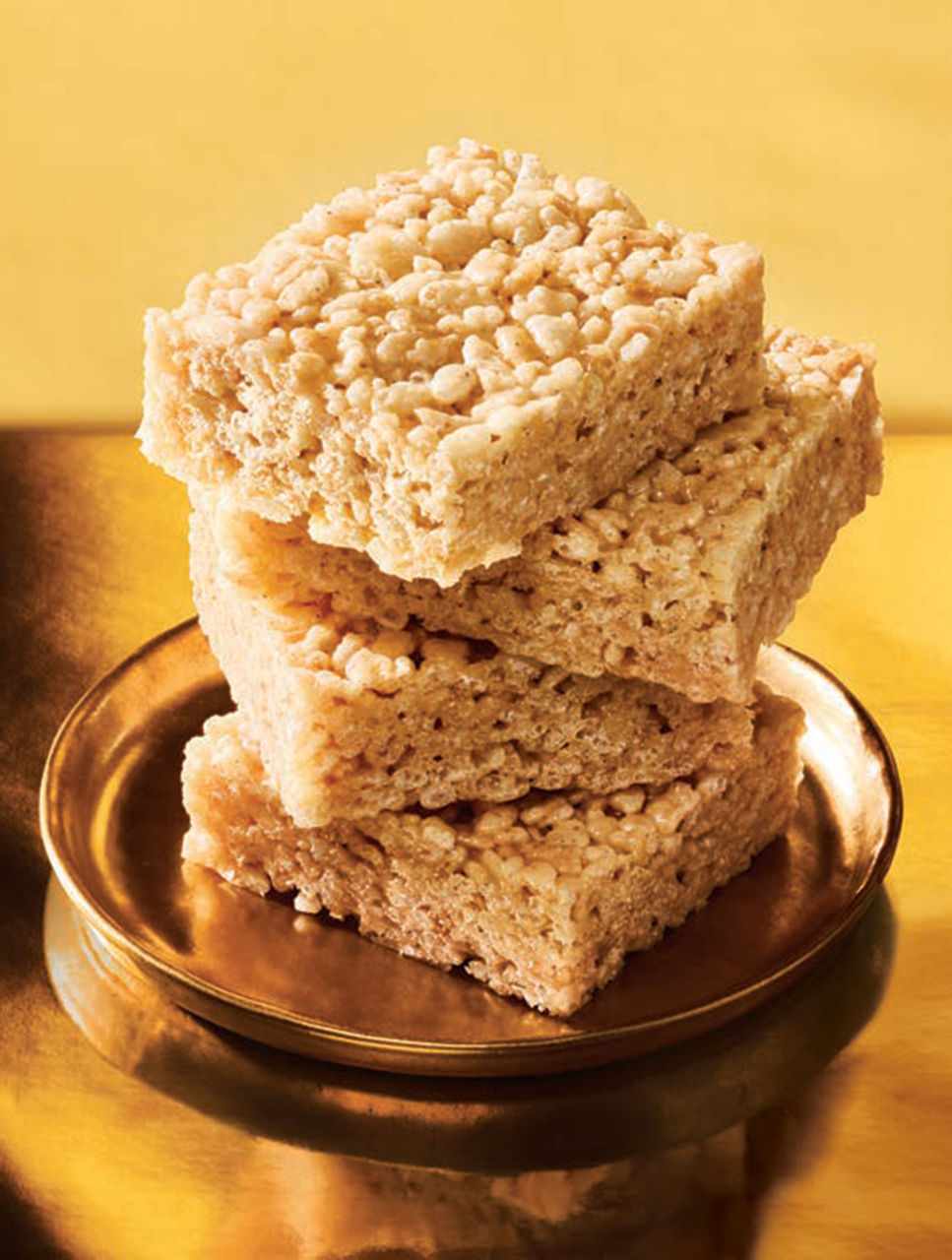
    Bourbon, Vanilla Bean, and Brown Butter Crispy Rice Squares

    Bourbon, Vanilla Bean, and 
    Brown Butter Crispy Rice Squares
    Dress up a childhood classic for the grown-up palate without turning on the oven! Vanilla bean and bourbon-infused brown butter transform the sweet marshmallow treat into a warm, 
    mellow, adults-only delight that stores well and makes a 
    wonderful addition to a holiday treat box.
    Ingredients:
    1/2 cup (125 mL) unsalted butter
    2 tbsp + 1 1/2 tsp (30 + 7 mL) bourbon, divided
    1 bag (455 g) regular marshmallows
    2 tsp (10 mL) vanilla paste
    3/4 tsp (4 mL) fine sea salt
    8 cups (2 L) crispy rice cereal


    Directions:
    Line a 9 × 13-inch (23 × 32-cm) baking dish with parchment paper and set aside.

    In a large pot, melt butter over medium heat, stirring often, until beginning to foam. Once foaming, stir continuously until butter smells sweet and nutty and turns golden brown, about 3 to 5 minutes.

    Pour 2 tbsp (30 mL) bourbon into browned butter and continue stirring for 1 minute to cook off some of the alcohol.

    Add marshmallows, stirring constantly, until almost melted and smooth. Working quickly, stir in vanilla paste, salt and remaining bourbon, and stir until mixture is smooth and creamy.

    Reduce heat to low and immediately stir in cereal, stirring until fully combined.

    With lightly buttered or damp hands, press mixture evenly into the prepared dish. Cool to room temperature, about 1 hour, before cutting into squares. Store at room temperature in a tightly sealed container for up to 1 week.     
    Makes 12 large or 24 small squares

    Friday, November 14, 2025

    My Favorite Forgiving Pie Crust

    My Favorite Forgiving Pie Crust
    Makes enough for a double crust 10-inch pie
    Ingredients:
    2 1/2 cups unbleached flour
    1 tablespoon sugar
    1 teaspoon salt
    1/2 cup unsalted butter, very cold
    1/2 cup transfat-free vegetable shortening, frozen

    Directions:
    Put flour, sugar and salt into a food processor. Pulse to mix well. Cut butter and shortening into small pieces and sprinkle them over the flour mixture. Use on/off pulses with the food processor to blend the fats into the flour. The mixture will look like coarse crumbs.

    Put ice cubes into about 1/2 cup water and let the water chill. Remove the ice cubes and drizzle about 6 tablespoons of the ice water over the flour mixture. Briefly pulse the machine just until the mixture gathers into a dough.

    Dump the mixture out onto a sheet of wax paper. Gather into two balls, one slightly larger than the other. Flatten the balls into thick disks. Wrap in plastic, and refrigerate until firm, about 1 hour. (Dough will keep in the refrigerator for several days.)

    Wednesday, November 12, 2025

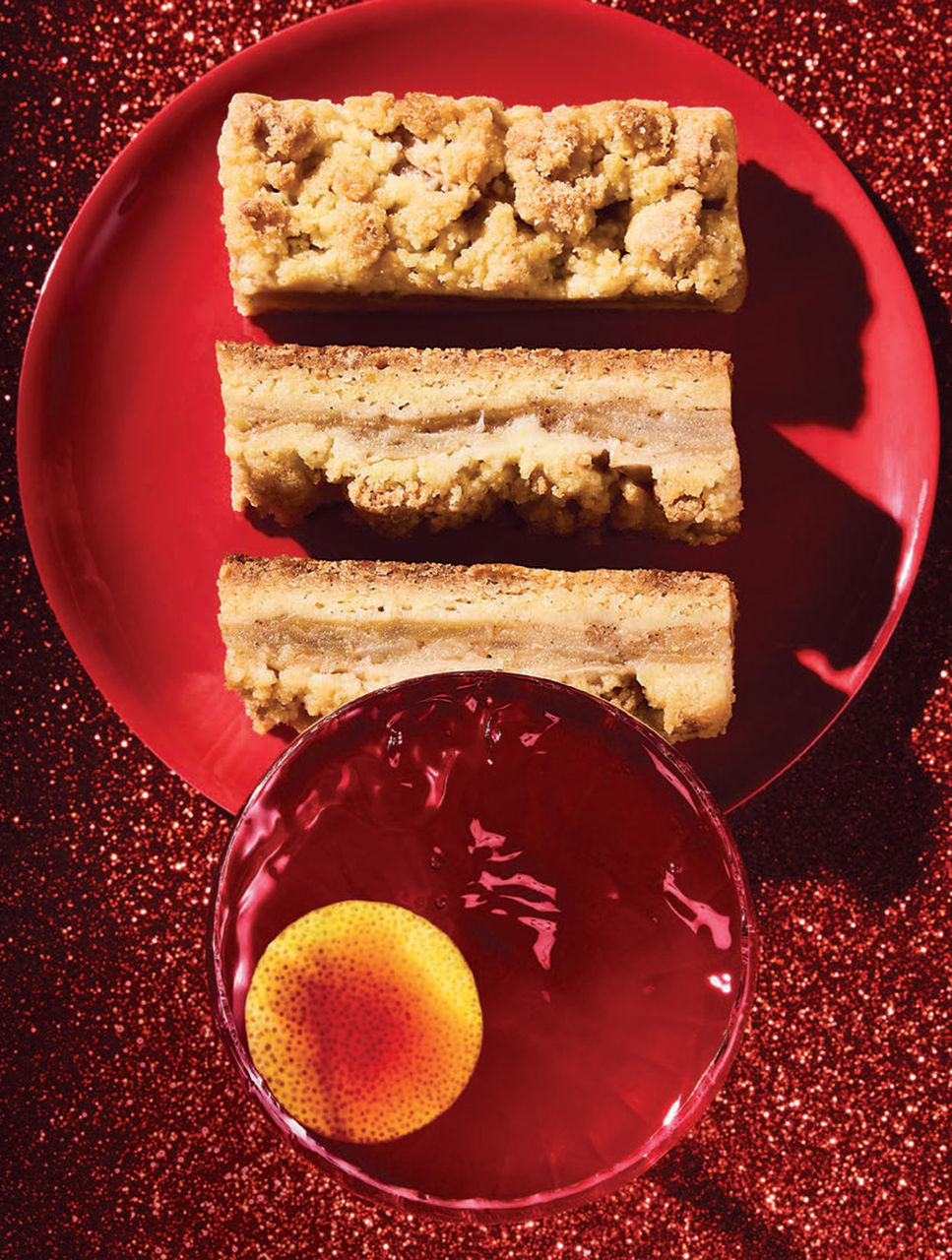
    Apple Pie Bars With Cognac


    Apple Pie Bars with Cognac
    Skip pastry with these easy, rustic and perhaps superior apple pie bars.   The cooked down apples release their sugars into a mix of lemon juice and Cognac creating an elevated filling suited for celebrations rounded out with a crumbly topping.
    Ingredients:
    Cognac Kissed Apple Pie Filling
    6 medium apples, a mix of tart and sweet, such as Gala and Granny Smith, about 907 g
    2 tbsp (30 mL) all-purpose flour
    1/3 cup (80 mL) granulated sugar
    1/4 tsp (1 mL) fine sea salt
    3/4 tsp (4 mL) cinnamon
    4 tsp (20 mL) Cognac
    1/2 tsp (2 mL) fresh lemon juice
    Crumb Crust                      
    1 large egg
    1 tsp (5 mL) vanilla extract
    1/2 tsp (2 mL) almond extract
    2 1/2 cups (625 mL) all-purpose flour
    1 cup (250 mL) granulated sugar
    1/2 tsp (2 mL) fine sea salt
    13 tbsp (195 mL) cold, unsalted butter, cubed and returned to fridge

    Directions:
    Preheat oven to 375°F (191°C) and line a 9 × 9-inch (23 x 23-cm) square baking pan with parchment paper.

    To make crust, in a small bowl, whisk the egg, and vanilla and almond extracts to combine and set in the fridge to chill.

    To the bowl of a food processor fitted with the S-blade, add the flour, sugar and salt and pulse to combine. Sprinkle the cold, cubed butter overtop, secure the lid, and pulse again until the butter is dispersed throughout and the largest piece is smaller than a pea.

    Remove the egg mixture from the fridge and pour it overtop of the flour mixture. Pulse one last time to combine. The dough should hold together when squeezed.

    Remove 13/4 cups (425 mL) of the crust mixture into a bowl and transfer to the refrigerator.

    Press the remaining dough into the bottom of the prepared pan, prick it with a fork and bake for 15 minutes. The edges will be lightly golden.

    Meanwhile, prepare the apple pie filling. Peel, core and thinly slice apples. Place them in a large bowl and sprinkle with the flour, sugar, salt and cinnamon; toss to combine. In a small bowl, stir together the Cognac and lemon juice. Drizzle it over the apples and toss once more.

    Spread the apples and the juices evenly overtop of the par-baked crust. Sprinkle with the reserved chilled crust mixture, breaking off bits so it resembles a crumble. Press down gently so crumble sticks lightly to the apples.

    Bake for 15 minutes, then lower the oven temperature to 350°F (177°C)

    10. Bake, rotating halfway through, for 50 minutes more, or until the topping is golden brown and the apples are soft. Remove from oven and allow it to cool to room temperature before serving. Serve alone, or with vanilla ice cream or whipped cream and a dusting of icing sugar. Leftover bars will keep in a tightly sealed container in the fridge for 3 to 4 days.
    Makes 16 bars

    Tuesday, November 11, 2025

    Carrot Cake Scones

    Carrot Cake Scones
    These carrot cake scones are loaded with all of the good stuff – plenty of shredded carrots, coconut, pecans, raisins and some candied ginger for a fiery kick. Finished with a tangy cream cheese glaze, these scones are not too sweet and they're perfect for breakfast.
    Ingredients:
    2 ¼ cups all-purpose flour
    ¼ cup light brown sugar
    ½ tsp salt
    1 tbsp baking powder
    1 tsp cinnamon
    ¼ tsp nutmeg
    ⅛ tsp cloves
    1 cup grated carrots
    ½ cup raisins
    ½ cup shredded sweetened coconut
    ½ cup chopped nuts (we used pecans)
    3 tbsp crystallized ginger, finely chopped (optional)
    ½ cup heavy cream + more for brushing the scones
    1 large egg
    1 ½ teaspoons vanilla extract
    ½ cup unsalted butter, frozen
    Optional: 2 tablespoons coarse (turbinado) sugar for
    topping
    Cream cheese glaze recipe follows:

    Directions: 
    Preheat the oven to 350˚F. In a large bowl. whisk
    together the flour, brown sugar, salt, baking powder,
    cinnamon, nutmeg and cloves.

    Add in the grated carrots, raisins, coconut, nuts, and
    ginger, tossing to coat in the flour mixture.

    In a separate medium bowl, whisk together the heavy
    cream, egg, and vanilla.

    Using a box grater, grate the frozen butter into the
    bowl with the flour mixture. Gently work the
    ingredients together with a spatula or your hands so
    butter is evenly distributed, but don’t over-mix.

    Add in the heavy cream mixture and gently mix just
    until a shaggy dough forms. Avoid over-mixing – you
    should still be able to see the butter pieces throughout
    the dough.

    Transfer the dough to a clean, lightly floured surface.
    Using floured hands, shape the dough into a roughly
    10-inch disk. Using a sharp knife or bench scraper, cut
    the dough into 8 triangle wedges.

    Transfer the scones to a parchment paper-lined baking
    sheet. Place the scones in the freezer for 15 minutes,
    or in the refrigerator for 30 minutes to chill.

    Before baking, brush the tops with more heavy cream,
    then sprinkle with coarse sugar. Bake for 20-25
    minutes, until light golden brown on top.


    Cream Cheese Glaze (optional):
    1 tablespoon cream cheese, softened to room temp
    1 tablespoon unsalted butter, softened to room temp
    1/2 cup powdered sugar
    2 tablespoons heavy cream

    Mix ingredients until you have a lump free glaze.

    Monday, November 10, 2025

    Figgy Pudding

    Figgy Pudding. NY Times
    Also known as plum pudding or Christmas pudding, figgy pudding is a traditional British dessert served on Christmas. (“Pudding” in the United Kingdom is what “dessert” is called elsewhere.) Many families boast their own recipes, but in general, this rich cake-like dessert is made with a mix of dried fruits soaked in liquor, warm spices, fresh breadcrumbs, nuts and sometimes candied citrus. Beef suet, which is available online, is the traditional fat used, but it can be substituted with butter.  Figgy pudding preparations often begin the Sunday before Advent, on Stir-up Sunday, when family members take turns stirring the pudding. Figgy pudding requires planning, so start shopping for ingredients at least one month before Christmas. After the initial steam, the pudding rests at least 3 weeks for the flavors to meld. The pudding can also be made months in advance, stored in the freezer and reheated before serving. The final presentation of drizzling it with liquor and setting it on fire is worthy of a grand holiday celebration.
    9 hours cooking  3 weeks resting. 10 servings
    Ingredients:
    For The Pudding
    1cup/150 grams dried currants, (see Tip 1)
    1cup/150 grams raisins
    1cup golden raisins or sultanas
    3/4 cup brandy plus more for serving
    5 ounces/150 grams packaged, not fresh, beef suet, or
        ¾ cup/172 grams unsalted butter
    120 grams fresh white bread (3 to 4 slices)
    8 tablespoons unsalted butter softened at room temperature
    1cup/150 grams packed dark brown sugar
    ½cup/70 grams all-purpose flour
    ½teaspoon baking powder
    1teaspoon pumpkin pie spice (see Tip 3)
    ½teaspoon kosher salt (such as Diamond Crystal)
    1medium tart apple, preferably Granny Smith
    2 large eggs
    1tablespoon black treacle or molasses, to taste (optional)
    ½teaspoon lemon zest
    ⅓cup/50 grams blanched slivered almonds
    Unsalted butter, for greasing
    Hard sauce, ice cream, fresh heavy cream or English custard, for serving (optional)

    For The Hard Sauce
    8 tablespoons/115 grams unsalted butter, softened at room temperature
    ¾ cup/93 grams confectioners’ sugar, plus more to taste
    2 to 3 tablespoons brandy, to taste.

    Directions:
        Set aside a 2 liter pudding or a heat-proof bowl as well as a lidded pot of similar size.

        Place the currants and both types of raisins in a medium bowl. Add the brandy, mix, cover with plastic wrap and set aside at room temperature to soak overnight. Place the suet or butter in the freezer to make grating easier later.

      The following day, cube the bread, including the crust, transfer it to a food processor and pulse until you have fine crumbs. (Alternatively, you can shred the bread by hand.

      Transfer the bread crumbs to a large mixing bowl. Add the brown sugar, flour, baking powder, pumpkin spice and salt; mix, breaking up any clumps of brown sugar. Peel the apple, then grate it and the suet (or butter) on the large hole of a box grater over the dry ingredients. Add the eggs, black treacle and lemon zest. Mix well with a wooden spoon; the mixture will be thick. Stir in the almonds and the brandy-soaked currants and raisins, along with any of the liquid.

    At this point, the pudding can be steamed; or covered and refrigerated for up to 1 week for the flavors to deepen, and then steamed. To steam: Generously butter the pudding mold and transfer the mixture to it, filling the mold only ¾ of the way (the pudding will expand as it cooks). Pack down the mixture and smooth the top.   

    Cut a round piece of parchment that will fit on top of the pudding mixture; butter one side and place it, buttered-side-down, on top. Cover the top of the mold with another piece of parchment that has a little overhang. Secure the parchment tightly to the rim of the mold with a rubber band or string, then trim the overhang. (Two sets of hands make this job easier.) Repeat with another piece of parchment paper. (This is important to do even if your mold comes with a lid. If a lid is included, place it over the parchment and cover the top of the lid tightly with foil. If you don’t have a lid, cover the parchment with 2 pieces of foil. You want to ensure you have a water-tight seal on the mold as it steams.)

    Place the steamer basket in the pot. (If not using a steamer basket, place an inverted heat-proof plate or trivet, a folded cotton kitchen towel, or a couple of layers of aluminum foil on the bottom of the pot. Anything heat-proof that the pudding mold can safely sit on to prevent direct contact with the heat source will work.) Fill the pot ¼ of the way with water and bring to boil. Bring a separate kettle or small pot of water to boil. Carefully lower the pudding mold into the steamer basket, or rest it on top of whatever is in the bottom of the pot to prevent scorching. The water should come halfway up the sides of the mold. If it doesn’t, slowly add more boiling water from the kettle along the sides of the pot. Cover the pot, adjust the heat to medium-low or low —the water should be at a constant gentle simmer, but not boiling — and steam the pudding for 6 hours.

    Check the pudding every 30 minutes to make sure the water is always at the halfway mark, adding more boiling water as needed. After 6 hours, carefully remove the mold from the pot and cool to room temperature. Store the pudding, covered in its mold, in the fridge for at least 3 weeks and up to 6 weeks, or in the freezer for up to one year (see Storage Tips).

    Prepare the hard sauce, if using: Two days and up to 1 week before serving, place the butter in the bowl of a stand mixer fitted with the paddle attachment. (Alternatively, use a hand-held beater and a mixing bowl.) Beat on medium until light and creamy, about 2 minutes. Add the confectioners’ sugar and beat on medium just until smooth. Taste and add more sugar, if desired. Add the brandy, to taste, 1 tablespoon at a time, and mix by hand with a spatula until combined. Transfer to a serving dish, smooth the top, cover and refrigerate until hard.

    About 2 hours before serving the pudding, reheat the pudding by steaming as directed in Step 7, this time for 1 hour. Remove the mold from the pot and peel off all the coverings, being mindful of the steam. Place a serving dish over the mold and invert the pudding. Don’t remove the mold right away. Give it a little time and a jiggle to help release the pudding.
                                                                                                              Pour 2 to 3 tablespoons of brandy in a heat-proof ladle. Hold the ladle over the pudding and carefully light it. As soon as the brandy catches fire, pour it over the pudding. The pudding will light up in a blue haze; it will extinguish quickly on its own.                                                                                                                                                                       Slice the pudding and serve it warm with hard sauce, ice cream, or drizzled with heavy cream or custard. The pudding will keep in the fridge for up to 1 week, wrapped well in parchment and again in plastic wrap or aluminum foil.                                                           TIPS                                                                                       Feel free to substitute a variety of dried fruits for the currants and raisins, such as diced figs, apricots or cherries.                                                                                                                                                       Beef suet, a fat used in many British recipes, is traditional here. It comes packaged in a hard block or pellets. Fresh suet has a strong, meatier odor and taste, so it is not recommended here.                                                                                                                      Traditionally, an English spice mix is used that includes many of the spices used in American pumpkin spice mix, as well as ground coriander and mace. If you like, you can add a tiny pinch of those to the pumpkin spice.                                                                                                                                                                                                                                             If you’d like to remove the steamed pudding from the mold before storing it, wrap it very tightly with plastic wrap, then in foil. Before reheating, unwrap the pudding and transfer it back to the mold.


    Step 1

    Set aside a 2-liter pudding mold or similarly sized heat-proof bowl, as well as a lidded pot or steamer large enough to hold the mold. (A tall pot, like a stock pot or a pasta pot with a steamer basket, works well.)
    Step 2


    Place the currants and both types of raisins in a medium bowl. Add the brandy, mix, cover with plastic wrap and set aside at room temperature to soak overnight. Place the suet or butter in the freezer to make grating easier in Step 4.
    Step 3


    The following day, cube the bread, including the crust, transfer it to a food processor and pulse until you have fine crumbs. (Alternatively, you can shred the bread by hand.)

    Step 4


    Transfer the bread crumbs to a large mixing bowl. Add the brown sugar, flour, baking powder, pumpkin spice and salt; mix, breaking up any clumps of brown sugar. Peel the apple, then grate it and the suet (or butter) on the large hole of a box grater over the dry ingredients. Add the eggs, black treacle and lemon zest. Mix well with a wooden spoon; the mixture will be thick. Stir in the almonds and the brandy-soaked currants and raisins, along with any of the liquid.


    Step 5


    At this point, the pudding can be steamed; or covered and refrigerated for up to 1 week for the flavors to deepen, and then steamed. To steam: Generously butter the pudding mold and transfer the mixture to it, filling the mold only ¾ of the way (the pudding will expand as it cooks). Pack down the mixture and smooth the top.
    Step 6


    Cut a round piece of parchment that will fit on top of the pudding mixture; butter one side and place it, buttered-side-down, on top. Cover the top of the mold with another piece of parchment that has a little overhang. Secure the parchment tightly to the rim of the mold with a rubber band or string, then trim the overhang. (Two sets of hands make this job easier.) Repeat with another piece of parchment paper. (This is important to do even if your mold comes with a lid. If a lid is included, place it over the parchment and cover the top of the lid tightly with foil. If you don’t have a lid, cover the parchment with 2 pieces of foil. You want to ensure you have a water-tight seal on the mold as it steams.)
    Step 7


    Place the steamer basket in the pot. (If not using a steamer basket, place an inverted heat-proof plate or trivet, a folded cotton kitchen towel, or a couple of layers of aluminum foil on the bottom of the pot. Anything heat-proof that the pudding mold can safely sit on to prevent direct contact with the heat source will work.) Fill the pot ¼ of the way with water and bring to boil. Bring a separate kettle or small pot of water to boil. Carefully lower the pudding mold into the steamer basket, or rest it on top of whatever is in the bottom of the pot to prevent scorching. The water should come halfway up the sides of the mold. If it doesn’t, slowly add more boiling water from the kettle along the sides of the pot. Cover the pot, adjust the heat to medium-low or low —the water should be at a constant gentle simmer, but not boiling — and steam the pudding for 6 hours.
    Step 8


    Check the pudding every 30 minutes to make sure the water is always at the halfway mark, adding more boiling water as needed. After 6 hours, carefully remove the mold from the pot and cool to room temperature. Store the pudding, covered in its mold, in the fridge for at least 3 weeks and up to 6 weeks, or in the freezer for up to one year (see St
    1. orage 


      Tips).Step 9

    2. Prepare the hard sauce, if using: Two days and up to 1 week before serving, place the butter in the bowl of a stand mixer fitted with the paddle attachment. (Alternatively, use a hand-held beater and a mixing bowl.) Beat on medium until light and creamy, about 2 minutes. Add the confectioners’ sugar and beat on medium just until smooth. Taste and add more sugar, if desired. Add the brandy, to taste, 1 tablespoon at a time, and mix by hand with a spatula until combined. Transfer to a serving dish, smooth the top, cover and refrigerate until hard.

    3. Step 10

      About 2 hours before serving the pudding, reheat the pudding by steaming as directed in Step 7, this time for 1 hour. Remove the mold from the pot and peel off all the coverings, being mindful of the steam. Place a serving dish over the mold and invert the pudding. Don’t remove the mold right away. Give it a little time and a jiggle to help release the pudding.

    4. Step 11

      Pour 2 to 3 tablespoons of brandy in a heat-proof ladle. Hold the ladle over the pudding and carefully light it. As soon as the brandy catches fire, pour it over the pudding. The pudding will light up in a blue haze; it will extinguish quickly on its own.

    5. Step 12

      Slice the pudding and serve it warm, topped with hard sauce or ice cream, or drizzled with heavy cream or custard. The pudding will keep in the fridge for up to 1 week, wrapped well in parchment and again in plastic wrap or aluminum foil.

    TIPS
    • Tip 1: Feel free to substitute a variety of dried fruits for the currants and raisins, such as diced figs, apricots or cherries.
    • Tip 2: Beef suet, a fat used in many British recipes, is traditional here. It comes packaged in a hard block or pellets. Fresh suet has a strong, meatier odor and taste, so it is not recommended here.
    • Tip 3: Traditionally, an English spice mix is used that includes many of the spices used in American pumpkin spice mix, as well as ground coriander and mace. If you like, you can add a tiny pinch of those to the pumpkin spice.
    • Tip 4: If you’d like to remove the steamed pudding from the mold before storing it, wrap it very tightly with plastic wrap, then in foil. Before reheating, unwrap the pudding and transfer it back to the mold.