Showing posts with label Scones. Show all posts

Thursday, December 18, 2025

Carrot Cake Scones

Carrot Cake Scones
These carrot cake scones are loaded with all of the good stuff – plenty of shredded carrots, coconut, pecans, raisins and some candied ginger for a fiery kick. Finished with a tangy cream cheese glaze, these scones are not too sweet and they're perfect for breakfast.
Ingredients:
2 ¼ cups all-purpose flour
¼ cup light brown sugar
½ tsp salt
1 tbsp baking powder
1 tsp cinnamon
¼ tsp nutmeg
⅛ tsp cloves
1 cup grated carrots
½ cup raisins
½ cup shredded sweetened coconut
½ cup chopped nuts (we used pecans)
3 tbsp crystallized ginger, finely chopped (optional)
½ cup heavy cream + more for brushing the scones
1 large egg
1 ½ teaspoons vanilla extract
½ cup unsalted butter, frozen
Optional: 2 tablespoons coarse (turbinado) sugar for
topping
Cream cheese glaze recipe follows:

Directions: 
Preheat the oven to 350˚F. In a large bowl. whisk
together the flour, brown sugar, salt, baking powder,
cinnamon, nutmeg and cloves.

Add in the grated carrots, raisins, coconut, nuts, and
ginger, tossing to coat in the flour mixture.

In a separate medium bowl, whisk together the heavy
cream, egg, and vanilla.

Using a box grater, grate the frozen butter into the
bowl with the flour mixture. Gently work the
ingredients together with a spatula or your hands so
butter is evenly distributed, but don’t over-mix.

Add in the heavy cream mixture and gently mix just
until a shaggy dough forms. Avoid over-mixing – you
should still be able to see the butter pieces throughout
the dough.

Transfer the dough to a clean, lightly floured surface.
Using floured hands, shape the dough into a roughly
10-inch disk. Using a sharp knife or bench scraper, cut
the dough into 8 triangle wedges.

Transfer the scones to a parchment paper-lined baking
sheet. Place the scones in the freezer for 15 minutes,
or in the refrigerator for 30 minutes to chill.

Before baking, brush the tops with more heavy cream,
then sprinkle with coarse sugar. Bake for 20-25
minutes, until light golden brown on top.


Cream Cheese Glaze (optional):
1 tablespoon cream cheese, softened to room temp
1 tablespoon unsalted butter, softened to room temp
1/2 cup powdered sugar
2 tablespoons heavy cream

Mix ingredients until you have a lump free glaze.

Tuesday, November 11, 2025

Carrot Cake Scones

Carrot Cake Scones
These carrot cake scones are loaded with all of the good stuff – plenty of shredded carrots, coconut, pecans, raisins and some candied ginger for a fiery kick. Finished with a tangy cream cheese glaze, these scones are not too sweet and they're perfect for breakfast.
Ingredients:
2 ¼ cups all-purpose flour
¼ cup light brown sugar
½ tsp salt
1 tbsp baking powder
1 tsp cinnamon
¼ tsp nutmeg
⅛ tsp cloves
1 cup grated carrots
½ cup raisins
½ cup shredded sweetened coconut
½ cup chopped nuts (we used pecans)
3 tbsp crystallized ginger, finely chopped (optional)
½ cup heavy cream + more for brushing the scones
1 large egg
1 ½ teaspoons vanilla extract
½ cup unsalted butter, frozen
Optional: 2 tablespoons coarse (turbinado) sugar for
topping
Cream cheese glaze recipe follows:

Directions: 
Preheat the oven to 350˚F. In a large bowl. whisk
together the flour, brown sugar, salt, baking powder,
cinnamon, nutmeg and cloves.

Add in the grated carrots, raisins, coconut, nuts, and
ginger, tossing to coat in the flour mixture.

In a separate medium bowl, whisk together the heavy
cream, egg, and vanilla.

Using a box grater, grate the frozen butter into the
bowl with the flour mixture. Gently work the
ingredients together with a spatula or your hands so
butter is evenly distributed, but don’t over-mix.

Add in the heavy cream mixture and gently mix just
until a shaggy dough forms. Avoid over-mixing – you
should still be able to see the butter pieces throughout
the dough.

Transfer the dough to a clean, lightly floured surface.
Using floured hands, shape the dough into a roughly
10-inch disk. Using a sharp knife or bench scraper, cut
the dough into 8 triangle wedges.

Transfer the scones to a parchment paper-lined baking
sheet. Place the scones in the freezer for 15 minutes,
or in the refrigerator for 30 minutes to chill.

Before baking, brush the tops with more heavy cream,
then sprinkle with coarse sugar. Bake for 20-25
minutes, until light golden brown on top.


Cream Cheese Glaze (optional):
1 tablespoon cream cheese, softened to room temp
1 tablespoon unsalted butter, softened to room temp
1/2 cup powdered sugar
2 tablespoons heavy cream

Mix ingredients until you have a lump free glaze.

Friday, November 17, 2023

Nutella Scones

Nutella Scones:
Ingredients
2 1⁄2 c. flour
1⁄2 c. sugar
1 T. baking powder
1 1⁄4 stick unsalted butter, sliced
1 c. buttermilk
Nutella
Course sugar crystals
Sliced almonds

Directions:
Preheat oven to 350 degrees. Prepare a baking sheet with parchment paper. 

Mix the flour, sugar and baking powder in a large bowl. Add butter and mix with a fork without overdoing it. It must stay crumbly and dry.  

Incorporate buttermilk until the mixture stays together. 

With your hands, make 2-inch balls of batter. Flatten balls in the center. Add 1/2 T. nutella (or more if you like them sweeter). 

Close balls, and don’t worry if they stay uneven. Decorate with sliced almonds and sugar crystals. Bake 15-20 minutes or until golden brown.

Sunday, March 20, 2022

Maple Oat Scones With Candied Bacon

Maple Oat Scones With Candied Bacon
Balancing on the edge between sweet and savoury, these hearty scones can be served as a side to a classic egg breakfast or on their own with extra syrup and whipped cream. The dough will look ragged but don’t be tempted to overwork it or you will end up with a tough finished product. Scones are best served the same day. Freeze any extras before baking and pop them in the oven when needed.

Ingredients:
Candied Bacon
10 slices bacon 2 tbsp (30 mL) maple syrup, divided
3 tbsp (45 mL) brown sugar, divided
Scones
3 ½ cups (875 mL) all-purpose flour
1 ¼ tsp (6 mL) baking soda
2 ½ tsp (12 mL) baking powder
1 tsp (5 mL) salt
2 cups (500 mL) old-fashioned rolled oats
1 ¼ cups (310 mL) unsalted butter, cold, cut into 1-inch (2.5-cm)
 
   pieces
¾ cup (175 mL) maple syrup, plus extra for brushing
¾ cup (175 mL) buttermilk
Whipped cream and maple syrup for serving (optional)

Directions:
For the candied bacon, line a baking sheet with parchment; set aside. Working in 2 batches,
place the slices of bacon in a cold frying pan in a single layer. Pour over 1 tbsp (15 mL) of the maple syrup and sprinkle with half the brown sugar. Turn heat to medium-low. Once sizzling starts, turn heat to low. Cook gently for 15 to 20 minutes turning often (cooking time will vary depending on the thickness of your slices). Remove to prepared baking sheet when browned and shiny (bacon will harden as it cools). Cool to room temperature. Repeat with second batch. Cut or break into small pieces. Reserve, covered, at room temperature. Bacon can be made up to 2 days in advance.

Preheat oven to 350 °F (180 °C). Line a baking sheet with parchment paper; set aside.

For the scones, in a large bowl whisk together flour, baking soda, baking powder, salt, oats and 1 cup (250 mL) of candied bacon (reserve remaining bacon for garnish). With a pastry blender (or fingertips) work butter into flour mixture until pieces of butter are the size of chickpeas. In a separate bowl whisk together ¾ cup (175 mL) maple syrup and buttermilk; add to flour mixture. Stir until it just comes together.

Turn dough out onto work surface and press into a 10 x 10-inch (25 x 25-cm) square, about 1 ½ inches (4 cm) thick. Using a sharp knife cut into 12 equal-sized rectangles. Place on prepared baking sheet and brush with extra maple syrup. Top each with an equal amount of reserved bacon. Bake on centre rack for 20 to 25 minutes or until they are golden brown and cooked through. Remove from oven and brush with more maple syrup. Serve with whipped cream and extra maple syrup, if desired.

Makes 12 scones

Thursday, January 13, 2022

Tillamook Cherry-Almond Scones

Cherry-Almond Scones
Ingredients:
2 cups all purpose flour
2 teaspoon baking powder
3/4 teaspoon salt
1/4 cup sugar
1/2 cup unsalted butter, chilled and cut into 1/2" pieces
1/4 cup dried cherries, chopped
1/4 cup almonds, coarsely chopped
1 tablespoon fresh orange zest
1/4 cup whole milk
1/4 teaspoon almond extract

Directions:
Preheat a 450*F oven.

In a large bowl sift together flour baking powder, salt, and sugar.  Add butter pieces and work well with finger or work with pastry blender until mixture resembles coarse meal.  

Stir in cherries, almonds, and orange zest.  Make a well in the center and our the milk and almond extract.  

With a rubber spatula quickly mix ingredients into soft slightly a wet dough.

Turn dough onto a lightly floured surface.  Lightly sprinkle dough with flour and pat into a 7" circle.  Cut into 8 wedges. Place on a greased baking sheet spacing 2 inches apart.  

Bake 12 to 14 minutes until lightly browned.  Serve warm from the oven.  Yield: 8 Scones

If using salted butter omit the salt in the recipe. 


Monday, August 30, 2021

Brown Butter Rye Scones

                                                                                  
Brown Butter Rye Scones
Although rye is often associated with bread, we think this classic grain has endless possibilities when introduced into other baking categories. In this scone, pumpernickel flour adds a subtle dimension to flavors from other grains. We enjoy the tasty wholesomeness of these scones served plain, but for over-the-top tastiness, we recommend adding the glaze. King Arthur Flours.

Prep: 15 mins  Bake: 15 to 18 mins  Yield: 8 scones

Ingredients
Scones
8 tablespoons (113g) unsalted butter, cold, divided
1/2 cup (64g) Six-Grain Blend or old fashioned oats
1/2 cup (57g) Whole Wheat Flour
1 cup (106g) pumpernickel flour medium rye flour
1 tablespoon baking powder
3 tablespoons (35g) sugar
1/2 teaspoon salt
2 large eggs
1/3 cup (74g) milk  (try reducing to 1/4 cup)
Glaze:
2 tablespoons (28g) unsalted butter, browned
3/4 cup (85g) confectioners' sugar
1/4 teaspoon vanilla-butternut flavor or 1/2 teaspoon vanilla extract
1 to 2 tablespoons (14 to 28g) milk

Directions:
To make the brown butter: Melt, then cook 5 tablespoons of the butter in a saucepan over medium heat, swirling occasionally, until golden brown. Pour into a heatproof container, cool slightly, then freeze until solid, about 2 hours.  Illustrated directions follows.

Scones:
Preheat the oven to 425°F. Line a baking sheet with parchment.

Combine the 6-grain blend, flours, baking powder, sugar, and salt until well blended.

Work both the chilled brown butter and the additional 3 tablespoons butter into the flour mixture until unevenly crumbly.

Combine the eggs and milk, then mix into the flour-butter mixture.

Turn the dough out onto a floured surface and pat it into an 8" disk. Cut into 8 wedges and place on the baking sheet.

Bake the scones for 15 to 18 minutes, until golden. Cool slightly before glazing.


To make the glaze: 
Brown the butter as you did for the scones, then combine all the ingredients, adding enough milk to make a spreadable glaze. Glaze scones while still warm, and serve.

Store any leftover scones well-wrapped, at room temperature, for several days. Freeze for longer storage.


How to make brown butter:

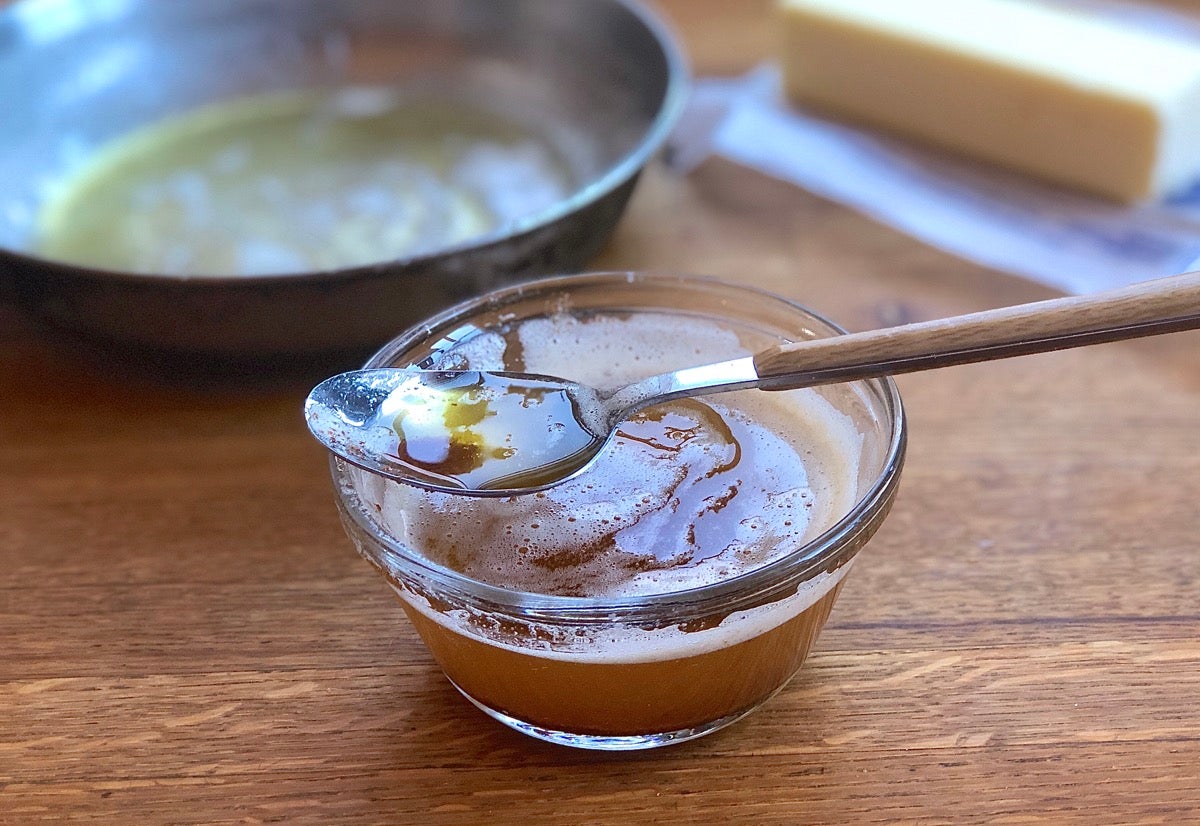
Bowl of hot brown butter, straight from the skillet.

How does regular butter become brown butter?

Brown butter is butter that’s heated until its water evaporates and its milk proteins and sugars (specifically, lactose) turn brown. This process is an example of the Maillard reaction, a chemical interaction between amino acids and sugar that results in darkened color and the production of a variety of flavor compounds. The Maillard reaction is responsible for the “toasty” flavor in a slice of breakfast toast, the delicious crispy edges of a chocolate chip cookie, and the rich flavor of a golden-brown croissant.

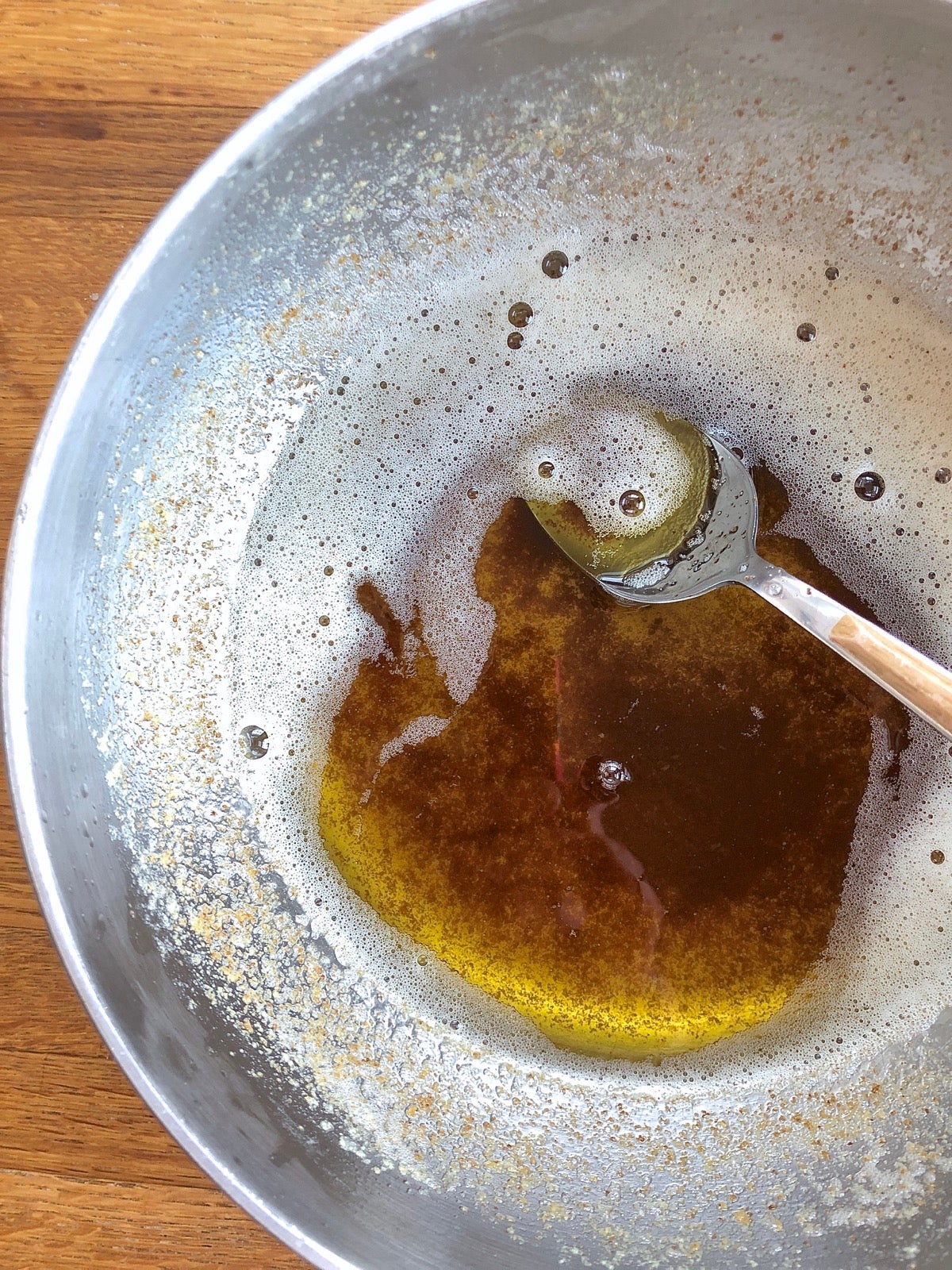
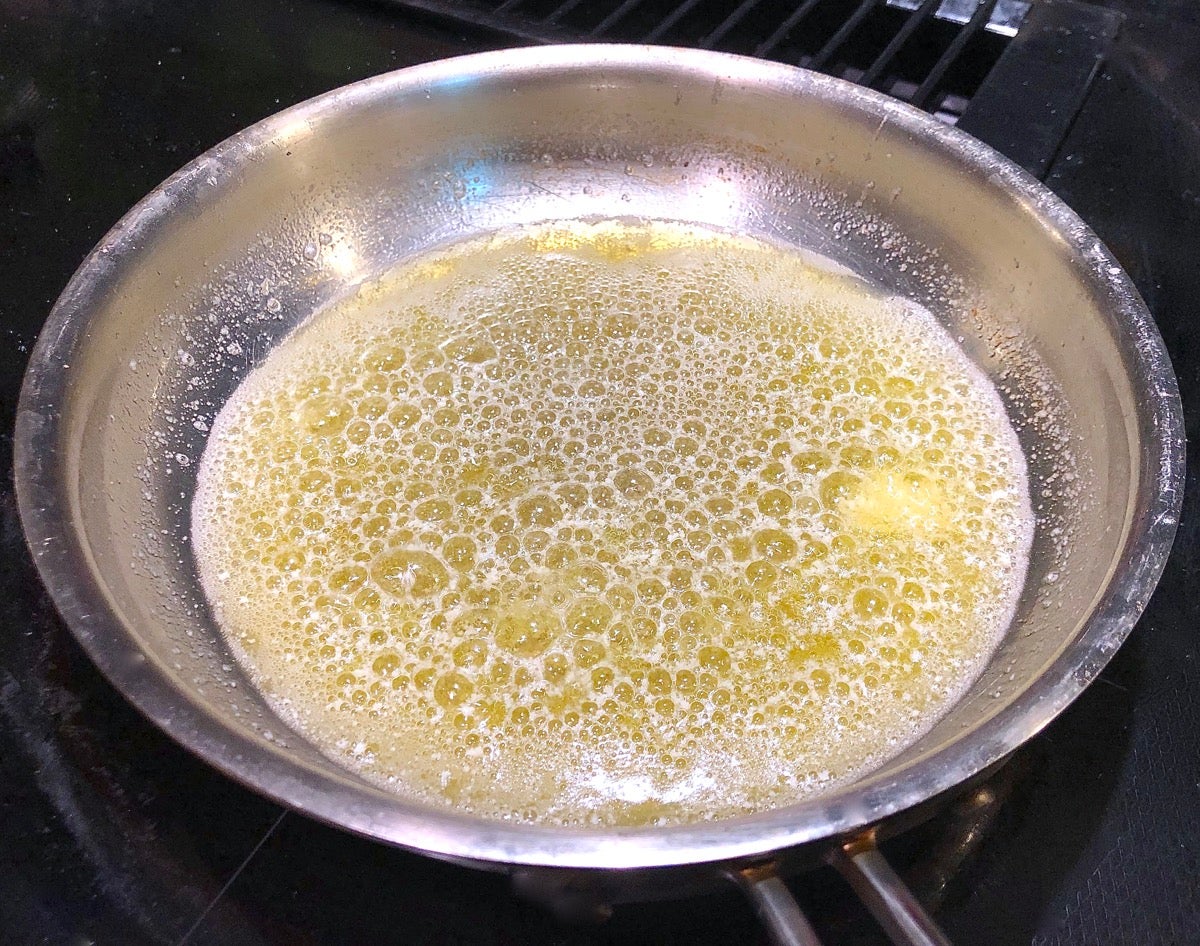
Brown butter in a skillet showing dark milk solids at the bottom of the pan.

When butter is melted and then simmered, it gradually separates into two parts: its inherent fat, and its milk solids, which drop to the bottom of the pan. The fat darkens somewhat, but the silty looking milk solids brown significantly, moving from light mahogany to almost black as the butter simmers.

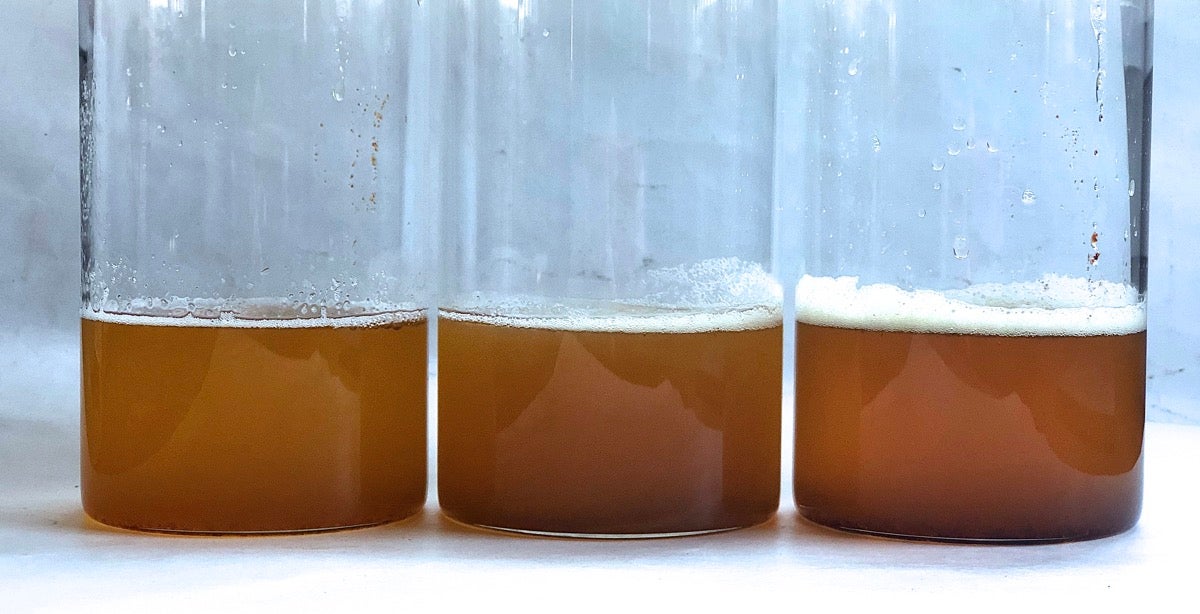
Three clear glass lab jars of liquid brown butter, showing slight differences in color.
Three "strengths" of brown butter. Note the base of each jar, where you can see the dark milk solids. The jar on the left is light brown butter, the one on the right darker, and the one in the center darker still.

Brown butter’s flavor reflects the color of its milk solids: very light solids give the butter mild flavor; dark solids, a much richer, “toastier” experience.

For comparison's sake think of maple syrup, whose grades range from light amber to dark/robust: the darker the syrup, the more maple-y it tastes. Thus with brown butter: the darker it is, the stronger its butter flavor. (Stop short of letting that sediment turn black, though: blackened butter is bitter.)

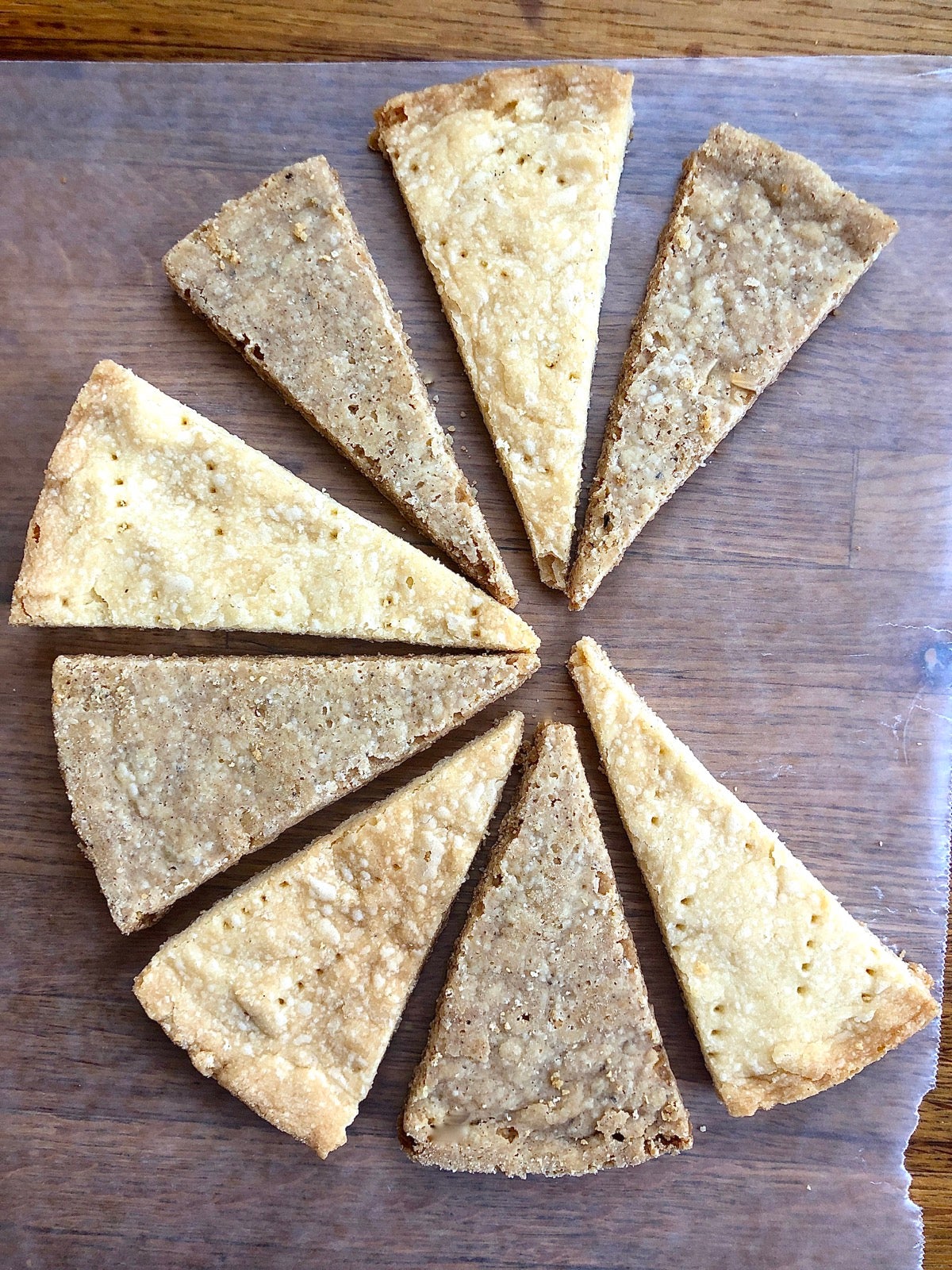
Shortbread wedges on a counter, some made with brown butter, some with standard butter.
Two batches of shortbread, one made with brown butter, one with standard butter. Notice the difference in color.

What can I bake with brown butter?

Use brown butter just about everywhere you’d use regular butter, including in cookies and cake, biscuits and pie crust, scones and muffins and pastry. It's also superb in icings and frostings: try it in our favorite Italian Buttercream, or Soft Cookie Frosting.

A couple of caveats: Brown butter may darken the color of lighter baked treats like sugar cookies and yellow cake. Also, brown butter's dark flecks may be visible. Just think of them as you would vanilla bean specks: indicative of wonderful flavor.

Butter sizzling in a shallow skillet.

How to make brown butter

This is a really easy process — but it’s not foolproof. You either pay attention, or pay the price: burned, bitter butter. Still, 10 to 12 minutes at the stove isn’t onerous, and brown butter is certainly worth the effort.

I typically use 8 ounces (227g, 16 tablespoons, two sticks) of unsalted butter. Why unsalted? Salted butter runs the risk of becoming too salty as the butter’s liquid evaporates. Salted butter also tends to foam more as it melts, making it difficult to see the butter underneath changing color.

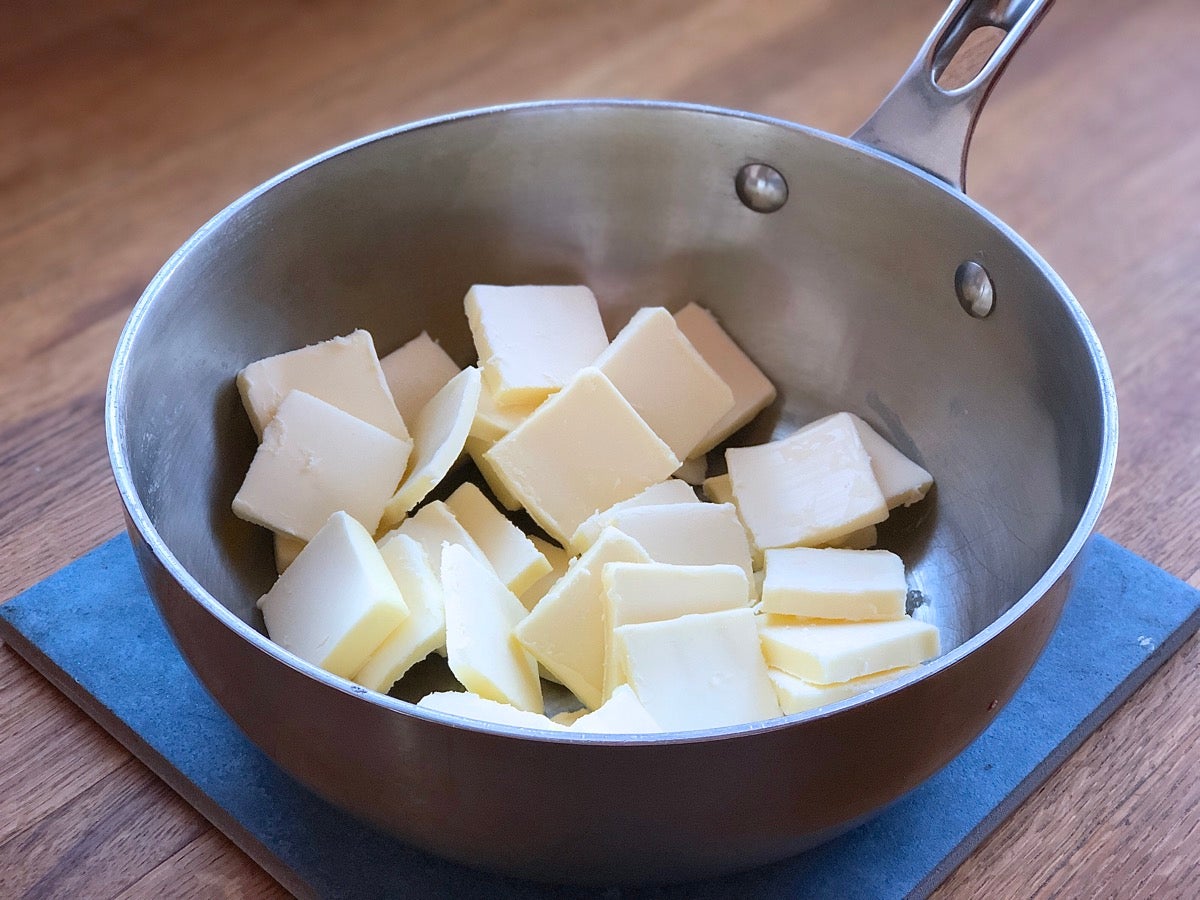
Pats of butter in a light-colored skillet, ready to melt and simmer into brown butter.

First, choose a light-colored pan. This will allow you to easily track the butter’s progress from amber to dark gold to chestnut brown.

Cut butter into uniform pieces so it heats evenly. While it’s tempting to just throw a couple of sticks of butter into the saucepan and forget about it, take the time to cut the butter into pats. This will ensure the butter melts evenly, a key to making brown butter that’s neither undercooked nor burned.

Place the pan on a burner set to medium heat. You’re looking for a very even heating experience. Using medium heat is a good compromise between high heat (too much risk of burning) and low (too slow)

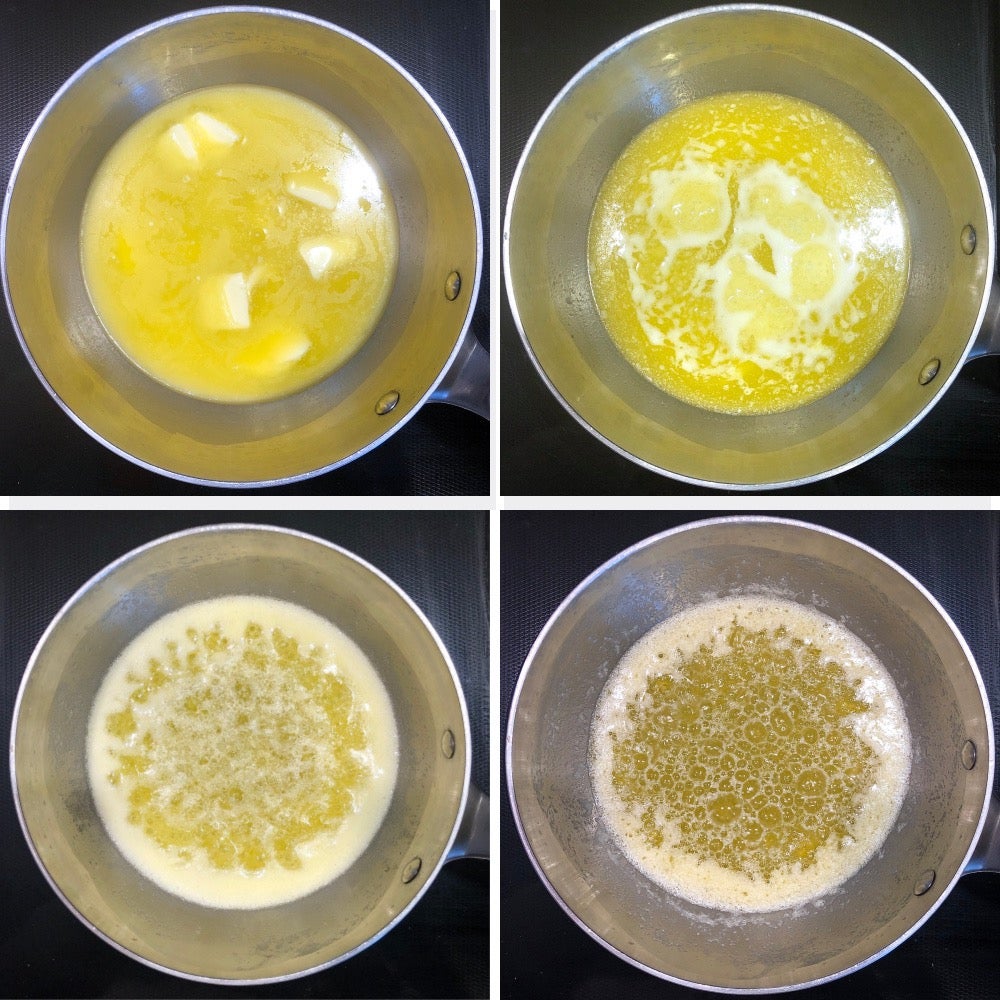
Four photos showing the four stages of butter browning in a saucepan

The butter gradually melts (photo at top left), then starts to sputter and pop as its water evaporates (top right). Foam collects on top as the butter continues to simmer (bottom left). The bubbles eventually become larger, pushing the foam to the sides of the pan and giving you a better view of the darkening milk solids underneath (bottom right).

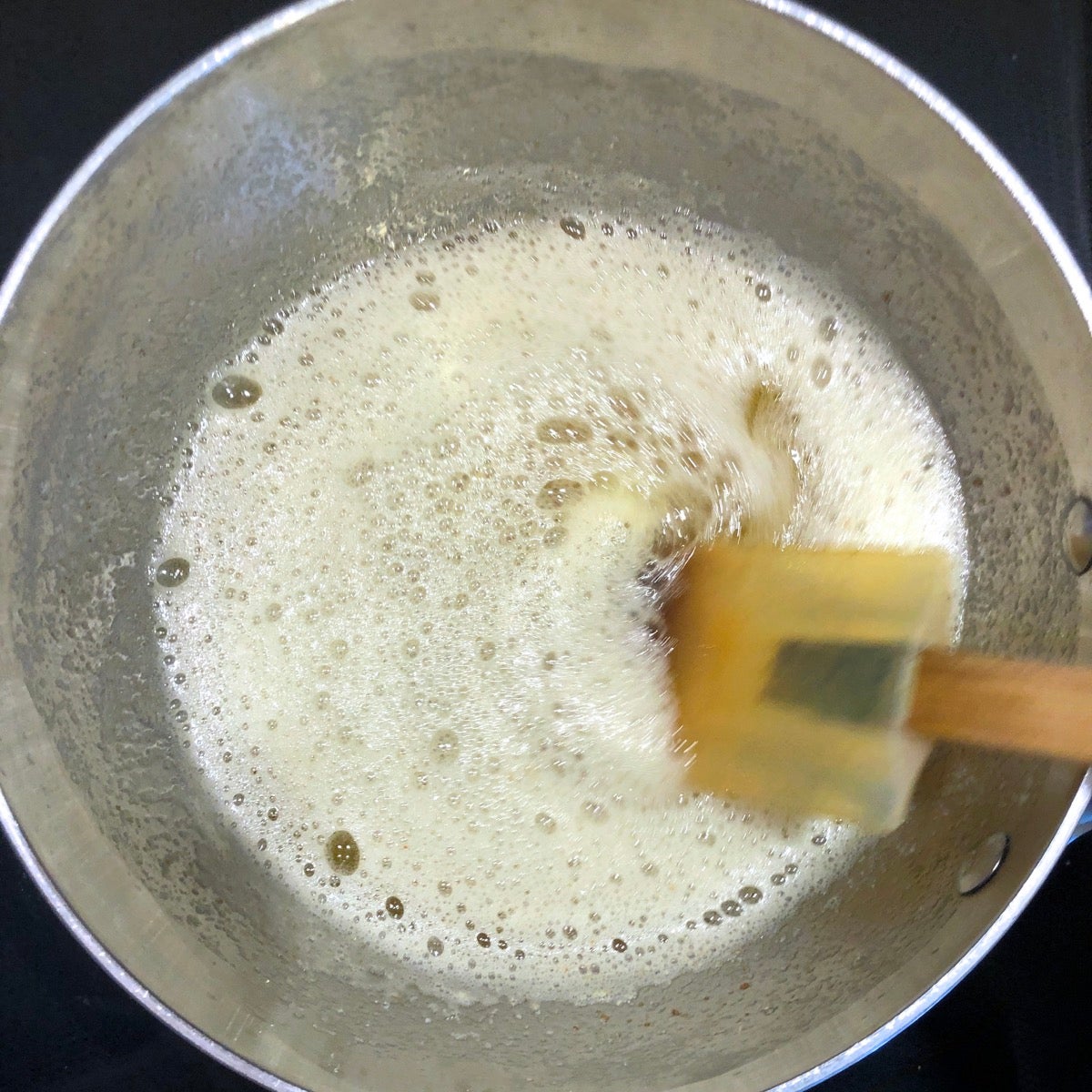
Using a spatula to stir simmering butter in a skillet.

Once the butter has stopped popping and sputtering and started foaming, swirl the pan to help clear the foam to the sides, and stir up the dark bits at the bottom with a heatproof spatula. Swirling and stirring keep the bits from burning.

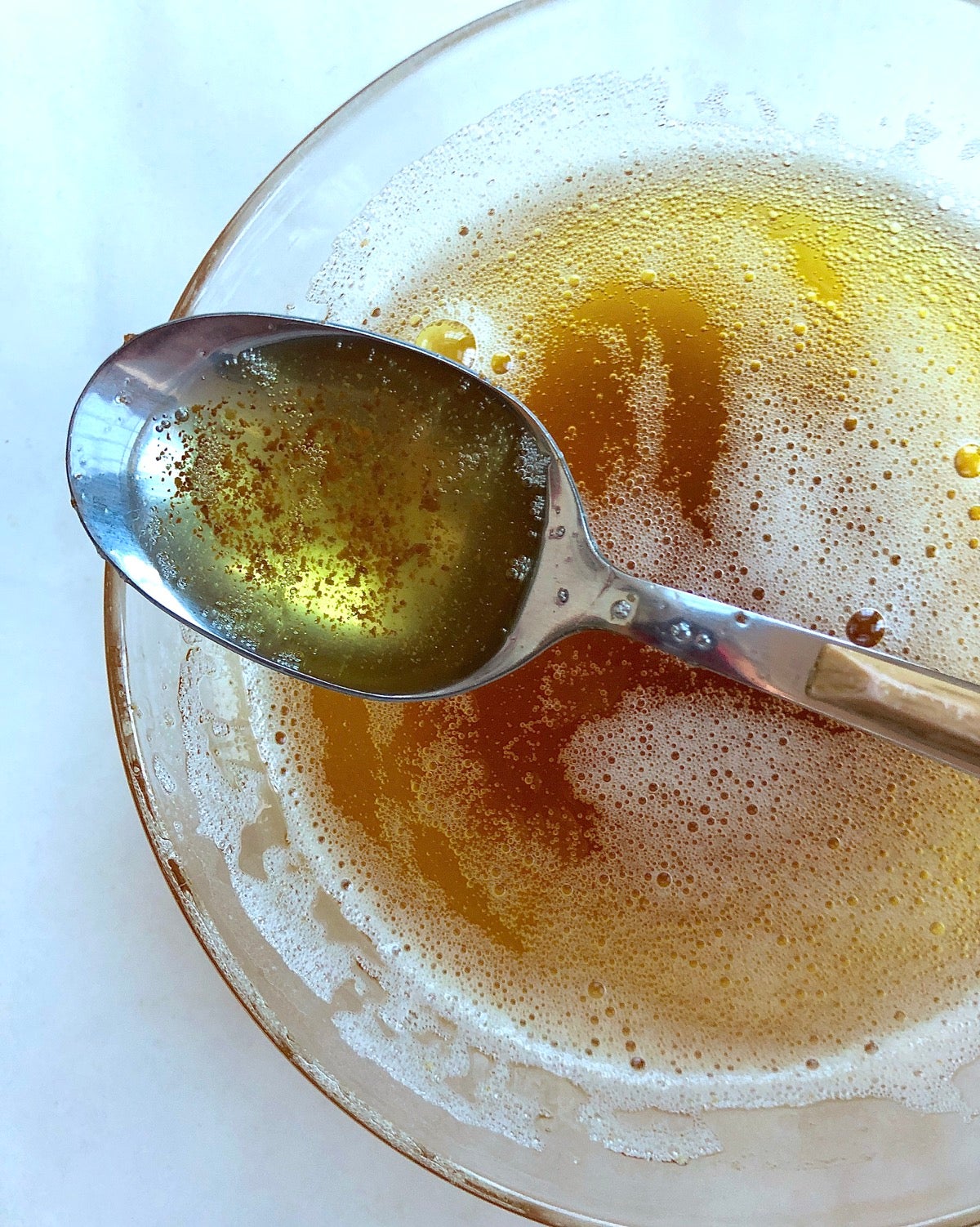
Brown butter in a bowl with some in a spoon showing the darker milk solids under the liquid fat.

When the butter has browned to your liking, remove the pan from the heat. You may prefer the mild flavor of barely browned butter, or the more intense taste of butter with a generous amount of deep brown milk solids; it's up to you.

In France, brown butter is called beurre noisette: hazelnut butter, referring to the preferred color of the browned solids. For added flavor leave the pan on the heat beyond this point, long enough to yield solids that are a really deep mahogany brown.

Once the butter is as brown as you like, speed is imperative: immediately remove the pan from the heat and pour the butter into a heatproof container, to stop it cooking any further.

If your recipe calls for melted butter, you can use brown butter immediately. But if your recipe calls for softened, room temperature, or cold butter, you’ll need to refrigerate it first.

Brown butter becomes rock hard in the refrigerator, making it appropriate for recipes that need cold butter to be “worked” into flour (think biscuits and pie crust).

For recipes calling for room-temperature butter, remove brown butter from the fridge an hour or so ahead of time, just as you would regular butter. For softened butter, give room-temperature butter a few quick stirs; it should loosen up nicely.

Brown butter keeps well for several weeks in the refrigerator; store it airtight. A glass jar is your best bet.

Brown butter in a bowl, chilled in the refrigerator to make it solid.

Brown butter tips  

Adjust the liquid in your recipe if necessary. Since butter is 15% water, you need to adjust your recipe to make up for the liquid that evaporated from the butter during the simmering process. Add 1 tablespoon (14g) water (or other liquid) for every 1/2 cup (8 tablespoons, 113g) of butter used. Failing to add this extra liquid may yield a somewhat greasy final result, especially in something like chocolate chip cookies. 

For the biggest bang, use brown butter in butter-forward baked goods. While brown butter will make everything taste better, the difference in flavor is more apparent in baked treats that use a lot of butter and don’t offer a lot of competing flavors. Plain cookies (shortbread, sugar cookies), pie crust, puff shells (choux paste), flaky pastry, and biscuits are good examples. 

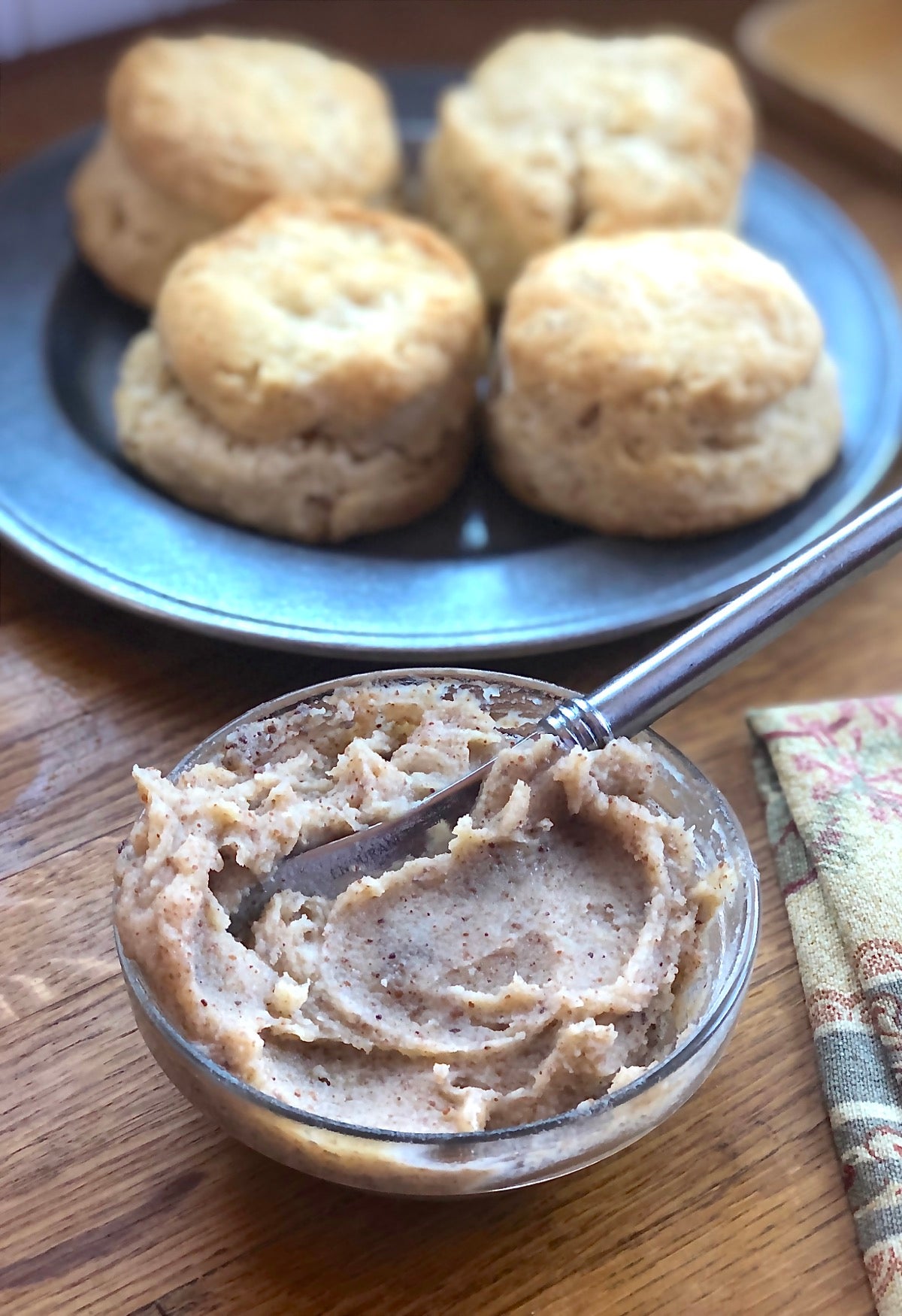
Brown butter's not just for baking. Drizzle melted brown butter onto cooked vegetables or fish, or use room-temperature brown butter as a spread on toast, pancakes, scones, muffins, or biscuits. It's also wonderful, as you'd expect, on popcorn.  

Store any leftover scones well-wrapped, at room temperature, for several days. Freeze for longer storage.


Friday, March 26, 2021

Cranberry Orange Scones

Cranberry Orange Scones
Ingredients:

4 cups plus 1/4 cup all-purpose flour
1/4 cup sugar, plus additional for sprinkling
2 tablespoons baking powder
2 teaspoons kosher salt
1 tablespoon grated orange zest
3/4 pound cold unsalted butter, diced
4 extra-large eggs, lightly beaten
1 cup cold heavy cream
1 cup dried cranberries
1 egg beaten with 2 tablespoons water or milk, for egg 
   wash
1/2 cup confectioners' sugar, plus 2 tablespoons
4 teaspoons freshly squeezed orange juice


Directions:
Preheat the oven to 400 degrees F. 

In the bowl of an electric mixer fitted with a paddle attachment, mix 4 cups of flour, 1/4 cup sugar, the baking powder, salt and orange zest. Add the cold butter and mix at the lowest speed until the butter is the size of peas. 

Combine the eggs and heavy cream and, with the mixer on low speed, slowly pour into the flour and butter mixture. Mix until just blended. The dough will look lumpy! Combine the dried cranberries and 1/4 cup of flour, add to the dough, and mix on low speed until blended.

Dump the dough onto a well-floured surface and knead it into a ball. Flour your hands and a rolling pin and roll the dough 3/4-inch thick. You should see small bits of butter in the dough. Keep moving the dough on the floured board so it doesn't stick. Flour a 3-inch round plain or fluted cutter and cut circles of dough. Place the scones on a baking pan lined with parchment paper. Collect the scraps neatly, roll them out, and cut more circles.

Brush the tops of the scones with egg wash, sprinkle with sugar, and bake for 20 to 25 minutes, until the tops are browned and the insides are fully baked. The scones will be firm to the touch. 

Allow the scones to cool for 15 minutes and then whisk together the confectioners' sugar and orange juice, and drizzle over the scones.

Wednesday, August 5, 2020

Blueberry Scones With Lemon Glaze

Blueberry Scones With Lemon Glaze

Ingredients

Ingredients for Scones:
2 cups all-purpose flour
1 tbsp baking powder
½ tsp salt
1/3 cup sugar
6 tbsp diced frozen butter
1/3 cup plain yogurt
2 eggs beaten
1 tsp vanilla
1 cup fresh blueberries
Ingredients for Glaze:
1 cup confectioners sugar
¼ cup lemon juice (about 3 large lemons)
Zest of 1 lemon
1 tbsp butter softened
Raw sugar for sprinkling (optional)


Directions
Important: Dice and freeze your butter at least 1 hr before starting, I left mine overnight so it was ready to go when I started.


Preheat oven 375 degrees

Combine all your dry ingredients, flour, salt, baking powder, and sugar in your food processor. Pulse a few time to combine well. Add in your frozen butter and pulse until you have a breadcrumb texture.

Transfer over flour mixture to large bowl and add wet ingredients eggs, yogurts, and vanilla. Fold mixture until just incorporated. Do not over mix! This will create a denser scone. (We want those frozen butter crumbles intact when it goes into the oven to create little melted pockets in our scones.) Very gently fold in the blueberries.

Flour up your hands and place dough on a well-floured surface. Pat down into a rectangle shape 1” thick.

Cut into triangles or desired shape. Place scones on greased baking sheet spaced about apart. These will grow. Bake in 375 degree oven for 25 min or until brown. You can check your scones with the toothpick test.

Prepare your glaze while these are baking or cooling.
In a bowl sift in your confectioners sugar and mix in butter. Pour in lemon juice, zest and mix well.
Glaze your scones once cooled a little and sprinkle with raw sugar which adds a nice crunch. Serve warm and enjoy!

Tuesday, August 4, 2020

Cherry Almond Scones

Cherry Almond Scones
Ingredients:
2 cups all purpose flour
2 teaspoons baking powder
3/4 teaspoon salt
1/4 cup sugar
1/2 cup unsalted butter, chilled and cut into 1/2 inch 
   pieces
1/4 cup almonds, roughly chopped
1/4 cup dried cherries, chopped
1 tablespoon fresh orange zest
3/4 cup whole milk
1/4 teaspoon almond flavoring

Directions:
Preheat oven to 450*F

In a large bowl sift together flour, baking powder, salt and sugar.

Add butter pieces and work with finger tips or pastry knife until mixture resembles very coarse meal. Stir in cherries, almonds, and orange zest.  

Make a well in the center and add the milk and almond extract.  With a rubber spatula, quickly blend ingredients into a soft, slightly wet dough.

Turn dough onto a well floured work surface.  Lightly sprinkle dough with flour.  Pat into a 7-inch circle and cut into 8 wedges.

Place the wedges on a well oiled baking sheet 2-inches apart.  Bake 12-14 minutes until well browned.  Serve warm from the oven.  Makes 8 scones

If using salted butter, omit the 3/4 teapsoon salt.


Sunday, April 14, 2019

Ham And Cheese Scones

Ham And Cheese Scones

Ingredients:

2 cups all-purpose flour
1 tablespoon baking powder
2 teaspoon sugar
1/2 teaspoon kosher salt
1/2 teaspoon black pepper, plus more for sprinkling
4 tablespoon cold unsalted butter, cut into small pieces
3 oz. sharp Cheddar cheese, grated (about 1 cup)
3 oz. thinly sliced ham, torn into pieces (about ¾ cup)
1 tablespoon fresh thyme, plus more for sprinkling
1 cup plus 1 tbsp. cold heavy cream


Directions:
Heat oven to 400°F. Line a baking sheet with parchment paper. 
In a large bowl, whisk together flour, baking powder, sugar, salt, and pepper. 
Add butter and, using your fingers, rub it into flour mixture until coarse crumbs form. Fold in cheese, ham, and thyme. 


Stir in 1 cup cream until just incorporated, no dry crumbs remain at bottom of bowl, and dough holds together when squeezed. Shape into ¾-in.-thick disk (about 8 in. in diameter). 


Using a sharp knife, cut dough into 8 triangles. Place on prepared sheet, brush with remaining Tbsp cream, and sprinkle with thyme and cracked pepper. 

Bake until golden brown, 18 to 22 minutes.

Tuesday, May 5, 2015

Pot O' Gold Scones

Pot o' Gold Scones
Ingredients:
Dough
2 1/4 cups (7 5/8 ounces) King Arthur white whole wheat flour, organic preferred
2 teaspoons baking powder
1/2 teaspoon baking soda
1/2 teaspoon salt
1/4 cup (1 7/8 ounces) brown sugar, firmly packed
1/3 cup (2 5/8 ounces) butter
1 1/2 cups (6 ounces) golden raisins
2/3 cup (2 5/8 ounces) diced walnuts or pecans
2 tablespoons (1 ounce) cold orange juice
1/3 cup (2 3/4 ounce) cold milk or half and half
1 1/2 teaspoons vanilla extract
2 large eggs

*
Topping
coarse white (sparkling) sugar, optional
Preheat the oven to 375°F. Lightly grease an 8-wedge scone pan, or line a large baking sheet with parchment paper.

To prepare the dough: In a medium-sized mixing bowl, whisk together the flour, baking powder, baking soda, salt, and sugar. Cut the butter into pats, and work it into the dry ingredients to make an unevenly crumbly mixture. Stir in the fruit/nuts.

In a medium-sized measuring cup, whisk together the orange juice, milk or half and half, vanilla, and eggs. Reserve out 1 tablespoon of the mixture, then add the remainder to the dry ingredients all at once, mixing just until the dough comes together.

Press the dough into the cups of the scone pan, filling them all the way. Or, using a muffin scoop or spoon, drop the dough by 1/4-cupfuls onto the prepared baking sheet, leaving about 1 1/2 inches between the scones. Brush with the reserved 1 tablespoon of the milk mixture, and sprinkle the tops with coarse white sugar.

To bake the scones: Bake the scones for 20 to 22 minutes, until they're starting to brown on top. Remove them from the oven, and serve warm, with jam and butter; or with fruit curd and English clotted cream or double Devon cream. To serve later, reheat scones, wrapped loosely in aluminum foil, for 8 to 10 minutes in a 350°F oven. Yield: 8 wedge-shaped scones from a scone pan, or 12 round drop scones.


Note: Golden raisins are the featured fruit in these tender, tasty scones, made with good-for-you white whole wheat. Substitute the dried fruit of your choice, for the raisins and/or the nuts; use a generous 2 cups of whatever fruit/nut combination you choose.

Tuesday, February 24, 2015

Savory Pumpkin Scones With Gruyere and Sage


Savory Pumpkin Scones With Gruyere And Sage

Ingredients:
1 stick unsalted butter, 4 tablespoons cubed and chilled
8 sage leaves, cut crosswise into thin ribbons
1 large shallot, finely chopped (1/4 cup)
1 cup pure pumpkin puree
1 teaspoon salt
1 teaspoon freshly ground black pepper
1 cup heavy cream
1/4 cup whole milk
2 cups all-purpose flour, plus more for dusting
2 teaspoons baking powder
7 ounces Gruyère cheese—6 ounces cut into 1/4-inch dice, 1 ounce shredded

*
Directions:
In a medium skillet, melt 1 tablespoon of butter until foaming. Add the sage and cook over moderately high heat, stirring, until crisp, about 30 seconds. Transfer to a paper towel–lined plate. Melt another 1 tablespoon of the butter in the skillet until foaming. Add the shallot and cook over moderately high heat until translucent, about 1 minute. Add the pumpkin puree, salt, pepper and 1/2 cup of the heavy cream and stir until very thick and reduced to 1 cup, about 4 minutes. Scrape the pumpkin mixture into a bowl and stir in the remaining 1/2 cup of heavy cream and the milk. Let cool to room temperature, then refrigerate until chilled, about 1 hour or overnight.

Preheat the oven to 350° and line a baking sheet with parchment paper. In a medium bowl, whisk the 2 cups of flour with the baking powder. Using a pastry blender or 2 knives, cut in the 4 tablespoons of cubed butter until the mixture resembles coarse meal. Add the diced cheese and toss to coat. Add the sage and the pumpkin mixture and stir just until combined.


Melt the remaining 2 tablespoons of butter. Turn the dough out onto a lightly floured surface and pat it into a 6-by-9-inch rectangle, 1 inch thick. Cut into 6 large triangles and transfer to the prepared baking sheet. Brush the tops of the scones with the melted butter and sprinkle with the shredded cheese. Bake until golden and puffy, about 25 minutes. Transfer to a wire rack to cool slightly; serve warm.
Yield: 6 Scones

Saturday, February 21, 2015

Sugared Lemon-Rosemary Scones


Sugared Lemon-Rosemary Scones

Ingredients:

2 1/4 cups all-purpose flour
1/3 cup sugar, plus more for sprinkling
2 tablespoons finely chopped fresh rosemary
1 tablespoon baking powder
3/4 teaspoon kosher salt
Finely grated zest of 1 lemon
1 1/2 sticks cold unsalted butter, cubed
3/4 cup heavy cream, plus more for brushing
*
Directions:
1.) In a food processor, pulse the flour with the 1/3 cup of sugar, the rosemary, baking powder, salt and lemon zest. Add the butter and pulse until the mixture resembles coarse meal, with some pea-size pieces of butter still visible. Transfer to a large bowl and stir in the 3/4 cup of cream until a shaggy dough forms. Turn the dough out onto a lightly floured work surface and gently knead just until it comes together. Gently roll the dough into a 14-inch log, wrap in plastic and refrigerate for 1 hour or until firm.  Can be refrigerated overnight to chill.  

2.) Preheat the oven to 375° and line a baking sheet with parchment paper. Slice the log into eight           1 3/4" rounds and transfer to the baking sheet. Brush the scones with cream and sprinkle generously with sugar. Bake for 22 to 25 minutes, until the scones are golden. Let cool slightly before serving.  Yield: 8 scones


MAKE AHEAD  The recipe can be prepared through Step 1 and refrigerated overnight.

Friday, February 6, 2015

Lavender and Lemon Scones


Lavender And Lemon Scones

{makes 16, adapted from Bon Appetit}

1/2 cup (1 stick) unsalted butter
1/4 cup (1/2 stick) salted butter
3 cups unbleached, all-purpose flour, plus more for kneading
3/4 cup sugar
1 TBSP baking powder
1 teaspoon dried culinary lavender
1 teaspoon kosher salt
1/2 teaspoon baking soda
1/2 cup buttermilk
1/2 cup half and half, plus more for brushing
2 teaspoons lemon zest
1 teaspoon vanilla bean paste (or extract)
sanding sugar
lemon curd

Place the butter in the freezer. Preheat oven to 425. Line a baking sheet with parchment.


Whisk together the flour, sugar, baking powder, lavender, salt and baking soda in a large bowl.

On the large holes of a grater, grate the frozen butter and add to the flour mixture. Stir gently, then rub the butter into the flour with your fingers until it resembles a coarse meal.


Whisk together the buttermilk, half and half, lemon zest and vanilla bean paste. Add to the flour/butter mixture and stir until a shaggy dough forms.

Dump the dough onto a floured surface and knead about 5 times, until the dough comes together. Pat into a 10 x 6" rectangle. Halve the dough into two 5 x 6" sections. Cut each section into fourths, then cut each square diagonally. (A bench scraper is the perfect tool for this.)

Place 8 of the scones on the prepared baking sheet. Brush lightly with half + half and sprinkle with sanding sugar. Bake for 13-15 minutes, until golden and done. Transfer to a wire rack and cool completely.

Meanwhile, place the remaining 8 scones on another baking sheet and freeze in a single layer. Once frozen, place in a freezer bag. Bake from freezer as directed above. Add a few more minutes of cooking time as necessary. If baking all at once, move oven racks to the lower and upper thirds and rotate sheets during cooking.

Once the scones are cooled, serve with a dollop (or three) of lemon curd. I used store-bought, but if you are looking to make your own, check out Sweetapolita's post on Citrus Curd. It's heavenly!

Monday, January 5, 2015

Apple Honey Scones


Apple Honey Scones

Buttery, flakey, studded with apples and delicately sweetened with honey, these scones are just the thing to enjoy with a cup of hot, mulled cider or hot toddy after a day of apple picking. A well-flavoured tart-sweet apple suited to baking is important for these scones to make sure the apple taste comes through. Leave the peel on the apples for a nice colour contrast.

Ingredients:
¾ cup (175 mL) buttermilk
1/4 cup (60 mL) + 2 tbsp (30 mL) liquid honey
2¼ cups (560 mL) all-purpose flour
2 tsp (10 mL) baking powder
½ tsp (2 mL) baking soda
½ tsp (2 mL) salt
½ tsp (2 mL) freshly grated nutmeg
or ground cinnamon
½ cup (125 mL) cold butter, cut into cubes
1½ cups (375 mL) diced Empire, Northern Spy or Idared apples

*
Directions:
1 Preheat oven to 425°F (220°C). Line a large baking sheet with parchment paper.

2 Whisk together buttermilk and ¼ cup (60 mL) of the honey until honey is dissolved.

3 Combine flour, baking powder, baking soda, salt and nutmeg in a bowl. Cut in butter with a pastry blender until coarse crumbs form (or pulse in a food processor, then transfer to a bowl). Stir in apples. Drizzle buttermilk mixture overtop. Stir with a fork until a soft dough forms.

4 Gather with floured hands and transfer to a lightly floured surface. Gently knead 2 or 3 times just until dough holds together. Pat into an 8-inch (20-cm) circle and cut into 8 wedges. Place on prepared baking sheet, at least 1 inch (2.5 cm) apart.

5 Bake for about 15 to 18 minutes or until puffed and golden. Warm remaining honey and brush over scones. Transfer to a rack. Let cool slightly and serve warm or let cool completely.

Makes 8 scones

Sunday, June 15, 2008

Raspberry Mega Scones

Raspberry Mega Scones Recipe
This is another recipe from Heidi which you are sure to enjoy.
Ingredients: 4 cups whole wheat pastry flour (or unbleached all-purpose flour)
3 tablespoons aluminum-free baking powder
1 teaspoon fine-grain sea salt
1 stick unsalted butter (4 oz), chilled and cut into 1/4-inch cubes
3/4 cup granulated sugar
1 1/4 cups half-and-half ( or you can also use heavy cream or whole milk)
1 teaspoon vanilla extract
zest of one lemon
2/3 cups raspberry preserves
Glaze:
1/2 cup powdered sugar
1 tablespoon lemon juice
zest of one lemon
***
Directions:
Preheat oven to 375. Line a baking sheet with parchment paper or a Silpat.
***
Combine the flour, baking powder, and salt in a bowl. Using a food processor, cut the butter into the flour mixture until it resembles little pebbles in a beach of sandy flour (about 20 quick pulses). You can also cut the butter in using a knife and fork. Pulse in the sugar. Now add the half-and-half, vanilla extract, and lemon zest. Pulse (or mix until) dough just comes together - don't over mix, but if the batter is too dry add more cream a bit at a time.
***
Turn out onto a floured piece of parchment paper or Silpat mat, divide into two equal sized pieces of dough and set one aside. Take the first piece of dough and roll out into (roughly) a 9x9 inch square, 1/2-inch thick. You want to keep the dough from sticking to the mat/paper if possible, so sprinkle with more flour if needed. Slather the slab of dough with the jam and fold the left side of the dough in toward the center. To discourage the dough from breaking or falling apart I fold it in by folding the Silpat in and then peeling the Silpat back afterwards. Fold the other side in using the same technique (if I'm not making sense, see the photo). Slide onto prepared baking sheet. Repeat with the other piece of dough. The two scones will fit on one baking sheet but give them a few inches between each other so they don't bake into each other. Brush with a bit of cream (optional), and bake for about 25 minutes or until golden where the scones touch the pan.
***
While the scones are baking, prepare the glaze. Combine the powdered sugar, lemon juice, and lemon zest in a small bowl. Stir until well combined, and set aside. When the scones come out of the oven brush them generously with the glaze and let cool. Slice into pieces as big or small as you like. Makes two mega scones.